Ashwagandha
Reviewed by medical experts · For informational purposes only
Introductory summary
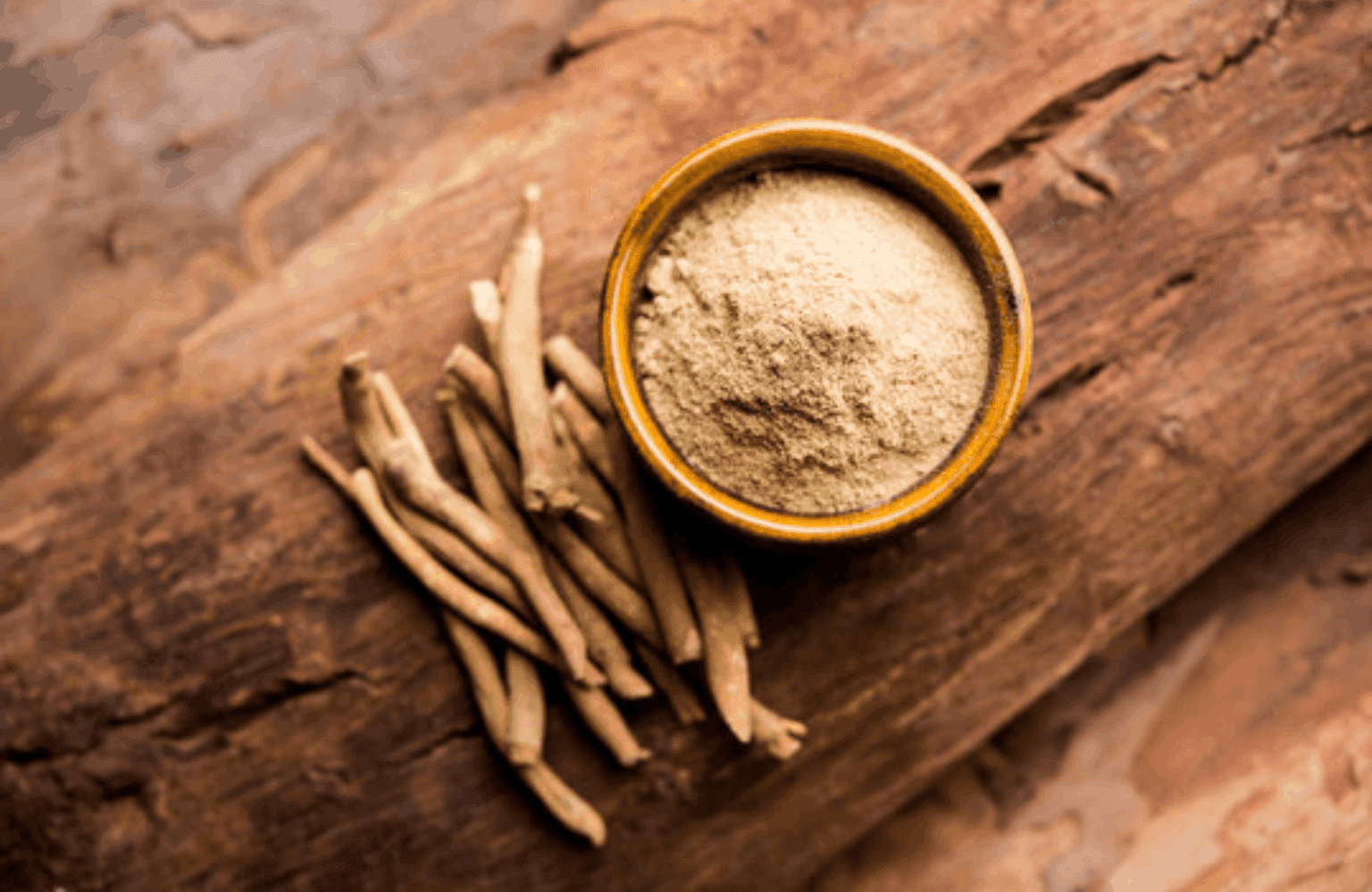
Ashwagandha scientifically known as Withania somnifera consists of dried mature roots valued as a Rasayana or rejuvenator in Ayurveda. Possessing Bitter and Astringent taste with Hot potency it effectively pacifies Vata and Kapha doshas. It acts as a Balya or strength promoter and Vajikarana or aphrodisiac making it essential for treating Vataroga or neurological disorders general debility known as Daurbalya and emaciation. It is also indicated for Klaibya or impotence and mental disorders like Unmada. Common Ayurvedic formulations include Asvagandhadyarishta and Asvagandhadi Lehya. The Ayurvedic Pharmacopoeia of India recommends a dosage of 3 to 6 grams of the root powder often consumed with milk to support vitality and tissue nutrition.
Ashwagandha
Ashwagandha, botanically known as Withania somnifera, is one of the most vital herbs in Ayurveda. It is classified as a Rasayana (rejuvenator) and Balya (strength promoter). The name implies that the fresh root smells like a horse (Ashwa), and traditionally, consuming it is believed to give one the strength and vitality of a horse. It is extensively used to treat disorders arising from the aggravation of Vata dosha, nervous exhaustion, and emaciation.
1. Name of the Herb
- Common Name: Ashwagandha
- Scientific Name: Withania somnifera Dunal.
- Sanskrit Names: Ashwagandha, Hayagandha (smells like a horse), Vajigandha.
- Other Names: Asgandh (Hindi), Amukkuram (Malayalam), Asagandha (Marathi), Amukkaramkizangu (Tamil), Pennerugadda (Telugu).
2. Brief Description
Ashwagandha consists of the dried mature roots of a perennial shrub found in waste lands and cultivated fields throughout India. In Ayurveda, it is highly valued as a Rasayana (tonic/rejuvenator) that nourishes the body tissues (Dhatus). It is renowned for its ability to combat debility, enhance vitality, and calm the nervous system.
3. Source / Part Used
- Plant Source: Herbal / Plant-based (Perennial Shrub).
- Part Used: Dried mature Root (Rt.).
4. Ayurvedic Properties
According to the Ayurvedic Pharmacopoeia of India, Ashwagandha possesses the following qualities:
- Rasa (Taste): Tikta (Bitter) and Kashaya (Astringent).
- Guna (Qualities): Laghu (Light to digest).
- Virya (Potency): Ushna (Hot).
- Vipaka (Post-digestive effect): Madhura (Sweet).
- Dosha Effect: Vatakaphapaha (It balances Vata and Kapha doshas).
5. Key Benefits
- Promotes Strength: Acts as a Balya agent, improving physical strength and immunity.
- Rejuvenation: Acts as a Rasayana, delaying aging and nourishing tissues.
- Sexual Vitality: Acts as a Vajikarana (Aphrodisiac), helping in conditions like Klaibya (impotence).
- Nervous System Support: Effective in treating Vataroga (neurological disorders).
- Reduces Swelling: Possesses Shothahara (anti-inflammatory) properties.
6. Uses / Indications
Ashwagandha is indicated for the following conditions in Ayurvedic texts:
- Daurbalya: General weakness and debility.
- Vataroga: Diseases caused by Vata dosha (e.g., arthritis, paralysis).
- Shotha: Oedema or inflammation.
- Klaibya: Male sexual dysfunction or impotence.
- Kshaya: Emaciation or consumption (tissue wasting).
- Mental Health: Used in formulations to treat Unmada (Mania/Psychosis), Apasmara (Epilepsy), and Murcha (Syncope).
7. How It Works
- Nutrient & Modulator: In formulations like Ashwagandhadi Lehya, it is described as a nutrient to the body and mind with adapto-immuno-neuro-endocrino-modulator properties.
- Dosha Pacification: Its Ushna (hot) potency pacifies Vata (which is cold), while its Madhura (sweet) post-digestive effect nourishes the tissues (Dhatus) and semen (Shukra).
8. Dosage
- Powder (Churna): 3 to 6 grams.
- Fermented Tonic (Asvagandhadyarishta): 12 to 24 ml.
- Electuary/Paste (Asvagandhadi Lehya): 6 to 12 grams.
- Note: Dosage varies based on age, digestive power, and specific formulation.
9. Safety Information
Ashwagandha is generally considered safe when taken in prescribed dosages as a Rasayana. It is a key ingredient in pediatric formulations like Aravindasava (used for pediatric conditions), indicating its safety for various age groups when properly formulated.
10. Side Effects
- The Ayurvedic texts do not list specific severe side effects for Ashwagandha roots when purified and used correctly.
- However, due to its Ushna (Hot) potency, excessive use might potentially increase heat in the body in individuals with high Pitta.
11. Precautions
- Pregnancy: Specific safety data for pregnancy is not detailed in the provided excerpts, but general Ayurvedic practice suggests caution with Ushna (hot) drugs.
- Medical Supervision: Formulations containing Ashwagandha often contain other ingredients; consult a physician for specific therapies like Vajikarana (aphrodisiac therapy).
12. Storage Instructions
- Store powders (Churna) in air-tight containers to protect from moisture.
- Fermented preparations (Arishta) should be kept in well-stoppered bottles.
13. References
- Encyclopædia Britannica – Withania somnifera
Comprehensive plant description, traditional uses, and biology of Ashwagandha (Withania somnifera).
https://www.britannica.com/plant/Withania-somnifera (Encyclopedia Britannica) - National Medicinal Plants Board (Government of India) – Ashwagandha
Official listing & cultivation data from India’s Ministry of AYUSH.
https://nmpb.nic.in/species/ashwagandha-withania-somnifera (National Medicinal Plants Board) - Planet Ayurveda – Ashwagandha Library
Ayurvedic properties, dosha effects, and classical categorization.
https://www.planetayurveda.com/library/ashwagandha-withania-somnifera/ (Planet Ayurveda)
- अश्वगंधा (Ashwagandha) Ayurvedic Herb Info (Hindi)
Ayurvedic uses and benefits explained in Hindi (Online Pansari).
https://onlinepansari.in/shop/products/raw-herbs/ashwagandha-withania-somnifera/ (onlinepansari.in) - Withania somnifera (अश्वगंधा) – Azaadbharat
Hindi article explaining traditional benefits and precautions of Ashwagandha.
https://www.azaadbharat.org/withania-somnifera-ashwagandha/ (Azaadbharat)
14. FAQs
Can it be taken daily?
Yes. Ashwagandha is classified as a Rasayana (rejuvenator), which is a category of herbs often used daily to maintain health, vitality, and immunity.
When should it be taken?
Powders are typically taken twice daily. Formulations like Ashwagandhadi Lehya are often taken with milk.
Can it be taken with milk/water?
Yes. Milk is a common Anupana (vehicle) for Ashwagandha, especially when used for strength (Balya) or as a restorative tonic.
Consult a Doctor
- DS4.2Deeksha sharma
Ayurveda4 yrs exp
- MS4.2Midun s kumar
Ayurveda4 yrs exp
- DR4.3Dr.Prajwal Raj Biradar
Ayurveda1 yrs exp
- BY4.3Bapodara yash kanabhai
Ayurveda3 yrs exp
More on Ashwagandha
Buy Medicine
 Prescribed to you4.5₹6 cashback
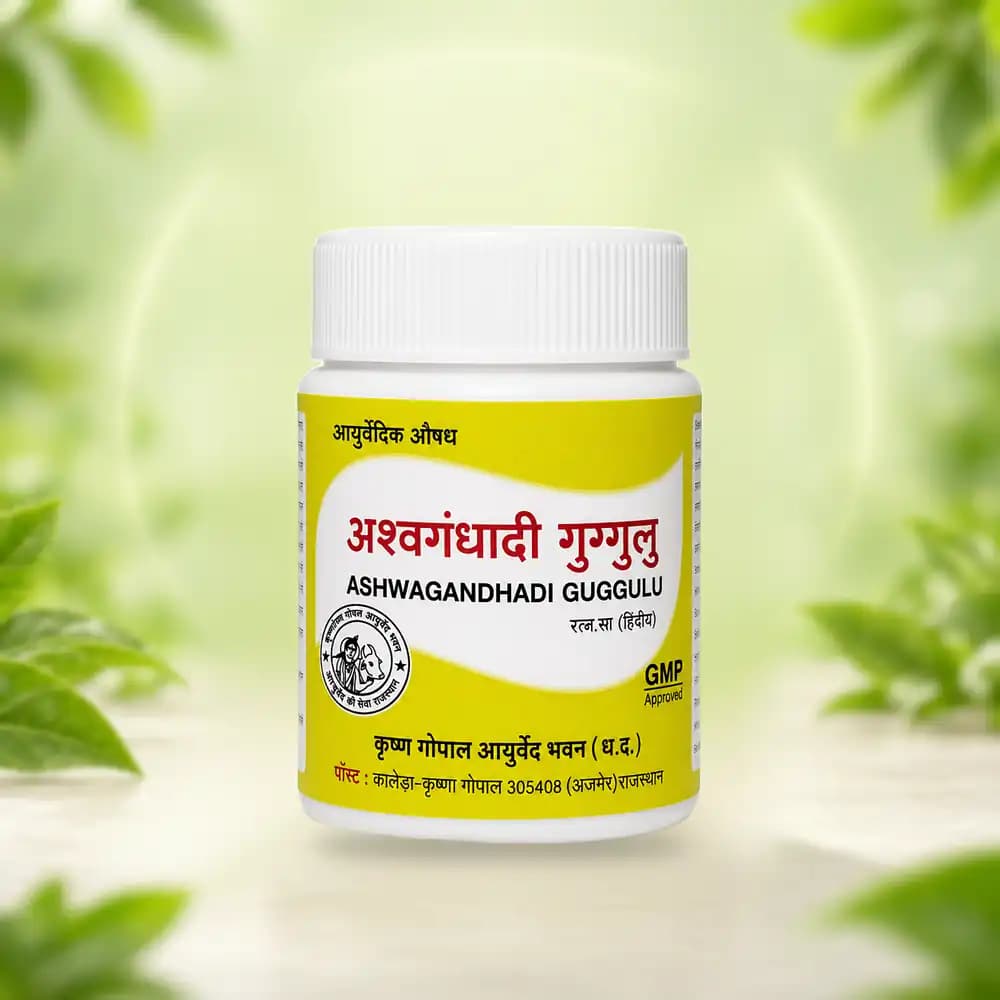
Ashwagandhadi Guggul (Kalera) Kalera
Joint strength, stress relief
Strip of 30 Tablets
4.5
₹66Get ₹6 Cashback
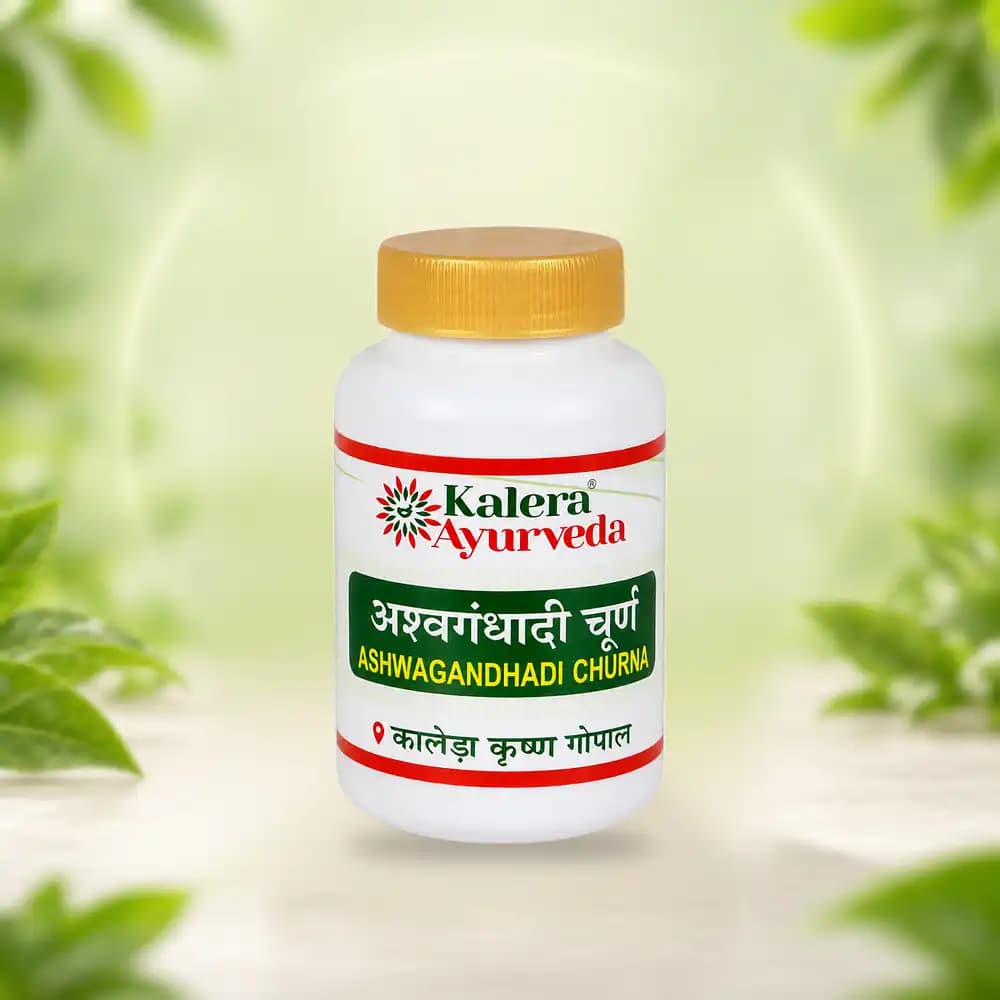 Prescribed to you4.5₹8 cashback
Ashwagandhadi Churna (Kalera)KaleraMuscle strength, stress relief
Container of 100 g
4.5
₹85Get ₹8 Cashback
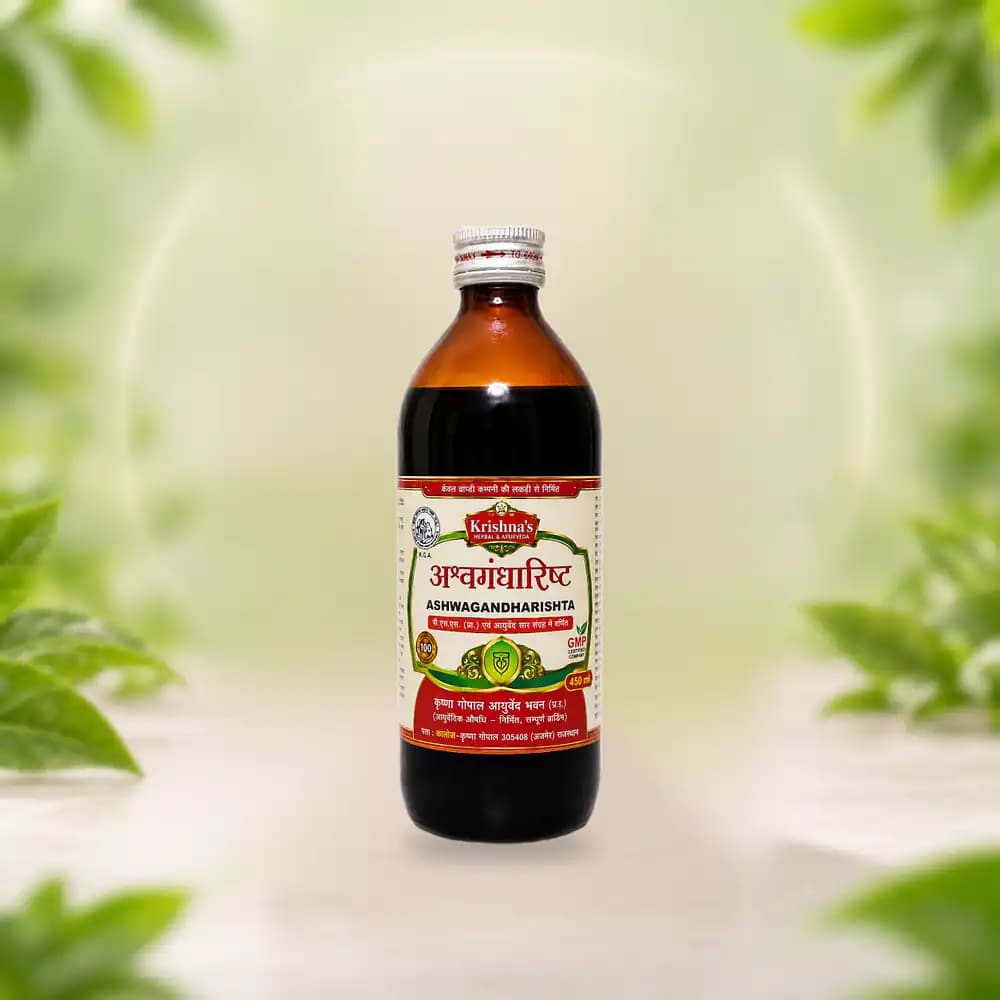 Prescribed to you4.4₹37 cashback
Ashwagandharishta (Kalera)KaleraBuilds strength, reduces stress
Bottle of 450 ml
4.4
₹372Get ₹37 Cashback
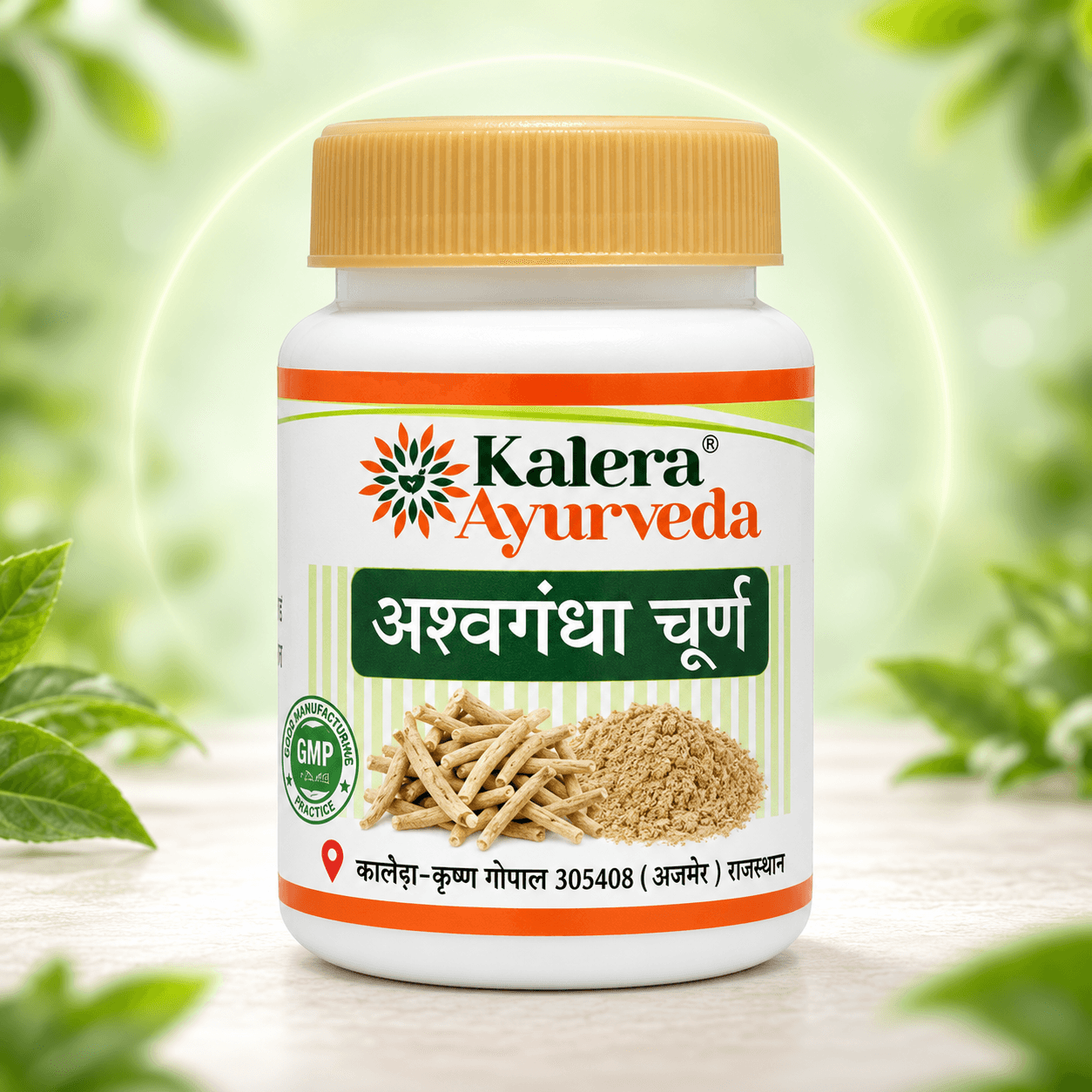 Prescribed to you4.5₹22 cashback
Ashwagandha Churna (Kalera)Kalera100% Pure Ashwagandha Root Powder
Container of 100 g
4.5
₹224Get ₹22 Cashback