Black Pepper
Reviewed by medical experts · For informational purposes only
Introductory summary
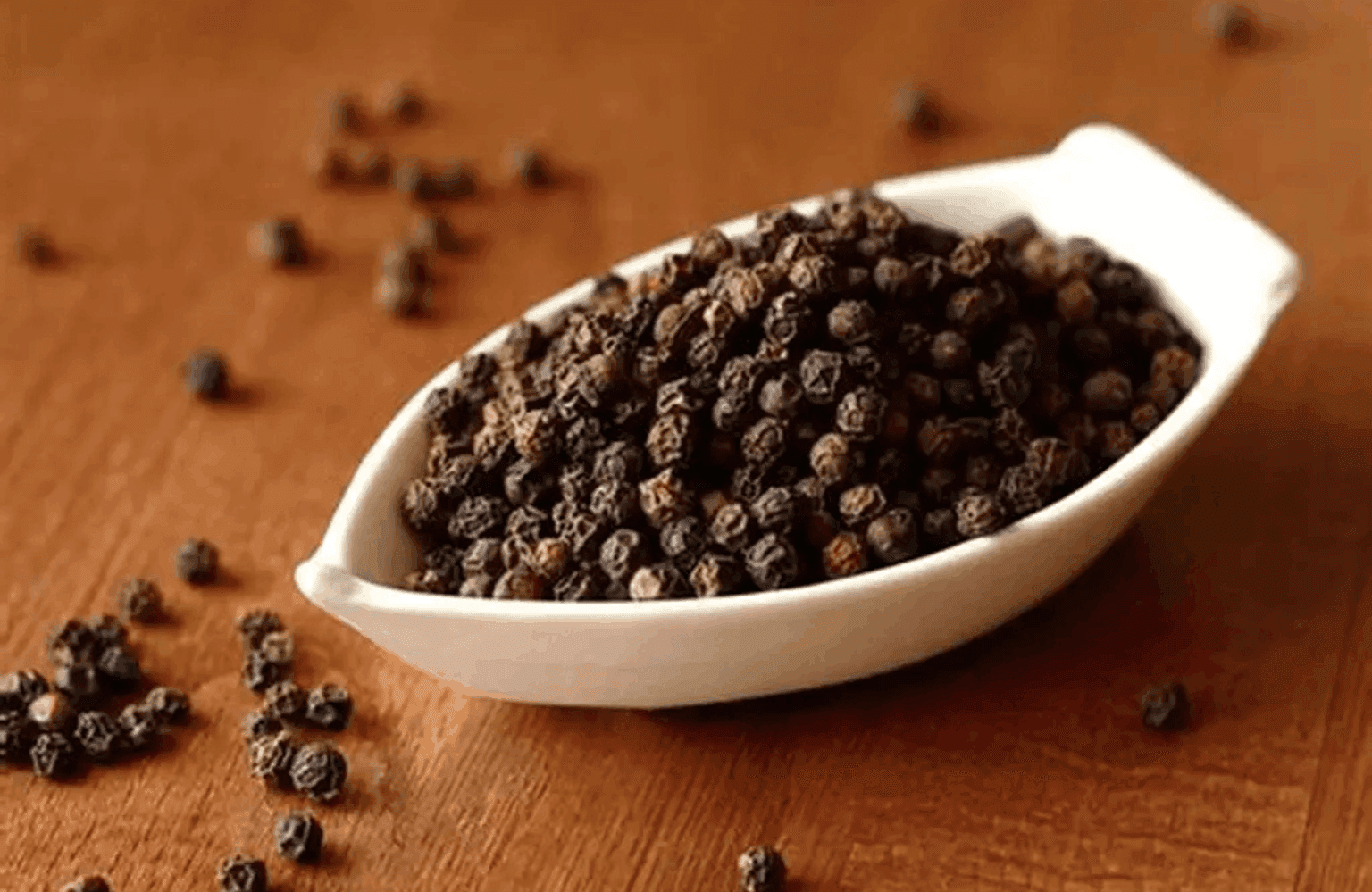
Black Pepper scientifically known as Piper nigrum consists of dried mature fruits referred to as Maricha or Vellaja in Ayurveda. It possesses a Pungent taste and post digestive effect with Hot potency and Light Sharp and Dry qualities. It acts as a powerful digestive stimulant and carminative that pacifies Vata and Kapha doshas while potentially increasing Pitta. Unique among pungent herbs it is described as Pramathi meaning it expels obstructions from body channels. It is extensively used to treat Agnimandya or digestive impairment Shula or colic and respiratory conditions like Kasa and Shvasa. It is a vital component of the Trikatu formulation. Unlike long pepper Black Pepper is considered Anvrishya or non aphrodisiac. The Ayurvedic Pharmacopoeia of India recommends a dosage of 0.5 to 1 gram of the powder.
Black Pepper
Black Pepper, scientifically known as Piper nigrum, is one of the most essential spices and medicinal herbs in Ayurveda. Known as Marica or Maricha in Sanskrit, it is a crucial component of the famous formulation Trikatu (Three Pungents), alongside Long Pepper (Pippali) and Dry Ginger (Shunthi). Unlike other heating spices, ancient texts describe it as having a unique ability to dry up fluids and clear channels, making it a primary remedy for respiratory congestion, indigestion, and metabolic sluggishness.
1. Name of the Herb
- Common Name: Black Pepper, Kalimirch (Hindi).
- Scientific Name: Piper nigrum Linn.
- Sanskrit Names: Marica, Vellaja, Kṛṣṇa, Uṣaṇa,.
- Synonyms: The term Vellaja is often used in formulations like Karpūrādyarka.
2. Brief Description
Black Pepper is a climbing vine cultivated for its fruit, which is dried and used as a spice and medicine. In Ayurveda, it is highly valued for its penetrating (Pramathi) qualities. It is unique among pungent herbs because, while it stimulates the digestive fire (Agni), classical texts like Charaka Samhita note that it is "not very hot" (Na Ati Ushna) compared to other heating herbs, yet it is powerful in clearing obstructions in the body's channels. It is considered a nervous stimulant and a resuscitator.
3. Source / Part Used
- Plant Source: Herbal / Plant-based.
- Part Used: Dried Fruit (Frt.) / Fruit containing the seed,.
4. Ayurvedic Properties
According to Dravyaguna Vijnana and Charaka Samhita, Black Pepper possesses the following properties:
- Rasa (Taste): Katu (Pungent).
- Guna (Qualities): Laghu (Light), Tikshna (Sharp/Penetrating), and Ruksha (Dry).
- Virya (Potency): Ushna (Hot). Note: Charaka Samhita describes it as "not very hot" relative to other pungent drugs, but it still has a heating effect.
- Vipaka (Post-digestive effect): Katu (Pungent).
- Dosha Effect: Kaphavatajit (Pacifies Kapha and Vata doshas). It can aggravate Pitta due to its fiery nature.
5. Key Benefits
- Clears Respiratory Congestion: It cuts through mucus (Chedana) and dries up phlegm, making it effective for coughs and asthma,.
- Stimulates Digestion: Acts as a powerful Dipana (appetizer) and digestive agent, resolving indigestion and sluggish metabolism.
- Cleanses Channels: It opens the body's channels (Srotas) and removes obstructions (Pramathi), helping nutrients reach tissues,.
- Reduces Fat: It scrapes away excess fat and mucus from the body.
- Anthelmintic: Acts as Jantughna or Krimighna, helping to destroy intestinal worms,.
6. Uses / Indications
Black Pepper is indicated in Ayurveda for the following conditions:
- Digestive Disorders: Agnimandya (Loss of appetite), Ajirna (Indigestion), Shula (Colic/Abdominal pain), and Aruci (Tastelessness),.
- Respiratory Disorders: Kasa (Cough), Shvasa (Asthma/Dyspnoea), and Pratishyaya (Sinusitis/Rhinitis),.
- Heart Health: Hridroga (Heart diseases), particularly those of bacterial origin (Krimija Hridroga),.
- Metabolic Issues: Sthaulya (Obesity) and blockage of channels.
- Skin Disorders: Kushtha (Skin diseases) and Shvitra (Leucoderma).
7. How It Works
- Absorbing & Drying: Unlike Long Pepper (Pippali) which is slightly unctuous, Black Pepper is Ruksha (dry). It works by extracting and absorbing moisture (Shoshana) from the tissues, which effectively dries up running noses, clears phlegm, and reduces fat.
- Stimulant: It acts as a nervous stimulant and can help in resuscitation or reviving sensory function.
- Bio-availability: As a part of Trikatu (Three Pungents), it helps burn Ama (metabolic toxins) and enhances the absorption of other medicines.
8. Dosage
- Powder (Churna): 0.5 to 1 gram (Implicit in single drug usage, though specific formulation doses vary).
- Trikatu Churna (Compound Powder): 1 to 3 grams.
- Maricadi Gutika (Pills for Cough): 3 grams (to be dissolved slowly in the mouth).
- Note: Dosage varies based on the specific Ayurvedic formulation and the patient's constitution.
9. Safety Information
Black Pepper is generally safe for consumption in culinary amounts. In medicinal doses, it is widely used in formulations like Trikatu and Maricadi Gutika which are standard remedies for cough and digestion,.
10. Side Effects
- Pitta Aggravation: Due to its Agneya (fiery) nature, excessive use causes burning sensation (Daha), thirst (Trishna), and excessive heat in the body.
- Dryness: Its Ruksha (Rough/Dry) quality can cause dryness in the mouth and throat if used in excess.
- Virility: Unlike Long Pepper, Black Pepper is described as Anvrishya (Non-aphrodisiac), meaning it does not promote, and may potentially decrease, sexual potency if used in excess.
11. Precautions
- Pitta Disorders: It is contraindicated in gastritis, burning sensation, and bleeding disorders (Raktapitta) as it can vitiate blood and increase heat.
- Pregnancy: Caution is advised due to its hot and penetrating action.
- Men's Health: Excessive intake is not recommended for those seeking to improve virility, as it is considered non-aphrodisiac.
12. Storage Instructions
- Store in a cool, dry place.
- Keep away from direct sunlight and moisture to preserve its volatile oils and pungency.
13. References
- Encyclopaedia Britannica – Black Pepper (Piper nigrum)
Botanical description, history, and uses.
https://www.britannica.com/plant/black-pepper - Kew Science – Plants of the World Online (POWO)
Taxonomy and nomenclature details.
https://powo.science.kew.org/taxon/urn:lsid:ipni.org:names:680559-1 - The Ayurvedic Pharmacopoeia of India (API) – Ministry of AYUSH
Official monograph on Maricha (Piper nigrum).
https://www.ayush.gov.in - Indian Medicinal Plants – A Compendium of 500 Species
Warrier, P.K., Nambiar, V.P.K., & Ramankutty, C. - Indian Materia Medica – Nadkarni, K.M.
https://archive.org/details/IndianMateriaMedica - Database on Medicinal Plants Used in Ayurveda (CCRAS)
https://www.ccras.nic.in - WHO Monographs on Selected Medicinal Plants
https://www.who.int - Review Article: Piperine – A Bioactive Compound of Black Pepper
Srinivasan, K. (2007). Critical Reviews in Food Science and Nutrition.
https://pubmed.ncbi.nlm.nih.gov/?term=piperine+review - Phytochemistry and Pharmacology of Piper nigrum
Journal of Ethnopharmacology.
https://www.sciencedirect.com - Bioavailability Enhancing Effect of Piperine
Available via PubMed Central (PMC).
https://www.ncbi.nlm.nih.gov/pmc/?term=piperine - National Medicinal Plants Board (NMPB), Government of India – Black Pepper Profile
https://nmpb.nic.in
14. FAQs
Q. Can it be taken daily?
Yes, in small culinary amounts (like in soup or dal). However, large medicinal doses should not be taken long-term by people with high body heat (Pitta).
Q. When should it be taken?
It is often taken with food to aid digestion or mixed with honey for respiratory issues. For coughs, preparations like Maricadi Gutika are dissolved slowly in the mouth.
Q. Can it be taken with milk/water?
Yes. It is often combined with honey, warm water, or milk depending on the condition. For example, Trikatu (containing Black Pepper) is often taken with honey.
Consult a Doctor
- NG5.0Dr Nandini gaur
Ayurveda1 yrs exp
- AG4.5Dr Anshuman Gupta
Ayurveda8 yrs exp
- BY4.3Bapodara yash kanabhai
Ayurveda3 yrs exp
- VR4.2Vaidya Rohit Kumar
Ayurveda3 yrs exp