Castor Oil
Reviewed by medical experts · For informational purposes only
Introductory summary
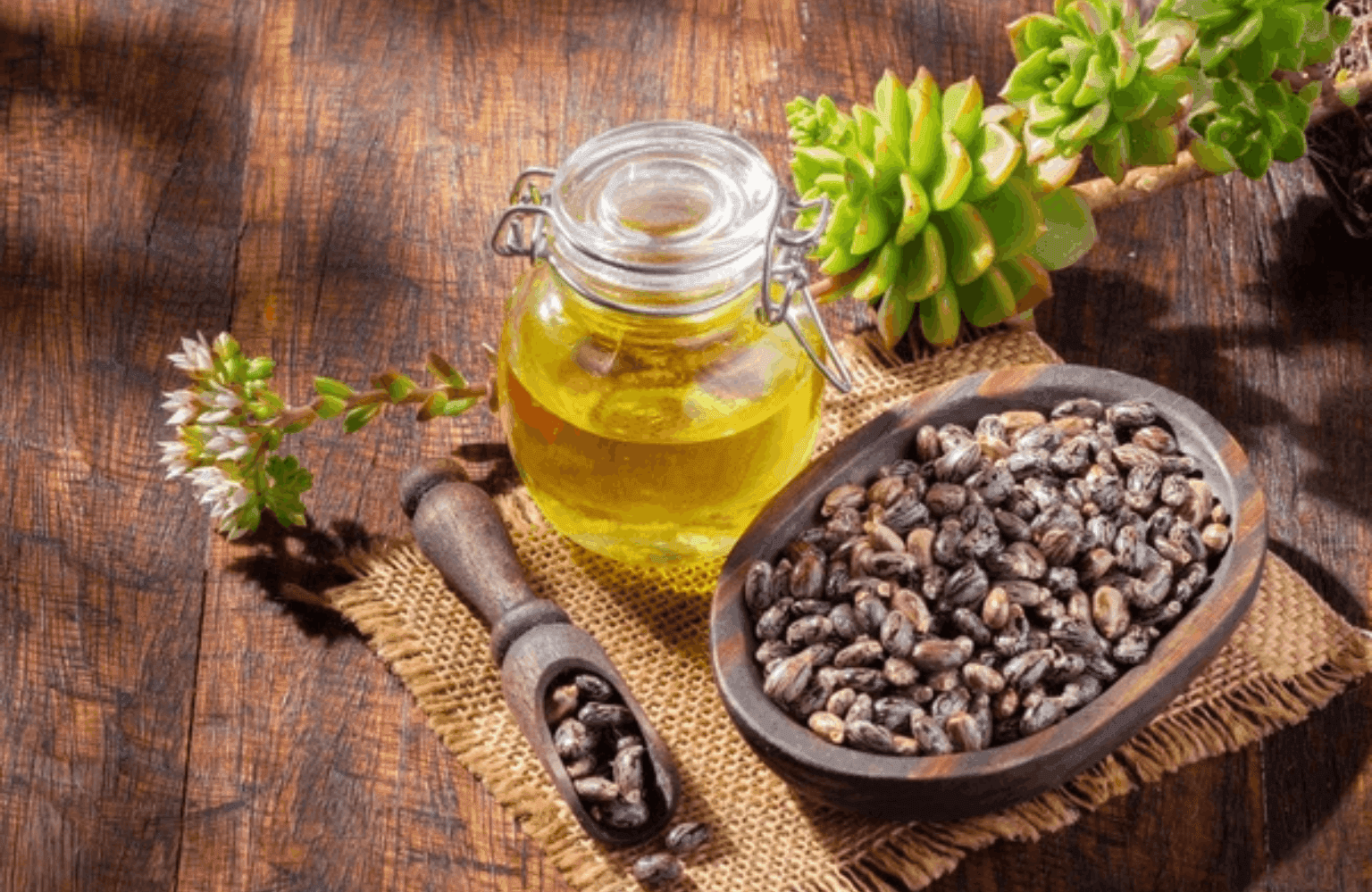
Castor Oil known as Eranda Taila in Ayurveda is extracted from Ricinus communis seeds. It is revered as the superior purgative and Vata alleviating substance. Possessing sweet pungent and astringent tastes with heavy penetrating and hot qualities it effectively pacifies both Vata and Kapha doshas while eliminating toxins known as Ama from deep body channels. Therapeutically it is a primary remedy for rheumatoid arthritis sciatica constipation and abdominal lumps called Gulma. It acts by breaking down hardness in the colon and ensuring downward movement of Vata. While excellent for relieving pain and stiffness it is generally indicated for therapeutic purgation or specific chronic conditions rather than daily use without medical supervision due to its strong laxative nature.
Castor Oil
Castor Oil, known in Ayurveda as Eraṇḍa Taila, is a fatty oil obtained from the seeds of the Castor plant (Ricinus communis). It is revered in traditional Indian medicine as the premier substance for Virechana (therapeutic purgation). Unlike many other oils, it is uniquely celebrated for its ability to alleviate both Vata and Kapha doshas simultaneously, making it a cornerstone treatment for painful neuromuscular and rheumatological conditions.
1. Name of the Herb
- Common Name: Castor Oil.
- Sanskrit Name: Eraṇḍa Taila (Oil of Eraṇḍa).
- Scientific Name: Ricinus communis Linn. (Oil).
- Synonyms: Rubu (Castor plant), Gandharvahasta (Castor plant).
2. Brief Description
Castor Oil is a viscous, yellowish liquid extracted from castor seeds. In Ayurveda, it is classified as the "best among purgatives" (Virecanadravya). It acts as a powerful unctuous laxative that penetrates deep into the minute body channels (Srotas) to loosen impurities. It is specifically praised for managing obstinate Vata diseases (like arthritis and paralysis) and is a key ingredient in many Simhanada Guggulu and Vatari formulations.
3. Source / Part Used
- Plant Source: Herbal / Plant-based (Seed Oil).
- Part Used: Seeds (Bija) are used to express the Oil (Taila). The root (Mula) is also extensively used in decoctions.
4. Ayurvedic Properties
According to Charaka Samhita (Sutra Sthana, Ch. 13 & 27):
- Rasa (Taste): Madhura (Sweet), Katu (Pungent), and Kashaya (Astringent).
- Guna (Qualities): Guru (Heavy), Tikshna (Sharp), and Sukshma (Subtle/Penetrating).
- Virya (Potency): Ushna (Hot).
- Vipaka (Post-digestive effect): Madhura (Sweet) (inferred from its nutritive/Vata-alleviating action).
- Dosha Effect: Vata-Kapha Shamaka (Pacifies Vata and Kapha).
- Note: While some contexts mention it increases Kapha due to heaviness, its therapeutic application is largely for expelling Kapha and Vata.
5. Key Benefits
- Best Purgative: It is the superior drug for inducing purgation (Virechana), effectively clearing accumulated toxins (Ama).
- Alleviates Pain: Highly effective in reducing pain associated with Vata, such as backache and sciatica.
- Combats Rheumatism: Specifically indicated for Amavata (Rheumatoid Arthritis) due to its ability to digest toxins and clear channels.
- Reduces Swelling: Useful in treating Gulma (Abdominal lumps/tumors) and Udara (Ascites).
- Skin Health: Beneficial for skin disorders (Kustha).
6. Uses / Indications
Castor Oil is clinically indicated in Ayurveda for:
- Gastrointestinal: Vibandha (Constipation), Gulma (Abdominal lump), Udararoga (Abdominal diseases like Ascites).
- Musculoskeletal: Amavata (Rheumatism), Vatarakta (Gout), Katishula (Lower back pain), Gridhrasi (Sciatica).
- Hernia: Bradhna or Antravriddhi (Inguinal hernia).
- General: Jirnajvara (Chronic fever), Hridroga (Heart disease).
7. How It Works
- Sramsana (Purgation): Due to its Tikshna (sharp) and Sara (mobile) qualities, it breaks down hard stools and impurities in the colon and expels them downward.
- Vata-Kapha Pacification: Its Ushna (hot) virya counteracts the coldness of Vata and Kapha. Its Snigdha (unctuous) quality combats the dryness of Vata.
- Channel Cleansing: It enters minute channels (Sukshma) to detach toxins (Ama) adhering to tissues, making it ideal for autoimmune-like conditions like Rheumatism where Ama blocks the joints.
8. Dosage
(General guidance based on formulations and AFI):
- Pure Oil (for purgation): 5 to 20 ml (Dose depends on bowel sensitivity).
- In Decoctions: Often added to herbal decoctions (like Rasnasaptaka or Dashamula) in doses of 10 to 20 ml.
- Note: It is often taken with warm milk, ginger water, or cow's urine depending on the disease.
9. Safety Information
- Safe when directed: Generally safe for short-term use as a laxative.
- Habit Forming: Frequent use for simple constipation can lead to dependence (lazy bowel).
- Ayurvedic Processing: It is often processed with herbs to reduce its thickness and enhance efficacy.
10. Side Effects
- Gastrointestinal: Nausea, vomiting, and abdominal cramps if the dose is too high.
- Dehydration: Excessive purgation can lead to fluid loss.
11. Precautions
- Acute Fever: Contraindicated in Navajvara (Acute fever) and diarrhea (Atisara).
- Pregnancy: Generally contraindicated for purgation; however, it is sometimes used under strict medical supervision for inducing labor or specific Vata conditions.
- Children & Elderly: Use with caution in reduced doses.
12. Storage Instructions
- Store in a cool, dry place in a well-closed container.
- Protect from light to prevent rancidity.
13. References
-
The World Health Organization’s Traditional Medicine Strategy supports evidence-based research into traditional medicinal substances including plant oils and their therapeutic effects.
WHO Traditional Medicine Strategy 2014-2023
WHO Traditional Medicine Strategy 2025-2034https://www.who.int/teams/who-global-traditional-medicine-centre/strategies
-
The Food and Agriculture Organization provides standards and risk evaluations for edible and cosmetic oils (quality, contaminants, fatty acid profiles).
FAO/WHO Codex Alimentarius on fats & oils
http://www.fao.org/fao-who-codexalimentarius
-
Tortora G.J., et al. (2012). Understanding the gastrointestinal effects of castor oil: mechanisms and clinical use.
Gastroenterology & Hepatology Review.
Castor oil’s hydrolyzation to ricinoleic acid and stimulation of intestinal motility.https://pubmed.ncbi.nlm.nih.gov/?term=castor+oil+gastrointestinal+effects
-
Parveen R., et al. (2018). Antimicrobial activity of castor oil and its fatty acids against microbial pathogens.
Journal of Essential Oil Research.
Castor oil’s fatty acids show inhibitory effects against select bacteria and fungi.https://www.sciencedirect.com/science/article/pii/S0962456218301240
-
Freire, M.O., et al. (2018). Castor oil and ricinoleic acid: effects on inflammation and nociception.
European Journal of Pharmacology.
Analgesic and anti-inflammatory pathways of ricinoleic acid.https://pubmed.ncbi.nlm.nih.gov/30248293
-
Dermatology & Moisturization
Castor oil’s triglycerides increase skin hydration by reducing trans-epidermal water loss.
Beneficial in dry skin and minor irritations.
https://www.ncbi.nlm.nih.gov/pmc/?term=castor+oil+skin+hydration
14. FAQs
** **Q. Can it be taken daily?
No, generally it is not for daily use unless prescribed for chronic conditions like Amavata (Rheumatism) for a specific period. Daily use can weaken the colon's natural urge.
Q. When should it be taken?
It is typically taken at night (bedtime) or early morning on an empty stomach for purgation.
Q. Can it be taken with milk/water?
Yes. In Vata disorders (like arthritis), it is often taken with warm milk. In cases of Ama (toxins), it may be taken with ginger water or cow's urine,.
Consult a Doctor
- MS4.2Midun s kumar
Ayurveda4 yrs exp
- SP4.5Dr Sreelekha P Nair
Ayurveda6 yrs exp
- VR4.2Vaidya Rohit Kumar
Ayurveda3 yrs exp
- V4.1Vairamuthu
Ayurveda8 yrs exp