Jatamansi
Reviewed by medical experts · For informational purposes only
Introductory summary
Jatamansi scientifically known as Nardostachys jatamansi is a perennial Himalayan herb belonging to the Valerianaceae family. The dried rhizome is the primary medicinal part used in Ayurveda. It possesses Bitter Astringent and Sweet tastes with Light and Unctuous qualities. Uniquely it has a Cold potency and Pungent post digestive effect making it Tridoshanut or capable of balancing Vata Pitta and Kapha doshas. It is highly valued as Medhya for promoting intellect and Nidrajanana for inducing sleep making it effective for insomnia and mental disorders. Therapeutically it treats burning sensations skin diseases like leprosy and erysipelas and heart conditions. The Ayurvedic Pharmacopoeia of India recommends a dosage of 2 to 3 grams of the rhizome powder or 5 to 10 grams for decoction.
Jatamansi
Jatamansi, scientifically known as Nardostachys jatamansi, is a valued medicinal herb in Ayurveda derived from the rhizome of a perennial herb found in the sub-alpine Himalayan tracts. It is highly revered for its ability to treat neuropsychiatric disorders and skin conditions. In Ayurvedic texts, it is classified as Tridoshanut, meaning it balances all three biological humors (Vata, Pitta, and Kapha), and is specifically noted for its Nidrajanana (sleep-inducing) and Medhya (intellect-promoting) properties.
1. Name of the Herb
- Common Name: Jatamansi, Spikenard, Nardus root.
- Scientific Name: Nardostachys jatamansi DC..
- Sanskrit Names: Jatāmāmsī, Māmsī, Jaṭā, Jaṭilā, Nalada.
- Regional Names: Balchara (Hindi), Jatamamsi (Bengali/Kannada), Jatamanchi (Malayalam), Jatamasi (Tamil).
2. Brief Description
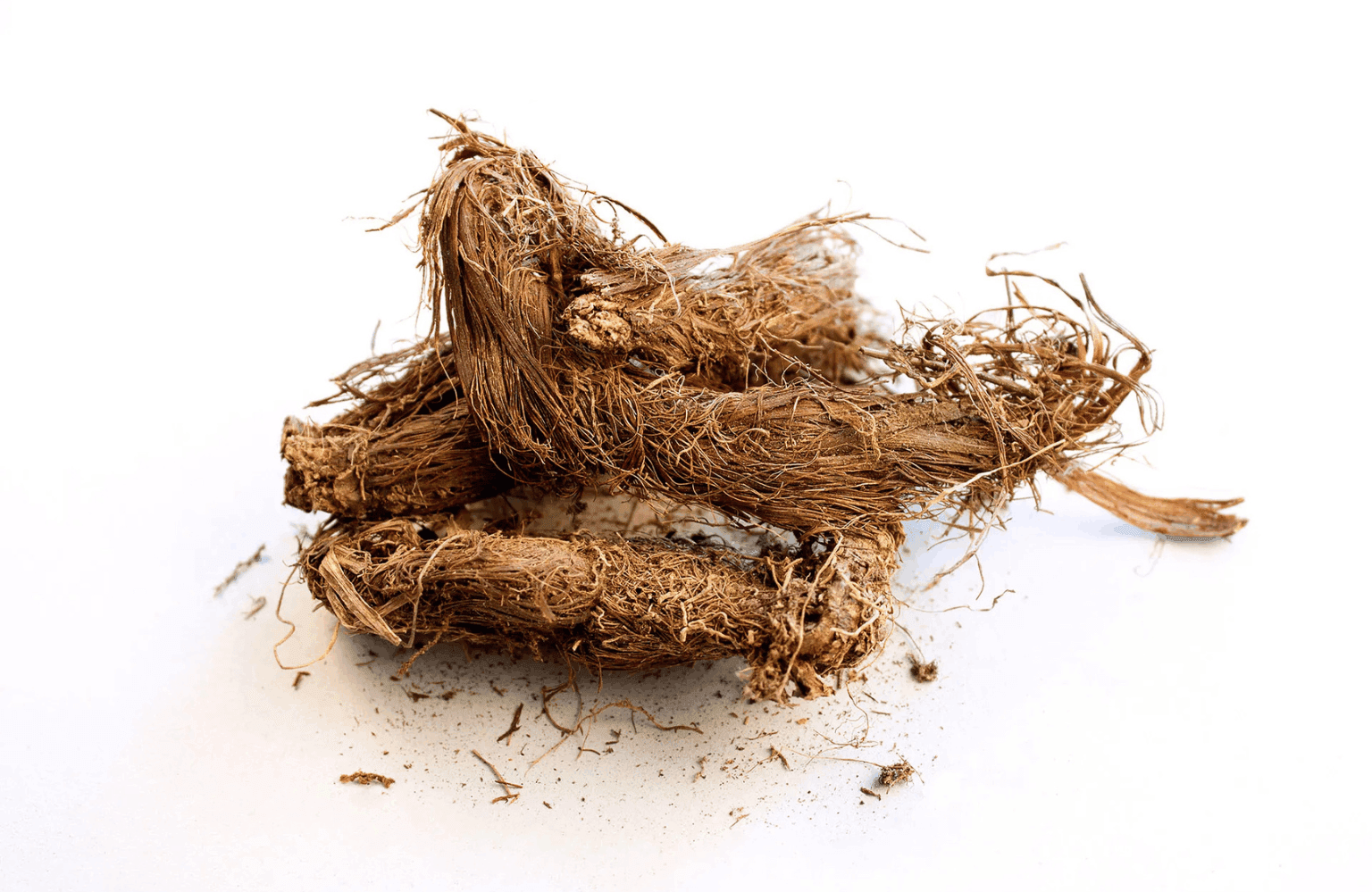
Jatamansi is an erect perennial herb growing at altitudes of 3000–5000 meters in the Himalayas. The medicinal part is the dried rhizome, which is dark brown, cylindrical, and covered with reddish-brown fibers forming a network (skeletons of sheathing leaf bases). It has a strong, characteristic aromatic odour and a slightly bitter, acrid taste. It is currently recognized as an endangered species in the Himalayan region due to over-exploitation.
3. Source / Part Used
- Plant Source: Herbal / Plant-based.
- Part Used: Rhizome (Dried).
4. Ayurvedic Properties
According to the Ayurvedic Pharmacopoeia of India:
- Rasa (Taste): Tikta (Bitter), Kaṣāya (Astringent), and Madhura (Sweet).
- Guna (Qualities): Laghu (Light) and Snigdha (Unctuous/Oily).
- Virya (Potency): Śīta (Cold).
- Vipaka (Post-digestive effect): Kaṭu (Pungent).
- Dosha Effect: Tridoṣanut (Balances Vata, Pitta, and Kapha doshas).
5. Key Benefits
- Promotes Sleep: Acts as Nidrajanana, effectively inducing sleep and treating insomnia.
- Enhances Intellect: It is Medhya, promoting mental clarity and intelligence.
- Skin Health: Acts as Kusthaghna (destroys skin diseases) and improves complexion (Varnya).
- Relieves Burning: Useful in alleviating Daha (burning sensation) due to its cold potency.
- Nervous System Support: Used in formulations to treat epilepsy and psychosis.
6. Uses / Indications
Jatamansi is indicated in Ayurveda for the following conditions:
- Mental Disorders: Mānasaroga (Mental disorders), Anidrā (Insomnia), Apasmāra (Epilepsy), and Unmāda (Mania/Psychosis),.
- Skin Disorders: Kuṣṭha (Leprosy/Skin diseases) and Visarpa (Erysipelas).
- Respiratory: Kāsa (Cough) and Śvāsa (Asthma) (often used in combinations like Eladi Churna).
- General: Dāha (Burning sensation) and as an aromatic ingredient in various formulations like Mahanarayana Taila.
7. How It Works
- Sedative Action: Jatamansi contains essential oils and compounds that exert a calming effect on the mind, making it a potent anxiolytic (anxiety-reducing) and sedative agent used to treat stress and sleeplessness.
- Tridosha Balance: Its unique combination of Tikta/Kasaya taste (balancing Pitta/Kapha) and Snigdha quality (balancing Vata) allows it to regulate the nervous system without causing excessive dryness or heat.
- Skin Healing: It is included in the Kusthaghna group, helping to purify the blood and soothe skin irritations and erysipelas.
8. Dosage
The recommended dosage according to the Ayurvedic Pharmacopoeia of India is:
- Powder (Churna): 2 to 3 grams.
- Decoction: 5 to 10 grams of the drug used for decoction.
9. Safety Information
Jatamansi is generally considered safe when used in recommended dosages. It is frequently used in polyherbal formulations for children (e.g., Bala Graha) and adults alike.
10. Side Effects
- No specific severe side effects are reported in the texts when taken in proper dosage.
- Excessive intake might lead to heavy sedation due to its Nidrajanana (sleep-inducing) property.
11. Precautions
- Endangered Status: This is a threatened Himalayan species; therefore, sustainable sourcing is critical.
- Medical Supervision: Conditions like epilepsy (Apasmara) and psychosis (Unmada) should be treated under the strict supervision of an Ayurvedic physician.
12. Storage Instructions
- Store the rhizomes or powder in a cool, dry place.
- Keep in an air-tight container to preserve its volatile essential oils and aroma.
13. References
-
WHO Monographs on Selected Medicinal Plants
World Health Organization
https://apps.who.int/iris/handle/10665/42052
-
WHO Global Report on Traditional and Complementary Medicine
https://www.who.int/publications/i/item/9789241515436
-
Convention on International Trade in Endangered Species (CITES) – Nardostachys jatamansi
https://cites.org
-
IUCN Red List – Nardostachys jatamansi
https://www.iucnredlist.org
-
Kew Science – Plants of the World Online (Nardostachys jatamansi)
https://powo.science.kew.org
-
World Flora Online – Nardostachys jatamansi
https://www.worldfloraonline.org
-
Ayurvedic Pharmacopoeia of India (API) – Jatamansi
https://www.ayush.gov.in
-
PubMed – Nardostachys jatamansi Research Articles
https://pubmed.ncbi.nlm.nih.gov/?term=Nardostachys+jatamansi
-
ScienceDirect – Jatamansi Phytochemistry & Pharmacology
https://www.sciencedirect.com/topics/pharmacology-toxicology-and-pharmaceutical-science/nardostachys-jatamansi
-
SpringerLink – Neuroprotective & Clinical Studies on Jatamansi
https://link.springer.com
14. FAQs
Q. Can it be taken daily?
Yes, in small therapeutic doses (2-3g), it can be taken to improve sleep and intellect, usually for a specified period under guidance.
Q. When should it be taken?
For sleep issues, it is best taken at night. For general health or respiratory issues, it can be taken as part of compound formulations like Eladi Churna.
Q. Can it be taken with milk/water?
Yes. It can be taken as a powder with water or honey. Formulations containing Jatamansi (like Kalyanaka Ghrita) are often taken with warm milk or water.
Consult a Doctor
- AG4.5Dr Anshuman Gupta
Ayurveda8 yrs exp
- MS4.2Midun s kumar
Ayurveda4 yrs exp
- SP4.5Dr Sreelekha P Nair
Ayurveda6 yrs exp
- D4.3Dr Divya
Ayurveda2 yrs exp