Pippali
Reviewed by medical experts · For informational purposes only
Introductory summary
Pippali scientifically known as Piper longum is a potent Ayurvedic herb valued as a Rasayana or rejuvenator. Unlike most pungent spices it possesses a Sweet post digestive effect allowing it to nourish tissues while clearing respiratory congestion. It effectively pacifies Vata and Kapha doshas and is extensively used to treat cough asthma indigestion and spleen disorders. It acts as a bio enhancer improving the absorption of other medicines. While beneficial for vitality and reproductive health Charaka Samhita warns against its habitual daily use for long periods without medical supervision as it may aggravate Pitta and Kapha. It is a key ingredient in famous formulations like Trikatu and Chyavanaprash with a recommended dosage of 1 to 3 grams.
Pippali
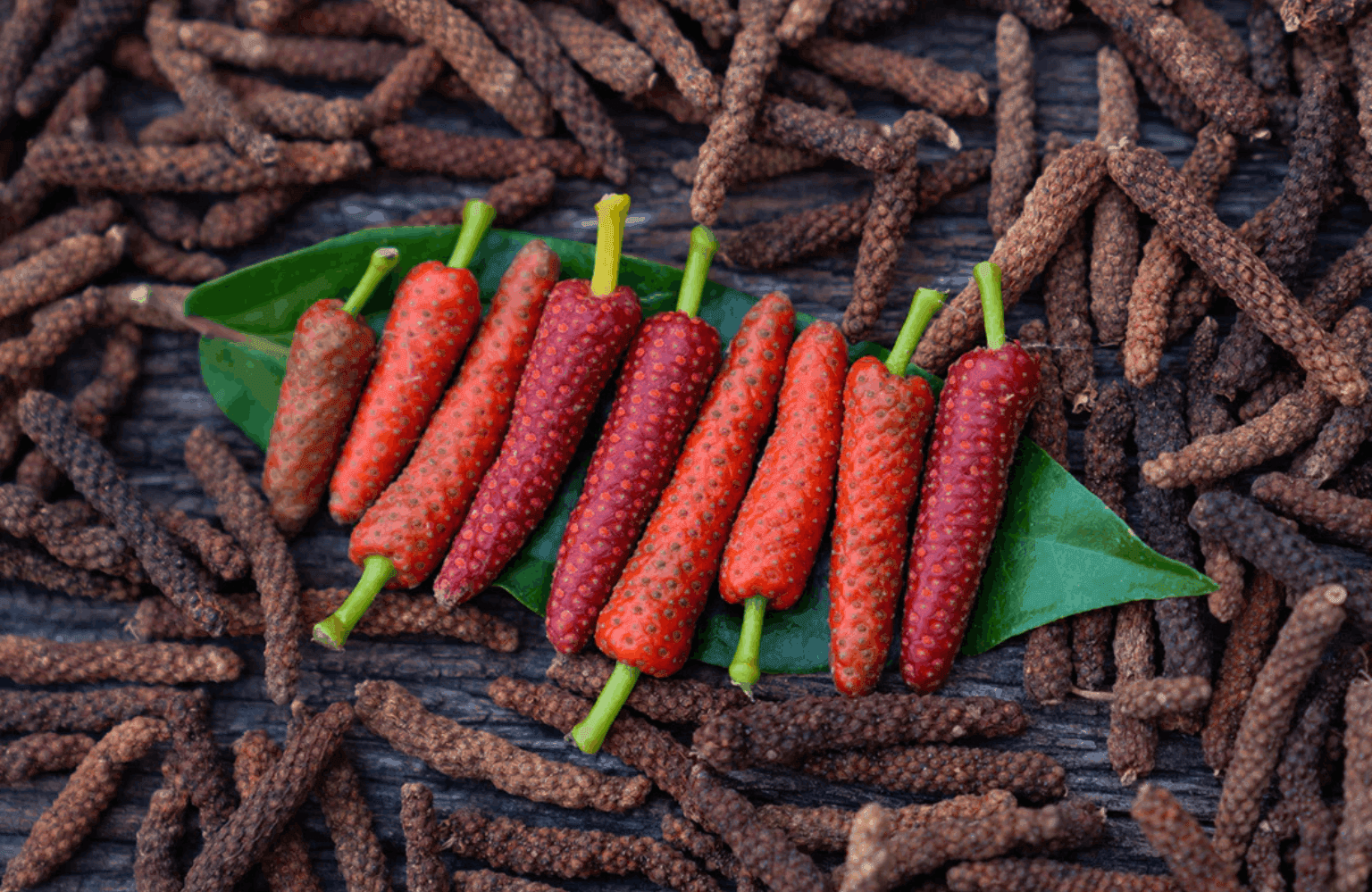
Pippali, scientifically known as Piper longum, is a unique and potent herb in Ayurveda. Unlike most spices that are merely digestive, Pippali is classified as a Rasayana (rejuvenator), meaning it promotes longevity and tissue nourishment. It is distinct because, although it tastes pungent like black pepper, it has a sweet post-digestive effect, allowing it to nourish the body while simultaneously clearing mucus and congestion. It is a key ingredient in famous formulations like Trikatu (Three Pungents) and Chyavanaprash.
1. Name of the Herb
- Common Name: Long Pepper.
- Scientific Name: Piper longum Linn.
- Sanskrit Names: Pippalī, Māgadhī, Kṛṣṇā, Kaṇā, Vaidehī, Upakulyā.
- Regional Names: Pipli (Hindi), Hippali (Kannada), Tippali (Tamil/Malayalam), Pimpli (Marathi).
2. Brief Description
Pippali is a slender, aromatic climber with perennial woody roots. The fruit (fruiting spike) is the primary part used; it is cylindrical, blackish-green when unripe and hard/black when dry, resembling a catkin. In Ayurveda, it is highly valued for its ability to treat respiratory and digestive disorders. Unlike ordinary peppers, it is considered "unctuous" (oily) and nourishing, making it an aphrodisiac and a tonic for the lungs and spleen.
3. Source / Part Used
- Plant Source: Herbal / Plant-based (Climber).
- Part Used:
- Fruit (Phala - specifically the dried fruiting spike).
- Root (Pippalīmūla).
4. Ayurvedic Properties
According to the Ayurvedic Pharmacopoeia of India and Charaka Samhita:
- Rasa (Taste): Kaṭu (Pungent).
- Guna (Qualities): Laghu (Light), Snigdha (Unctuous/Oily), and Tīkṣṇa (Sharp).
- Virya (Potency): Anuṣṇaśīta (Not very hot/Mildly heating). While generally considered heating, classical texts note it is "not excessively hot" compared to other pungent spices.
- Vipaka (Post-digestive effect): Madhura (Sweet). This is a unique property (Vichitra Pratyayarabdha) where a pungent herb becomes sweet after digestion, making it nourishing.
- Dosha Effect: Vāta-Kapha hara (Pacifies Vata and Kapha doshas). However, excessive use can aggravate all three doshas.
5. Key Benefits
- Respiratory Health: Excellent for removing cold, congestion, and difficulty in breathing (Kasahara/Svasahara).
- Rejuvenation: Acts as a Rasayana, specifically for the lungs and for vitality.
- Digestive Support: It rekindles the digestive fire (Agni) and helps digest toxins (Ama).
- Reproductive Health: Acts as Vrishya (Aphrodisiac) and improves sexual potency.
- Spleen Health: Specific remedy for Pliha Roga (Spleen enlargement/disorders).
6. Uses / Indications
Pippali is indicated in Ayurveda for the following conditions:
- Respiratory Disorders: Kāsa (Cough), Śvāsa (Asthma/Dyspnoea), and Hikkā (Hiccup).
- Digestive Disorders: Agnimāndya (Loss of appetite/Indigestion), Ajīrṇa (Indigestion), Udara Roga (Abdominal diseases), and Gulma (Abdominal tumors/lumps).
- Metabolic: Prameha (Diabetes/Urinary disorders) and Medoroga (Obesity).
- General: Jvara (Fever), Kushtha (Skin diseases), and Vātarakta (Gout).
- Pippali Vardhamana: A specific therapy where the dose of Pippali is increased and decreased daily to treat chronic diseases like piles and wasting.
7. How It Works
- Unique Metabolism: Although it tastes pungent (Katu), it transforms into a sweet (Madhura) post-digestive effect. This allows it to be an aphrodisiac and nourishing tonic, unlike Black Pepper which is drying.
- Bio-Enhancement: It acts as Yogavahi, meaning it carries the properties of other herbs to deep tissues. Piperine, its active alkaloid, is the world's first scientifically validated bioavailability enhancer.
- Clearing Channels: Its sharp (Tikshna) quality cuts through thick mucus (Kapha) and clears the channels (Srotas), while its unctuousness (Snigdha) prevents it from aggravating Vata.
8. Dosage
General dosage guidance according to Ayurvedic Pharmacopoeia of India:
- Powder (Churna): 1 to 3 grams.
- Vardhamana Pippali: A specific escalating dosage regimen (starting from 3, 5, or 10 fruits up to a higher number and reducing back down) is used under strict medical supervision for rejuvenation.
9. Safety Information
Pippali is safe when used in therapeutic doses for a limited duration. It is chemically potent and acts quickly.
10. Side Effects
- Accumulation of Doshas: Charaka Samhita strictly warns that Pippali should not be used excessively or for very long periods without breaks. Constant use can accumulate Kapha (due to heaviness/moisture) and Pitta (due to heat).
- Burning Sensation: Excess intake may cause burning in the stomach or throat in Pitta-dominant individuals.
11. Precautions
- Long-term Use: Unlike Ginger (Sunthi) or Garlic, Pippali is generally restricted from daily, habitual use as a spice because it can vitiate the Doshas if used constantly.
- Pitta Prakriti: Individuals with high body heat should use it cautiously or with cooling vehicles like milk or ghee.
- Pregnancy: Consult an Ayurvedic physician, as it is a strong herb. The WebMD resource notes there isn't enough reliable information about safety during pregnancy.
12. Storage Instructions
- Store in a cool, dry place.
- Keep in an air-tight container to protect from moisture and insect infestation.
13. References
-
Charaka Samhita – Sutra Sthana & Chikitsa Sthana (Pippali in Rasayana & Shwasa-Kasa Chikitsa)
https://www.wisdomlib.org/hinduism/book/charaka-samhita
-
Ayurvedic Pharmacopoeia of India (API) – Piper longum
https://pcimh.gov.in
-
WHO Monographs on Selected Medicinal Plants
https://apps.who.int/iris/handle/10665/42052
-
WHO Global Report on Traditional and Complementary Medicine
https://www.who.int/publications/i/item/9789241515436
-
FAO Ecocrop Database – Piper longum
https://ecocrop.fao.org
-
PubMed – Piper longum Research Articles
https://pubmed.ncbi.nlm.nih.gov/?term=Piper+longum
-
NCBI Taxonomy Database – Piper longum
https://www.ncbi.nlm.nih.gov
-
ScienceDirect – Pippali Phytochemistry & Pharmacology
https://www.sciencedirect.com/topics/pharmacology-toxicology-and-pharmaceutical-science/piper-longum
-
Wiley Online Library – Piper longum Research
https://onlinelibrary.wiley.com
-
Kew Science – Plants of the World Online (Piper longum)
https://powo.science.kew.org
-
World Flora Online – Piper longum
https://www.worldfloraonline.org
14. FAQs
Q. Can it be taken daily?
Ayurvedic texts advise against the daily, habitual use of Pippali for long periods (unlike common spices), as it can eventually aggravate the Doshas. It is best used as a medicine or Rasayana for a specific duration.
Q. When should it be taken?
It is often taken with honey or ghee to treat cough and respiratory issues, or with milk during rejuvenation therapy.
Q. Can it be taken with milk/water?
Yes. Milk is the preferred vehicle (Anupana) when Pippali is used as a Rasayana (tonic) to counteract its heat. For digestion, it may be taken with warm water or honey.
Consult a Doctor
- MS4.2Midun s kumar
Ayurveda4 yrs exp
- SP4.5Dr Sreelekha P Nair
Ayurveda6 yrs exp
- VR4.2Vaidya Rohit Kumar
Ayurveda3 yrs exp
- V4.1Vairamuthu
Ayurveda8 yrs exp
Buy Medicine
 Prescribed to you4.3₹12 cashback
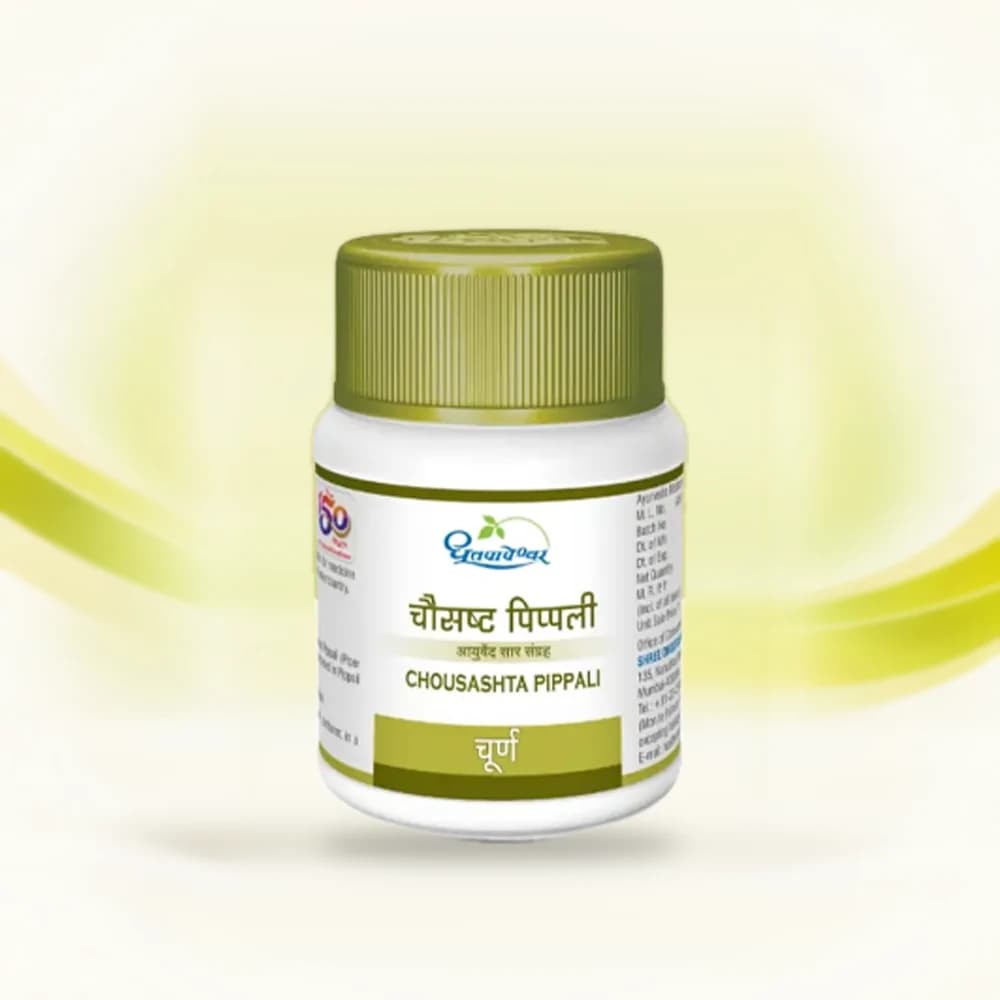
Chousashta Pippali (Dhootapapeshwar) SDL
SDLSupports respiratory strength
Container of 10 g
4.3
₹120Get ₹12 Cashback