Eucalyptus
Reviewed by medical experts · For informational purposes only
Introductory summary
Eucalyptus known as Tailaparna or Nilagiri in Ayurveda consists of the essential oil distilled from the fresh leaves of Eucalyptus globulus. Possessing Pungent Bitter and Astringent tastes with Hot potency and Light Unctuous qualities it effectively pacifies Vata and Kapha doshas. It acts as a powerful expectorant known as Kaphanihsaraka and pain reliever known as Vedanasthapaka making it highly effective for respiratory disorders like asthma cough chronic rhinitis and tuberculosis. It is also indicated for managing pain in headaches osteoarthritis and rheumatism. Additionally it functions as a digestive stimulant and is used to treat various fevers. The Ayurvedic Pharmacopoeia of India recommends a dosage of 1 to 5 drops of the oil,,.
Eucalyptus
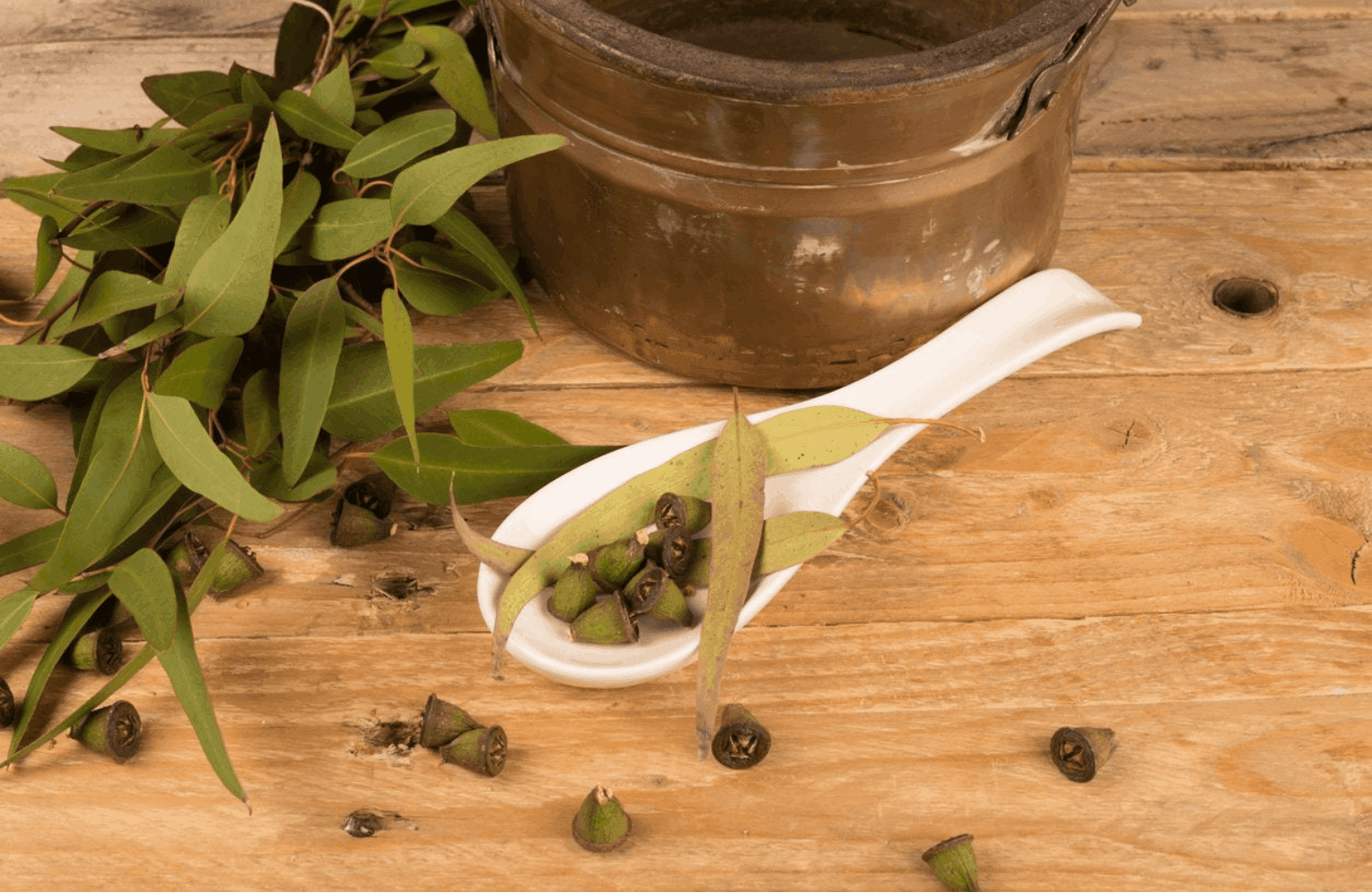
Eucalyptus, known in Ayurveda as Tailaparṇa or Nīlagiri, is a tall evergreen tree native to Australia but widely cultivated in India, particularly in the Nilgiri hills. The medicinal part primarily used is the essential oil obtained from its fresh leaves. It is highly valued in Ayurveda for its ability to clear respiratory congestion, relieve pain, and pacify Vata dosha. It is considered a strong Kaphanihsāraka (expectorant) and Vedanāsthāpaka (pain reliever).
1. Name of the Herb
- Common Name: Eucalyptus, Blue Gum.
- Scientific Name: Eucalyptus globulus Labill. (Note: Oil can also be derived from other species of Eucalyptus),.
- Sanskrit Names: Tailaparṇa, Sugandhapatra (Fragrant leaf), Ekalipta.
- Regional Names: Nīlagiri (Hindi/Kannada/Malayalam/Marathi), Yukeliptus (Hindi), Nīlagiri Tailam (Tamil).
2. Brief Description
Eucalyptus is a fast-growing tree with aromatic leaves. The medicinal product, Tailaparṇa Taila (Eucalyptus Oil), is a colourless or pale yellow liquid obtained by steam distillation of the fresh leaves. It has a characteristic strong, aromatic, and camphoraceous odour. In Ayurveda, it is categorized as a "Hot" potency drug used primarily to treat disorders arising from Cold (Kapha) and Wind (Vata) imbalances, such as asthma, headaches, and arthritis,.
3. Source / Part Used
- Plant Source: Herbal / Tree-based.
- Part Used: Leaf (specifically the Essential Oil distilled from fresh leaves).
4. Ayurvedic Properties
According to the Ayurvedic Pharmacopoeia of India, Eucalyptus Oil possesses the following qualities:
- Rasa (Taste): Kaṭu (Pungent), Tikta (Bitter), and Kaṣāya (Astringent).
- Guna (Qualities): Laghu (Light) and Snigdha (Unctuous/Oily).
- Virya (Potency): Uṣṇa (Hot).
- Vipaka (Post-digestive effect): Kaṭu (Pungent).
- Dosha Effect: Vātahara (Pacifies Vata) and Kaphanihsāraka (Expels Kapha).
5. Key Benefits
- Respiratory Relief: Acts as a powerful Kaphanihsāraka (expectorant), clearing mucus and congestion.
- Pain Management: Acts as Vedanāsthāpaka (pain stabilizer/reliever) and Śūlaghna (colic/pain killer).
- Digestive Support: Functions as Dīpana (appetizer) and Pācana (digestive).
- Antimicrobial: Possesses Pūtihara (anti-putrescent/deodorant) and Kṛmighna (anti-worm) properties.
- Stimulant: Acts as an Uttejaka (stimulant) for the body systems.
6. Uses / Indications
Eucalyptus Oil is indicated in Ayurveda for the following conditions:
- Respiratory Disorders: Kāsa (Cough), Śvāsa (Asthma/Dyspnoea), Pratiśyāya (Coryza/Cold), Pīnasa (Chronic Rhinitis/Sinusitis), and Yakṣmā (Tuberculosis).
- Pain & Joints: Śiraḥśūla (Headache), Sandhivāta (Osteoarthritis), Āmavāta (Rheumatism).
- Digestive Issues: Agnimāndya (Digestive impairment).
- Fever: Jvara (Fever) and Viṣamajvara (Intermittent fever).
- Skin & Wounds: Duṣṭa vraṇa (Non-healing ulcer), Tvakroga (Skin diseases), and Bastiśotha (Cystitis).
7. How It Works
- Expectorant: Its Uṣṇa (hot) potency and Kaṭu (pungent) nature help liquefy and expel solidified phlegm (Kapha) from the respiratory tract.
- Analgesic: As a Vātahara agent, it pacifies the Vata dosha, which is the primary cause of pain in conditions like headache and arthritis.
- Carminative: It acts through Anulomana (downward movement of Vata), helping to clear obstruction and gas.
8. Dosage
The recommended dosage for Eucalyptus Oil according to the Ayurvedic Pharmacopoeia of India is:
- Drops: 1 to 5 drops.
9. Safety Information
Eucalyptus oil is generally considered safe when used in the small, prescribed dosages (1-5 drops). It is often used externally or inhaled, but internal consumption should be strictly limited to the recommended dose due to its high potency.
10. Side Effects
- No specific side effects are explicitly listed in the provided Ayurvedic texts for the prescribed dosage. However, due to its Uṣṇa (Hot) and Tīkṣṇa (Sharp) nature, excessive use may cause heating sensation or irritation.
11. Precautions
- Dosage: Adhere strictly to the low dosage (1-5 drops) as it is a concentrated essential oil.
- Constitution: Individuals with high Pitta (heat) constitution should use it cautiously due to its hot potency.
12. Storage Instructions
- Store in a well-filled, well-closed container.
- Keep in a cool place.
- Protect from light to prevent degradation of the volatile oil.
13. References
- Biological, medicinal and toxicological significance of Eucalyptus leaf essential oil – A comprehensive review on the pharmacological activities of eucalyptus oil (antimicrobial, antioxidant, antiseptic, respiratory applications). J. Sci. Food Agric. (PubMed). (PubMed)
Dhakad AK et al. – Biological, medicinal and toxicological significance of Eucalyptus leaf essential oil: a review. (PubMed) - A Review on Eucalyptus Globulus – An Authentic Herb – Overview of phytochemicals and therapeutic activities including analgesic, anti-inflammatory, antimicrobial, and antioxidant properties. (J Pharm Res Int)
Sharma S, Sushma & Nishtha. J. Pharmaceutical Research International – A Review on Eucalyptus Globulus – An Authentic Herb. - Beneficial and Healthy Properties of Eucalyptus Plants: A Great Potential Use – Highlights 1,8-cineole and other bioactive compounds with antimicrobial and anti-inflammatory actions, plus traditional uses for respiratory health. (ScienceDirect)
ScienceDirect article – Beneficial and Healthy Properties of Eucalyptus Plants. - Eucalyptus Herbal Monograph – Botanical description, pharmacology, and traditional uses in respiratory conditions and as a stimulating expectorant. (Herb Finder)
Herbal Monograph – Eucalyptus (Himalaya Wellness). - Dhakad AK, Pandey VV, Beg S, Rawat JM, Singh A. Biological, medicinal and toxicological significance of Eucalyptus leaf essential oil: a review. J Sci Food Agric. 2018;98(3):833–848. (PubMed) (PubMed)
14. FAQs
** **Q. Can it be taken daily?
It is typically used for specific therapeutic conditions (like colds or fevers) rather than as a daily nutritional supplement.
Q. When should it be taken?
It is indicated when there are symptoms of congestion, pain, or Vata-Kapha imbalance.
Q. Can it be taken with milk/water?
While specific vehicles (Anupana) are not listed in the monograph for the oil alone, Ayurvedic oils are generally taken with warm water or milk to facilitate digestion and absorption. The oil is also frequently applied externally or inhaled.
Consult a Doctor
- AK4.8Dr. Amalnath K Viswanathan
Ayurveda4 yrs exp
- AI4.9Dr. Aayush Ishwar
Ayurveda2 yrs exp
- KJ4.6Dr Kruti Jaxesh Bhavsar
Ayurveda1 yrs exp
- MS4.2Midun s kumar
Ayurveda4 yrs exp