Acne
Reviewed by medical experts · For informational purposes only
Introductory summary
Acne known in Ayurveda as Yuvana Pidaka or Mukhadushika is a skin condition characterized by firm painful eruptions on the face resembling the thorns of the Shalmali tree. It is primarily caused by the vitiation of Kapha and Vata doshas combined with impure blood or Rakta. Kapha produces excessive oiliness and blockage in the pores while Vata and Rakta induce inflammation and pain. This condition is most prevalent in youth due to natural physiological changes. Management focuses on blood purification and balancing the doshas. Treatments include bio-cleansing therapies like Vamana or therapeutic emesis to expel toxins and topical applications of herbal pastes containing Lodhra Dhanyaka and Vacha to clear the skin and prevent scarring.
Acne
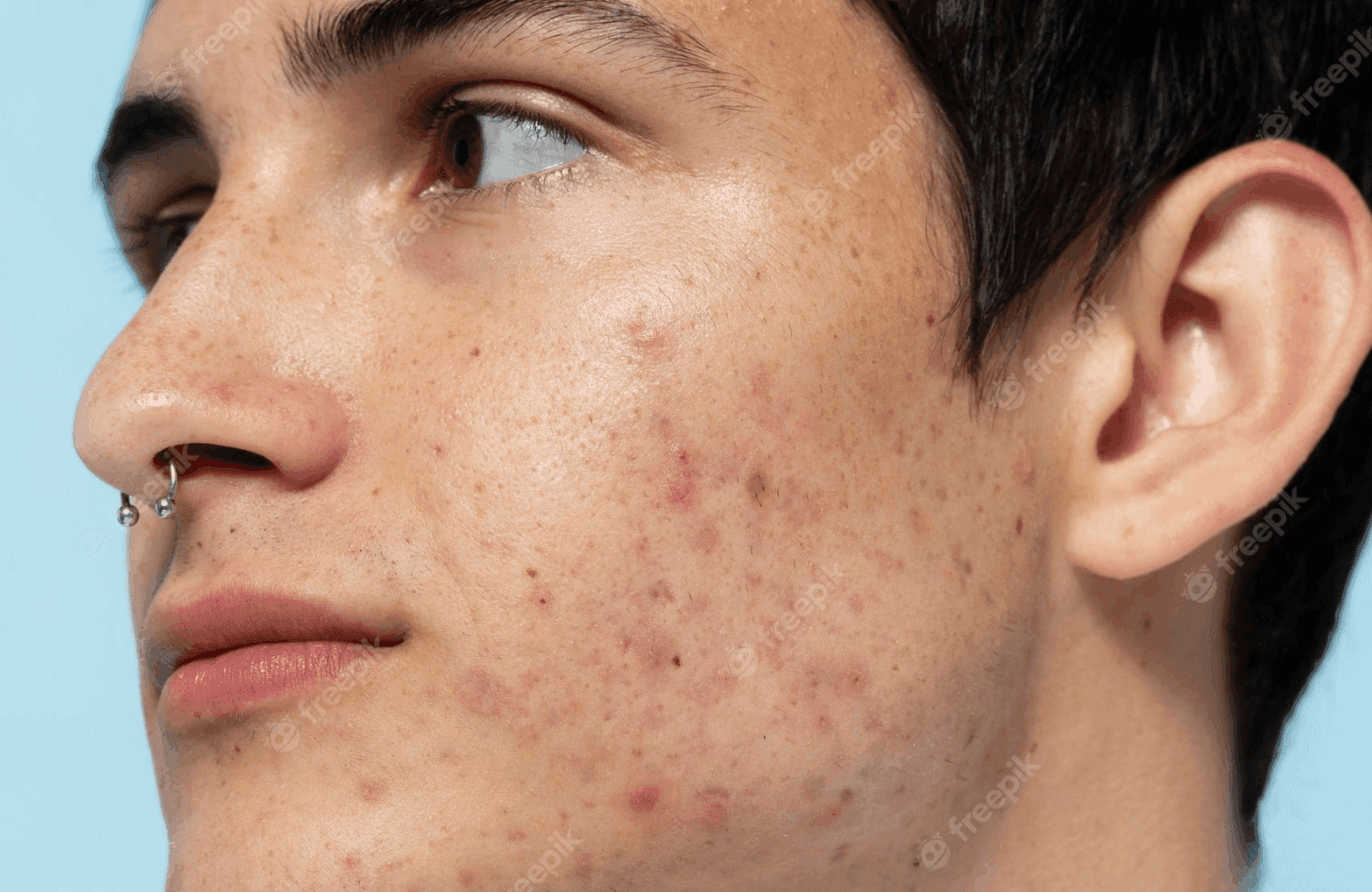
Acne, known in Ayurveda as Yuvana Pidaka (eruptions of youth) or Mukhadushika (defiler of the face), is a common skin condition characterized by the appearance of pimples or pustules on the face. It is classified under Kshudra Rogas (minor diseases) in classical texts like Madhava Nidana and Ashtanga Hridaya. While often considered a cosmetic issue, Ayurveda views it as a systemic imbalance involving the blood tissue (Rakta) and specific bio-energies (Doshas).
1. Definition
In modern terms, acne is a condition where the hair follicles become plugged with oil and dead skin cells. In Ayurveda, Yuvana Pidaka is defined as the manifestation of painful, firm eruptions on the face of youths (Yuvana) that resemble the thorns of the Shalmali tree (silk-cotton tree).
2. Etymology & Conceptual Meaning
-
Literal Meaning:
-
Yuvana: Means "youth" or "adolescent."
-
Pidaka: Means "eruption," "boil," or "pustule."
-
Mukhadushika: Derived from Mukha (face) and Dushika (that which corrupts or disfigures), referring to the disease's capacity to spoil the beauty of the face.
-
-
Conceptual Interpretation: Ayurveda considers this a disease primarily of the Kapha and Vata doshas and the blood (Rakta), manifesting specifically during the age of youth when natural hormonal and metabolic changes increase body heat and oiliness.
3. Causes (Nidana)
The causation of acne is multifactorial, involving biological age, dietary habits, and the vitiation of body tissues.
Dietary Causes
-
Pitta-Aggravating Foods: While specific lists for acne are broad, general skin diseases (Kustha) and blood impurities are caused by excessive intake of sour, salty, pungent (spicy), and oily foods.
-
Incompatible Foods: Consuming Viruddha Ahara (incompatible food combinations) like fish with milk is a known trigger for skin eruptions.
Lifestyle Causes
-
Age: The primary factor is youth (Yuvana), a time naturally associated with growth and hormonal changes.
-
Psychological Factors: Grief and anger are noted to vitiate the body's heat (Pitta) and blood, contributing to skin issues.
4. Journey of the Disease (Pathogenesis/Samprapti)
The formation of acne follows a specific pathological pathway involving the obstruction of facial channels.
-
Samprapti Ghataka (Components):
-
Process: The vitiated Vata and Kapha doshas interact with Rakta (blood). Kapha provides the oiliness and blockage, while Vata and Rakta contribute to the inflammation and pain. These swellings accumulate Medas (fat) inside, creating the characteristic pimple.
5. Symptoms (Lakshana)
Early Symptoms
-
Slight oiliness of the face.
-
Minor tenderness or redness.
Advanced Symptoms (Clinical Features)
-
Shalmali-kantaka-prakhya: Eruptions that look like the thorns of the Shalmali tree (conical shape).
-
Saruja: The eruptions are painful (Todavat - pricking pain) due to Vata involvement.
-
Ghana: The lesions are firm or thick.
-
Meda-garbha: They are filled with fatty matter (sebum/pus) inside.
6. Different Type or Classification (Bheda)
While Yuvana Pidaka is the specific term for acne vulgaris, Ayurveda describes related conditions under Kshudra Rogas:
-
Mukhadushika: Often used interchangeably with Yuvana Pidaka.
-
Padmini Kantaka: Papilloma of the skin appearing like thorns of a lotus.
-
Nilika/Vyanga: Hyper-pigmentation or blackish patches on the face, often a sequela of skin disorders.
7. Diagnosis
-
Ayurvedic Diagnosis: Diagnosis is primarily visual (Darshana). The physician observes the shape (thorn-like), consistency (firm/fat-filled), and location (face).
-
Differential Diagnosis: It is differentiated from Masurika (Chickenpox/Smallpox), which involves systemic fever and pustules all over the body, whereas Yuvana Pidaka is localized to the face and associated with youth.
8. Disease Management
The treatment involves Shodhana (purification) to remove toxins and Shamana (pacification) using external applications (Lepa).
Medicines (External Applications)
-
Vaca and Lodhra: A paste made of Vaca (Sweet flag), Lodhra, Saindhava (Rock salt), and Sarsapa (Mustard seeds) is prescribed to destroy acne.
-
Dhanyaka and Vaca: A paste of Dhanyaka (Coriander) and Vaca is effective for removing pimples.
-
Lodhra and Kustha: A paste made of Lodhra, Dhanyaka, and Kustha is recommended for facial eruptions.
-
Kumkumadi Oil: Often used for improving complexion and treating facial spots (Vyanga and Nilika).
Panchakarma (Bio-Purification)
-
Vamana (Emesis): Since Kapha is a causative factor, therapeutic vomiting is indicated to remove the root cause.
-
Nasya (Nasal Administration): Administering medicated oils through the nose is beneficial for diseases of the head and face (Urdhvajatrugata Roga).
-
Raktamokshana (Bloodletting): For severe cases involving Rakta (blood) vitiation, bloodletting via leeches or venesection is indicated to reduce inflammation.
Diet (Ahara) and Lifestyle
-
Avoid: Oily, spicy, and sour foods that aggravate Pitta and Rakta.
-
Face Care: Regular washing to remove oiliness.
9. Prognosis
-
Expected Course: It is generally a curable condition (Sadhya).
-
Complications: If untreated or if the eruptions are picked/squeezed, it can lead to Vyanga (discoloration/pigmentation) or Nilika (bluish-black marks) on the face.
-
Factors: Prognosis is good if the patient maintains a healthy diet and avoids digestive irritants.
10. Modern Correlations
-
Similarities:
-
The Ayurvedic description of "filled with fat" (Meda-garbha) correlates directly with the sebum retention in Acne Vulgaris.
-
The age of onset ("Youth") matches the hormonal onset of acne.
-
The description of "Shalmali thorns" describes papular acne.
-
-
Differences: Modern medicine emphasizes bacteria (P. acnes) and genetics. Ayurveda emphasizes the imbalance of Doshas (Vata/Kapha) and blood purity (Rakta Dushti).
11. References
1) Global Burden of Acne Vulgaris (Trend Analysis 1990–2021)
This recent analysis uses data from The Global Burden of Disease Study to show increasing prevalence and impact of acne among adolescents and young adults worldwide. It provides epidemiologic data that acne continues to be a major public health issue, affecting millions globally. (PubMed)
2) Acne Pathogenesis (Role of Microbiome and Factors)
Review articles summarize how acne develops involving sebum production, follicular hyperkeratinization, bacterial colonization (Cutibacterium acnes), and inflammation — factors central to understanding acne at a biological level. (Directory of Open Access Journals)
3) Cutibacterium acnes Research
A detailed article focusing on C. acnes, its role in acne formation, antimicrobial resistance issues, and therapeutic strategies. (direct.ewa.pub)
4) Pathophysiology of Acne Vulgaris (Clinical Study)
Research article documenting key pathogenic factors such as sebum production, bacterial colonization, inflammation, and follicular hyperkeratinization. (bjas.journals.ekb.eg)
5) Acne Management Guidelines (Global Clinical Evidence)
Guidelines from the Journal of the American Academy of Dermatology provide evidence‑based recommendations for acne management, including topical and systemic therapies. (jaad.org)
6) NICE Acne Management Overview
Clinical practice guideline by NICE (UK) covering general management strategies, treatments, and patient support in acne care. (NCBI)
12. FAQ Section
Q: Is acne only for teenagers according to Ayurveda?
A: Ayurveda specifically calls this disease Yuvana Pidaka, meaning "eruptions of youth," indicating it is most prevalent during that age stage. However, related conditions like Mukhadushika can affect the face at other times due to Dosha imbalance.
Q: Does Ayurveda recommend popping pimples?
A: No. Ayurvedic texts describe acne as being painful and deep-seated. Picking at them can lead to Vyanga (dark spots) or Nilika (discoloration), which are treated as separate complications.
Q: What is a simple home remedy mentioned in the texts?
A: Chakradatta recommends a paste made of Coriander (Dhanyaka) and Sweet Flag (Vaca) applied to the face to reduce pimples.
Q: Why does Ayurveda mention vomiting (Vamana) for acne?
A: Acne involves the Kapha dosha (which causes oiliness and blockage). Vamana is the specific bio-cleansing therapy to expel excess Kapha from the body, thereby treating the root cause of the skin obstruction.
Consult a Doctor
- MS4.2Midun s kumar
Ayurveda4 yrs exp
- SP4.5Dr Sreelekha P Nair
Ayurveda6 yrs exp
- VR4.2Vaidya Rohit Kumar
Ayurveda3 yrs exp
- V4.1Vairamuthu
Ayurveda8 yrs exp