piles
Reviewed by medical experts · For informational purposes only
Introductory summary
Piles known as Arsha in Ayurveda is a condition characterized by fleshy growths in the anal region caused by the vitiation of Doshas and Mandagni or weak digestive fire. It originates from constipation suppression of natural urges and sedentary habits leading to obstruction in the anal passage. Treatment focuses on improving digestion and regulating bowel movements. The Ayurvedic Formulary of India lists effective formulations like Arshoghna Vati and Takrarishta while Chakradatta emphasizes Takra or buttermilk as the supreme remedy. Therapies include Avagaha Sweda or sitz baths and Kshara Sutra application for removing the mass. Management requires consuming light foods like Surana and avoiding constipation inducing factors to alleviate pain and bleeding associated with this condition.
Piles
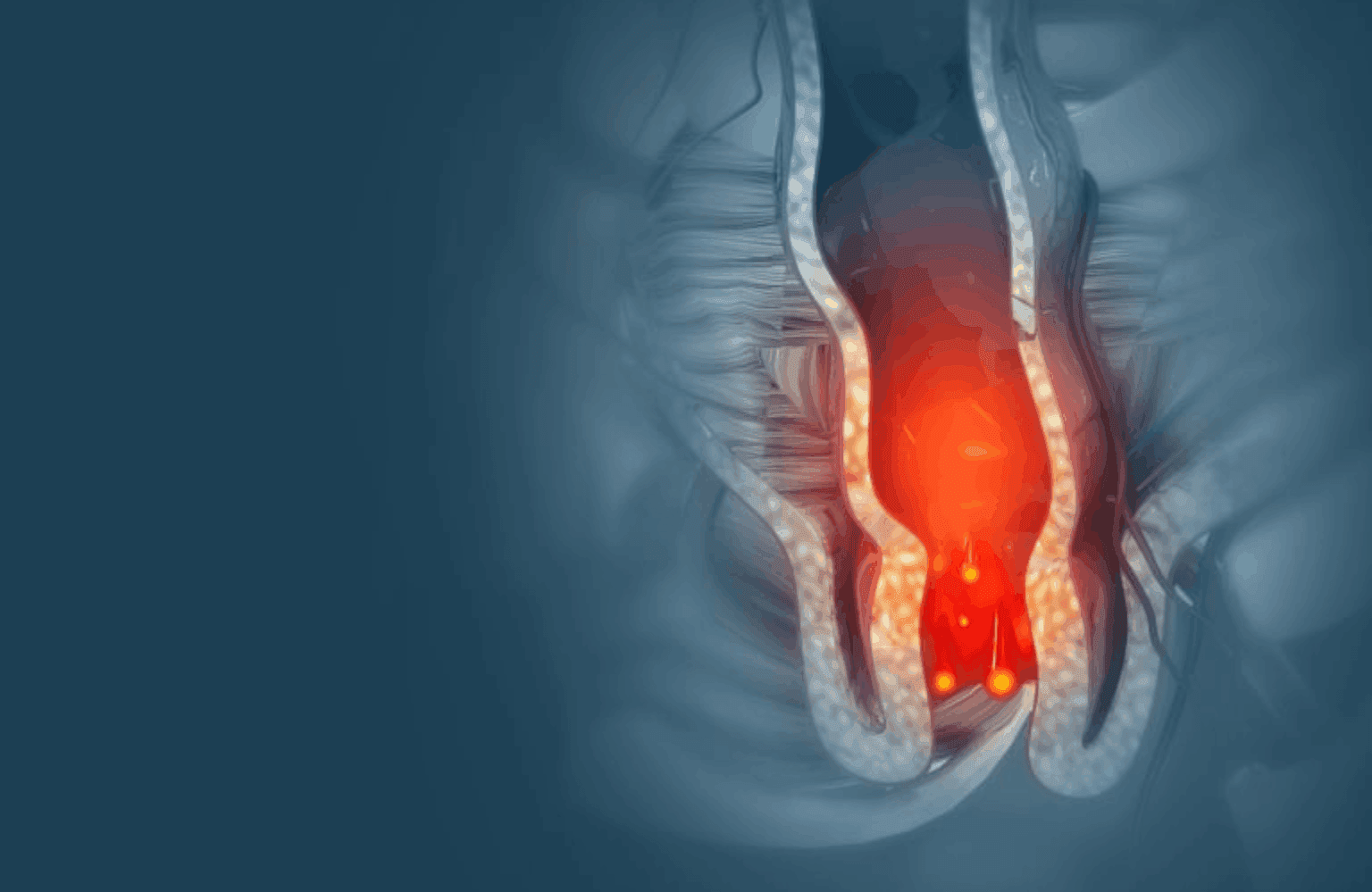
Piles, known as Hemorrhoids in modern medicine, is a condition characterized by swollen and inflamed veins in the rectum and anus that cause discomfort and bleeding. In Ayurveda, this condition is known as Arsha. It is described as a fleshy growth (Mamsa-ankura) that obstructs the anal passage and torments the patient like an enemy (Ari). It is considered one of the eight major difficult-to-cure diseases (Mahagada) in Ayurveda, often arising from severe digestive impairment.
1. Definition
- Modern Definition: Swollen veins in the lower part of the anus and rectum, similar to varicose veins, which can develop inside the rectum (internal hemorrhoids) or under the skin around the anus (external hemorrhoids).
- Ayurvedic Definition: Arsha refers to a condition where fleshy sprouts or growths (Mamsa-ankura) appear in the anal region (Guda) due to the vitiation of the skin (Twak), muscle (Mamsa), and fat (Medas), obstructing the passage of feces.
2. Etymology & Conceptual Meaning
- Literal Meaning: The word Arsha is derived from the root word Ari, which means "enemy."
- Conceptual Interpretation: Just as an enemy causes pain and harm, this disease causes intense pain and trouble to the human body, hence it is called Arsha. It is primarily a disorder of the Gudavali (the three folds or sphincters of the anal canal) caused by chronic issues with digestion (Agni).
3. Causes (Nidana)
The root cause of Piles in Ayurveda is Mandagni (weak digestive fire), which leads to constipation and the accumulation of waste.
- Dietary Causes:
- Excessive intake of heavy (Guru), sweet (Madhura), cold (Sheetala), or incompatible foods (Viruddha Ahara).
- Eating before the previous meal is digested (Adhyashana).
- Excessive consumption of alcohol, liquid diets, or Pramita (too little) food.
- Lifestyle Causes:
- Vegadharana: Suppressing natural urges, especially the urge to defecate or urinate.
- Sitting for long periods on uneven or hard seats (Utkatasana).
- Excessive riding on animals or vehicles.
- Straining during defecation.
- Sexual excess.
4. Journey of the Disease (Pathogenesis/Samprapti)
- Samprapti Ghataka (Components):
- Dosha: Tridosha (Vata, Pitta, Kapha) – specifically Apana Vayu (downward moving wind).
- Dushya (Tissues): Twak (Skin), Mamsa (Muscle), Meda (Fat), and Rakta (Blood).
- Adhisthana (Site): Guda (Anus) and the three Gudavali (anal sphincters).
- Agni: Jatharagni Mandya (Weak digestive fire).
- Pathogenesis:
- Due to the etiological factors (diet/lifestyle), the digestive fire is weakened (Mandagni).
- Food is not digested properly, leading to the accumulation of stool (Mala) and toxins.
- The Apana Vayu becomes vitiated and moves downward.
- It carries the vitiated Pitta and Kapha to the anal region.
- These Doshas contaminate the muscle and fat tissues of the anal folds (Gudavali).
- This results in the formation of fleshy growths (Mamsa-ankura) known as Arsha.
5. Symptoms (Lakshana)
- General Symptoms: Obstruction of gas and stool, pain, emaciation, and pale complexion.
- Vataja Arsha (Dry Piles): The pile masses are dry, hard, rough, and blackish or reddish. They resemble kadamba flowers or dates. Symptoms include intense pain, constipation, and dizziness.
- Pittaja Arsha (Inflamed/Bleeding Piles): The masses are blue, red, or yellow, soft to the touch, and resemble a parrot's beak or liver. Symptoms include burning sensation (Daha), fever, excessive thirst, and discharge of foul-smelling blood.
- Kaphaja Arsha: The masses are white, large, heavy, smooth, fixed, and resemble the udders of a cow or jackfruit seeds. Symptoms include severe itching (Kandu), slimy mucous discharge, and heaviness.
- Raktaja Arsha (Bleeding Piles): Similar to Pittaja but characterized by the sudden and profuse discharge of blood, leading to complications like anemia (Pandu) and frog-green complexion.
6. Different Types or Classification (Bheda)
Ayurveda classifies Arsha into six types based on the Doshas:
- Vataja
- Pittaja
- Kaphaja
- Sannipataja (Mixed/All three Doshas)
- Raktaja (Blood-predominant)
- Sahaja (Congenital/Hereditary) – present from birth due to defects in the seed (sperm/ovum) of the parents.
Functionally, they are also classified as:
- Shushka Arsha (Dry Piles): Caused by Vata and Kapha, non-bleeding.
- Ardra/Sravi Arsha (Wet/Bleeding Piles): Caused by Pitta and Rakta, bleeding.
7. Diagnosis
- Ayurvedic Diagnosis (Roga Pariksha):
- Darshana (Visual Exam): Inspecting the anal region to identify the shape and color of the pile mass (e.g., resembling a cow's udder indicates Kapha).
- Prashna (Questioning): Asking about bleeding, constipation, and family history (to rule out Sahaja).
- Differential Diagnosis:
- Must be distinguished from Gudabhramsha (Rectal Prolapse) where the bowel comes out but has no distinct "sprouts."
- Distinguished from Bhagandara (Fistula-in-ano), which involves a tract/opening rather than a mass.
8. Disease Management
The management of Arsha involves four approaches: Bheshaja (Medicine), Kshara (Alkaline application), Agni (Cauterization), and Shastra (Surgery).
Diet (Ahara)
- Takra (Buttermilk): Considered the supreme nectar for Piles. It kindles digestion (Deepana) and is light (Laghu). It should be taken daily, potentially mixed with Chitrak root powder.
- Surana (Elephant Foot Yam): Highly recommended as a specific vegetable for piles.
- Avoid: Heavy foods, suppressing urges, and constipation-inducing items.
Medicines
- Arshoghna Vati: A specific tablet mentioned in the Ayurvedic Formulary of India for destroying piles.
- Kankayan Gutika: Indicated for non-bleeding piles (Shushka Arsha) to improve digestion and reduce the mass.
- Takrarishta: A fermented preparation of buttermilk used to treat piles and anal fistula.
- Abhayarishta: A fermented tonic containing Haritaki (Chebulic myrobalan), excellent for constipation and piles.
- Bhallataka (Semecarpus anacardium): A potent herb used in formulations like Bhallataka Rasayana or Guda Bhallataka for severe piles (requires medical supervision).
- Chitrakadi Ghrita: Medicated ghee used to improve digestion in piles patients.
Panchakarma
- Avagaha Sweda (Sitz Bath): Sitting in a tub of warm water or herbal decoction to relieve pain and relax the sphincters.
- Basti (Enema): specifically Piccha Basti is used in bleeding piles to stop hemorrhage. However, strong purgation is generally contraindicated in bleeding piles.
- Kshara Sutra: A medicated thread used to ligate the pile mass, causing it to wither and fall off. This is a para-surgical procedure mentioned in Chakradatta.
9. Prognosis
- Sadhya (Curable): Piles located in the outer fold of the anus, occurring recently, and caused by a single Dosha are curable.
- Yapya (Manageable): Piles caused by two Doshas or located in the middle fold are manageable but may persist.
- Asadhya (Incurable/Difficult): Sahaja (congenital) piles, Sannipataja (caused by all three Doshas), and those associated with complications like swelling of hands/feet (Shopha), severe pain in the heart or sides, and rectal prolapse are considered incurable or very difficult to treat.
10. Modern Correlations
- Hemorrhoids: Correlates with Arsha.
- Anal Polyp: Correlates with Mamsa-ankura.
- Sentinel Pile/Skin Tag: Correlates with Vataja Arsha (dry, hard growth).
- Bleeding Hemorrhoids: Correlates with Raktarsha or Pittaja Arsha.
11. References
-
Mayo Clinic – Hemorrhoids (Piles): Symptoms & Causes
https://www.mayoclinic.org/diseases-conditions/hemorrhoids/symptoms-causes/syc-20360268
-
Mayo Clinic – Diagnosis & Treatment
https://www.mayoclinic.org/diseases-conditions/hemorrhoids/diagnosis-treatment/drc-20360275
-
Cleveland Clinic – Hemorrhoids
https://my.clevelandclinic.org/health/diseases/15141-hemorrhoids
-
MedlinePlus – Hemorrhoids
https://medlineplus.gov/hemorrhoids.html
-
Johns Hopkins Medicine – Hemorrhoids
https://www.hopkinsmedicine.org/health/conditions-and-diseases/hemorrhoids
-
National Institute of Diabetes and Digestive and Kidney Diseases (NIDDK)
https://www.niddk.nih.gov/health-information/digestive-diseases/hemorrhoids
-
Diseases of the Colon & Rectum (ASCRS Journal)
https://journals.lww.com/dcrjournal
-
Colorectal Disease Journal
https://onlinelibrary.wiley.com/journal/14631318
12. FAQ Section
Q: Is buttermilk good for piles?
A: Yes. According to Chakradatta, buttermilk (Takra) is considered the best remedy for piles. It improves digestion, is light to digest, and does not aggravate the Doshas when prepared correctly. It acts as "nectar" for patients with piles.
Q: Can congenital piles (from birth) be cured?
A: Ayurvedic texts like Madhava Nidana classify Sahaja Arsha (congenital piles) as Asadhya, meaning they are generally considered incurable or very difficult to treat, often requiring lifelong management rather than a complete cure.
Q: What herbs are best for bleeding piles?
A: Herbs like Kutaja (Holarrhena antidysenterica), Nagakesara, and Dura (Dub grass) are excellent for stopping bleeding. Applications of pastes made from these cooling herbs are recommended in Chakradatta for Raktarsha.
Q: Is surgery the only option for piles?
A: No. Ayurveda suggests four levels of treatment: Medicine (Bheshaja) for mild cases, Alkali (Kshara) and Fire Cautery (Agni) for moderate cases, and Surgery (Shastra) only for severe cases. Many cases can be managed with diet and medicine.
Consult a Doctor
- DS4.2Deeksha sharma
Ayurveda4 yrs exp
- MS4.2Midun s kumar
Ayurveda4 yrs exp
- DR4.3Dr.Prajwal Raj Biradar
Ayurveda1 yrs exp
- BY4.3Bapodara yash kanabhai
Ayurveda3 yrs exp
Buy Medicine
 Prescribed to you4.4₹20 cashback
Arsha Hita (Dhootapapeshwar) SDL
SDLPhysician-guided Ayurvedic care
Strip of 60 Tablets
4.4
₹207Get ₹20 Cashback
 Prescribed to you4.3₹4 cashback
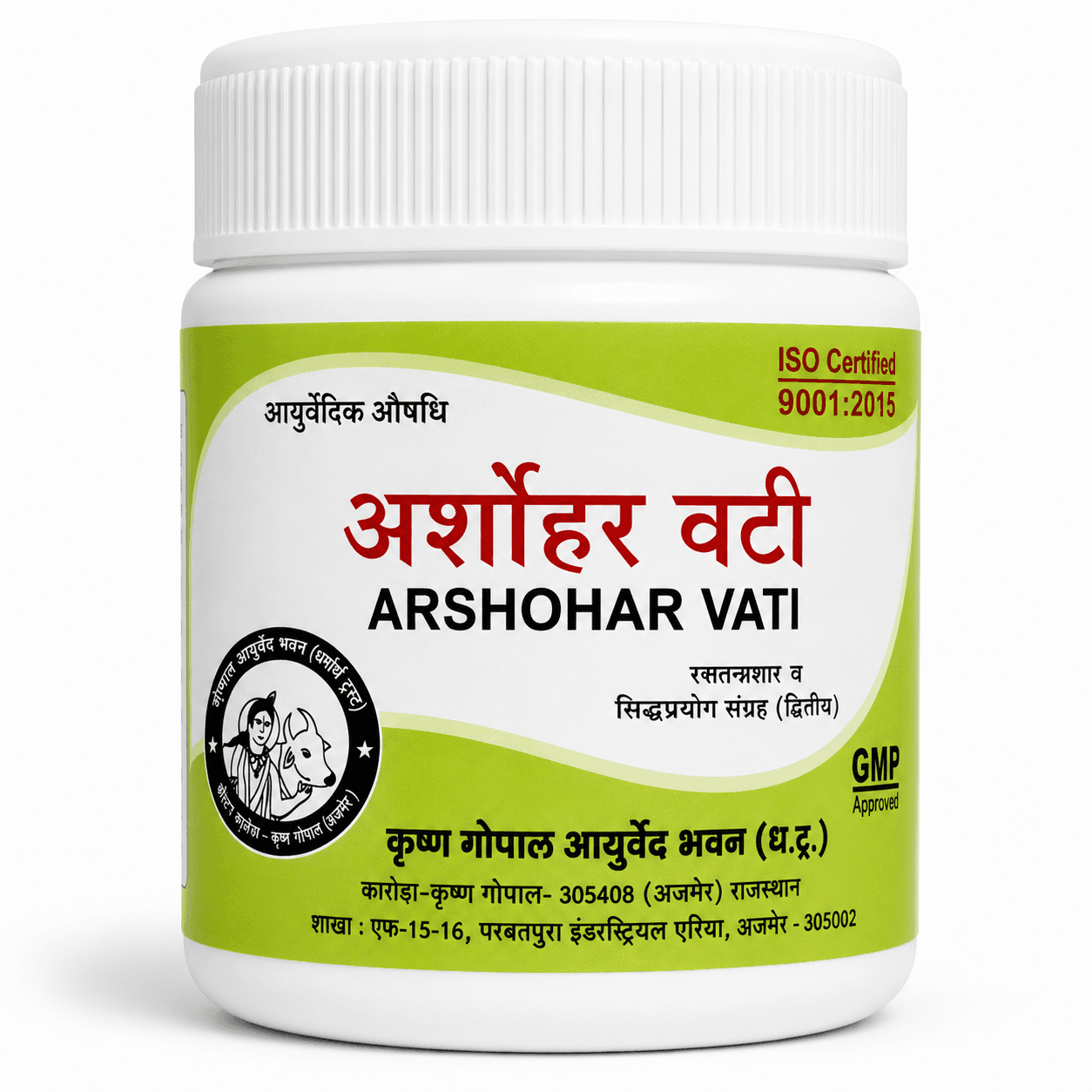
Arshohar Vati (Pra.Vi.) (Kalera) Kalera
Piles treatment, bleeding control
Strip of 30 Tablets
4.3
₹45Get ₹4 Cashback