Psychosis
Reviewed by medical experts · For informational purposes only
Introductory summary
Psychosis correlates with the Ayurvedic condition Unmada defined as the perversion of the mind intellect and memory. It arises when vitiated Doshas aggravated by incompatible diet and intense emotions like grief or fear move upward to afflict the heart and obstruct mental channels. This blockage clouds consciousness leading to delusions incoherent speech and erratic behavior. Ayurveda classifies Unmada into five types based on the dominant Dosha and external factors. Management focuses on clearing these blockages through Panchakarma therapies like Basti and Nasya alongside internal medication using potent formulations like Kalyanaka Ghrita and Old Ghee to stabilize the mind and restore cognitive function.
Psychosis
Psychosis is a condition that affects the way the brain processes information, causing a disconnection from reality. In Ayurveda, this severe mental disturbance is known as Unmada. It is classified as a disorder of the mind (Manas) where the intellect (Buddhi) and memory (Smriti) are perverted, leading to erratic behavior and a loss of social conduct.
1. Definition
Modern Definition: Psychosis is a symptom of mental illnesses (like schizophrenia) characterized by a loss of contact with reality, often involving hallucinations or delusions.
Ayurvedic Definition: Unmada is defined as the confusion or perversion (Vibhrama) of the Mind (Manas), Intellect (Buddhi), Consciousness (Sanjna), Memory (Smriti), Desire (Bhakti), Conduct (Shila), and Behavior (Chesta). It represents a state where the person loses control over their mental faculties and acts inappropriately.
2. Etymology & Conceptual Meaning
- Literal Meaning: The word Unmada is derived from "Mad," meaning intoxication or exhilaration, combined with the prefix "Ud," meaning upward or excessive. It implies a state of high mental agitation or "intoxication" caused by the Doshas moving upwards.
- Conceptual Interpretation: Ayurveda views the heart (Hridaya) as the seat of consciousness and the mind. In Unmada, the vitiated Doshas travel from their seats, enter the heart, and obstruct the Manovaha Srotas (channels of the mind), leading to a clouded intellect and loss of reality.
3. Causes (Nidana)
The causes are a mix of biological, dietary, and psychological factors that vitiate the Doshas and the mind.
- Dietary Causes:
- Consumption of Viruddha Ahara (incompatible foods) and food that is unclean, contaminated, or improperly prepared.
- Excessive intake of alcohol (Madya), which has qualities similar to poison and agitates the mind.
- Lifestyle Causes:
- Disrespecting gods, teachers, or elders (Devaguru-dwijanam pragharshanam).
- Improper bodily activities or acting against the code of noble conduct.
- Psychological Factors:
- Experiencing sudden or excessive fear (Bhaya) or joy (Harsha).
- Deep grief or mental shock (Manobhighata).
4. Journey of the Disease (Pathogenesis/Samprapti)
- Samprapti Ghataka (Components):
- Dosha: Vata, Pitta, and Kapha (physical) along with Rajas and Tamas (mental Doshas).
- Dushya (Tissues): Manas (Mind) and Sanjna (Consciousness).
- Adhisthana (Site): Hridaya (Heart) and Manovaha Srotas (Mental channels).
- Pathogenesis:
- Due to the consumption of unwholesome food and psychological stress, the somatic Doshas (Vata, etc.) get aggravated.
- These Doshas, accompanied by the mental Doshas (Rajas and Tamas), move upwards.
- They enter the Hridaya (the seat of the mind/intellect) and obstruct the Manovaha Srotas (channels carrying mental impulses).
- This obstruction clouds the intellect (Buddhi), causing the person to forget true knowledge and social norms, resulting in Unmada.
5. Symptoms (Lakshana)
- General Symptoms:
- Dhivibhrama: Confusion of the intellect.
- Satvapiplava: Unsteadiness or fickleness of the mind.
- Paryakula Drishti: Agitated or rolling eyes.
- Abaddhavak: Incoherent or irrelevant speech.
- Hridaya Sunya: A sensation of emptiness in the heart/mind.
- Prodromal Symptoms (Early Warning Signs):
- Ringing in the ears (Karnasvana).
- Frequent breathing issues (Uchhvasa).
- Dreaming of being intoxicated, seeing moving objects, or eating filth.
6. Different Types or Classification (Bheda)
Ayurveda classifies Unmada into five main types based on the Dosha involved:
- Vataja: Characterized by inappropriate laughing, dancing, singing, weeping, emaciation, and reddish eyes. The patient may wander aimlessly.
- Pittaja: Characterized by anger, threatening people, tearing off clothes, running away, burning sensation, and yellow eyes.
- Kaphaja: Characterized by lethargy, silence, staying in one place, lack of appetite, excessive sleep, and vomiting.
- Sannipataja: A severe combination of all three Doshas, often considered difficult to cure.
- Agantuja (Exogenous): Caused by external factors like shock, grief, or "possession" (interpreted as sudden severe psychiatric breaks not strictly caused by diet).
7. Diagnosis
- Ayurvedic Diagnosis:
- Darshana (Observation): Assessing the patient's behavior (laughing, crying, silence) and physical signs (eye color, emaciation).
- Prashna (Questioning): Checking for memory loss (Smriti bhramsha) and orientation.
- Differential Diagnosis:
- Distinguishing from Apasmara (Epilepsy): While both involve the mind, Apasmara is characterized by fainting, foaming at the mouth, and falling, whereas Unmada is primarily a behavioral and intellectual disturbance without necessarily losing consciousness.
8. Disease Management
Treatment involves Yuktivyapashraya (Rational medicine) and Daivavyapashraya (Spiritual/Psychological therapy).
Panchakarma (Bio-Purification)
- Snehana (Oleation): Internal consumption of medicated ghee is the first line of treatment.
- Virechana (Purgation): Recommended for Pittaja Unmada to remove excess heat and bile.
- Vamana (Emesis): Used for Kaphaja Unmada to clear heavy toxins.
- Basti (Enema): Crucial for Vataja Unmada to stabilize the nervous system.
- Nasya (Nasal Administration): Administering strong herbal drops (like mustard oil or herbal juices) to "wake up" the mind and clear the head channels.
- Shirodhara/Shirovasti: Pouring medicated oils on the head is effective for calming the mind and treating psychological disorders.
Medicines (Medhya Rasayanas)
- Kalyanaka Ghrita: A famous medicated ghee formulation specifically indicated for Unmada, epilepsy, and memory loss. It balances the Tridoshas and improves mental faculty.
- Mahapaishachika Ghrita: Improves intellect and memory and is used to treat mental disorders.
- Lashunadi Ghrita: Garlic-processed ghee used for mental disorders involving Vata.
- Siddharthaka Agada: A formulation used for bathing, snuffing, and anointing to clear mental cloudiness.
Diet (Ahara)
- Purana Ghrita: Old Ghee (stored for over 10 years) is considered a specific remedy for neurological and psychological disorders.
- Avoidance of alcohol, spicy foods, and irregular eating habits.
9. Prognosis
- Sadhya (Curable): If the disease is of recent onset, the patient has good physical strength, and the cause is a single Dosha.
- Asadhya (Incurable): Sannipataja Unmada (involving all three Doshas) is difficult to treat. Signs like constant wakefulness (insomnia), dilated eyes, and complete loss of physical strength indicate a poor prognosis.
10. Modern Correlations
- Schizophrenia: Vataja and Kaphaja Unmada share features with schizophrenia (hallucinations, withdrawal). Modern Ayurvedic clinical guidelines explicitly list Unmanda as a correlate for Schizophrenia.
- Bipolar Disorder: The manic phase correlates with Pittaja Unmada (anger, excessive energy), while the depressive phase correlates with Kaphaja Unmada (silence, lethargy).
- Anxiety/Stress: Treated under the umbrella of Manasa Roga using therapies like Shirodhara.
11. References
-
World Health Organization (WHO)
Psychosis and severe mental disorders – overview and care
https://www.who.int/news-room/fact-sheets/detail/mental-disorders
-
National Institute of Mental Health (NIMH – NIH)
Psychosis: symptoms, causes, and treatment
https://www.nimh.nih.gov/health/topics/psychosis
-
Centers for Disease Control and Prevention (CDC)
Mental health conditions including psychotic disorders
https://www.cdc.gov/mentalhealth/index.htm
-
Mayo Clinic
Psychosis: signs, causes, diagnosis, and management
https://www.mayoclinic.org/diseases-conditions/psychosis/symptoms-causes/syc-20354431
-
MedlinePlus (U.S. National Library of Medicine)
Evidence-based information on psychosis
https://medlineplus.gov/psychoticdisorders.html
-
Unmada (Ayurvedic correlation of Psychosis)
https://www.ncbi.nlm.nih.gov/pmc/articles/PMC5452224/
12. FAQ Section
Q: Can Ayurveda treat schizophrenia?
A: Ayurveda manages conditions like schizophrenia under the diagnosis of Unmada. Treatment involves clearing the mental channels through Panchakarma (detoxification) and stabilizing the mind with medicated ghees like Kalyanaka Ghrita.
Q: Why is Ghee (Ghrita) used for mental illness?
A: Ghee is the best substance for balancing Pitta and Vata, the two main Doshas involved in mental agitation. It crosses the blood-brain barrier and nourishes the brain tissues (Majja Dhatu). "Old Ghee" (Purana Ghrita) is specifically praised for treating insanity and epilepsy.
Q: What is the role of diet in mental health according to Ayurveda?
A: Ayurveda believes Viruddha Ahara (incompatible food) and unclean food directly affect the mind (Manas). A pure, Sattvic diet is essential for mental clarity, while Tamasic (dull) and Rajasic (agitating) foods should be avoided.
Q: Is Shirodhara effective for psychosis?
A: Shirodhara (pouring oil on the forehead) is highly recommended for anxiety, neurosis, and psychological disorders. It calms the Vata dosha in the head and induces a state of tranquility.
Consult a Doctor
- DS4.2Deeksha sharma
Ayurveda4 yrs exp
- MS4.2Midun s kumar
Ayurveda4 yrs exp
- DR4.3Dr.Prajwal Raj Biradar
Ayurveda1 yrs exp
- BY4.3Bapodara yash kanabhai
Ayurveda3 yrs exp
Buy Medicine
 Prescribed to you4.3₹22 cashback
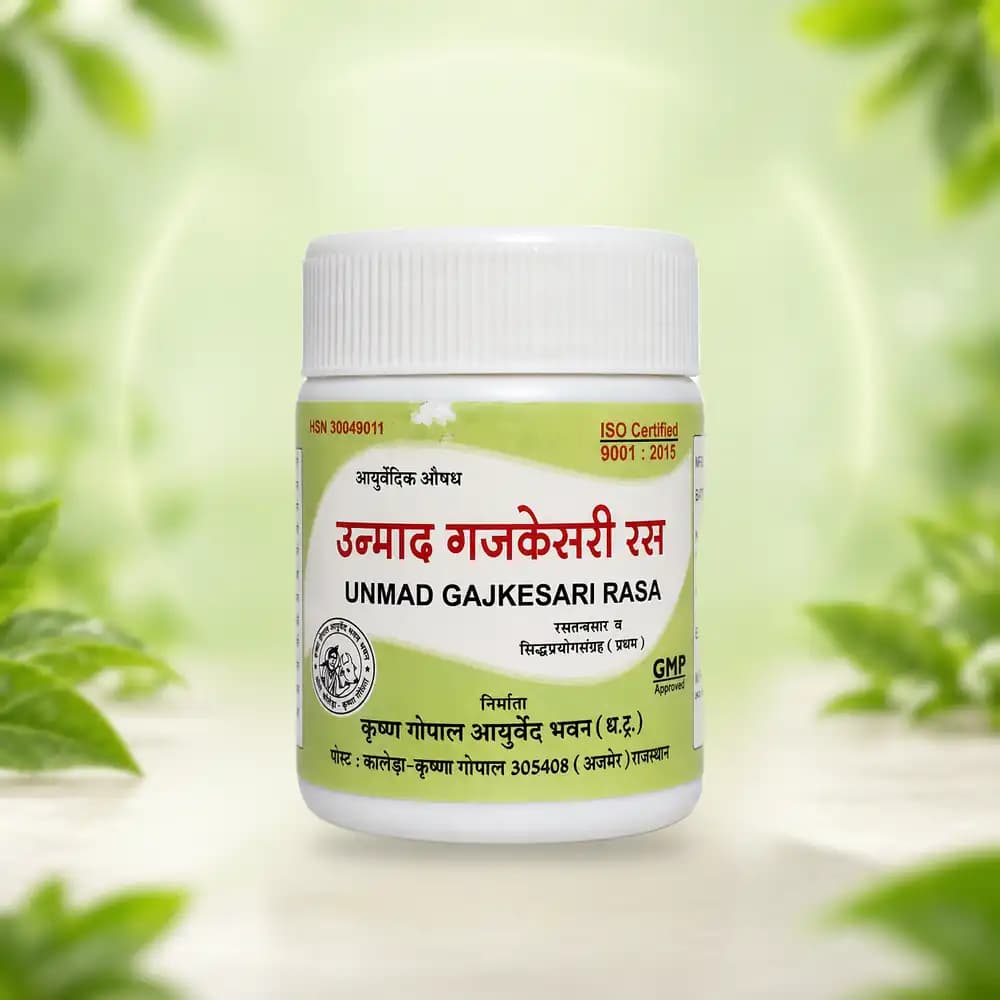
Unmadagaja Kesari Ras (Kalera) Kalera
Mental disorders, anxiety
Strip of 30 Tablets
4.3
₹224Get ₹22 Cashback
 Prescribed to you4.7₹52 cashback
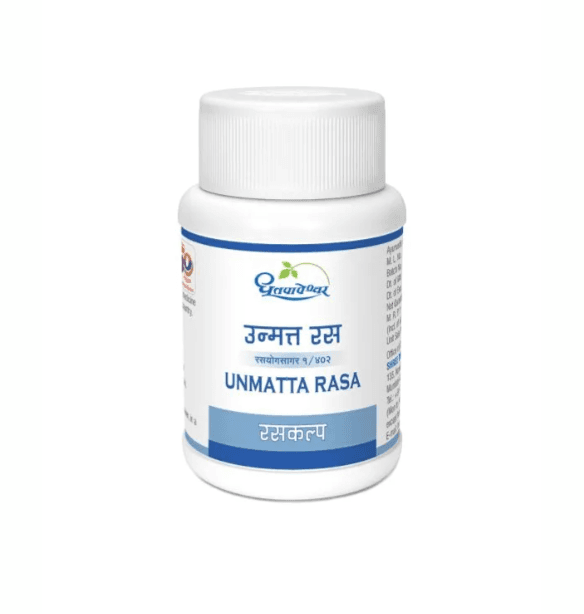
Unmatta Rasa (Dhootapapeshwar) SDL
SDLClassical Rasa for mental balance
Strip of 60 Tablets
4.7
₹520.01Get ₹52 Cashback