Flaxseed Benefits and Uses
Reviewed by medical experts · For informational purposes only
Introductory summary
Flaxseed known as Atasi in Ayurveda consists of the dried ripe seeds of Linum usitatissimum. It possesses Sweet and Bitter tastes with Heavy and Unctuous qualities. Due to its Hot potency and Pungent post digestive effect it is a powerful pacifier of Vata dosha. Therapeutically it is used to treat skin disorders known as Kushtha worm infestations and urinary disorders known as Prameha. It is often applied externally as a poultice for swellings and headaches. However Ayurveda cautions that it is Acakshushya meaning not beneficial for the eyes and may aggravate Pitta and blood disorders if used in excess. The Ayurvedic Pharmacopoeia of India recommends a dosage of 3 to 6 grams of the seed powder.
Flaxseed
Flaxseed, known in Ayurveda as Atasī, consists of the dried, ripe seeds of Linum usitatissimum. It is an erect annual herb cultivated extensively throughout the plains of India. While popularly known today for its oil and fiber (linen), Ayurveda identifies specific therapeutic uses for the seeds, particularly in treating skin disorders, urinary problems, and imbalances of the Wind element (Vata).
1. Name of the Herb
- Common Name: Flaxseed, Linseed.
- Scientific Name: Linum usitatissimum Linn..
- Sanskrit Names: Atasī, Umā, Kṣumā.
- Other Names: Alsi (Hindi/Kashmiri/Punjabi), Agasebeeja (Kannada), Ali (Tamil), Avisa (Telugu), Masina (Bengali).
2. Brief Description
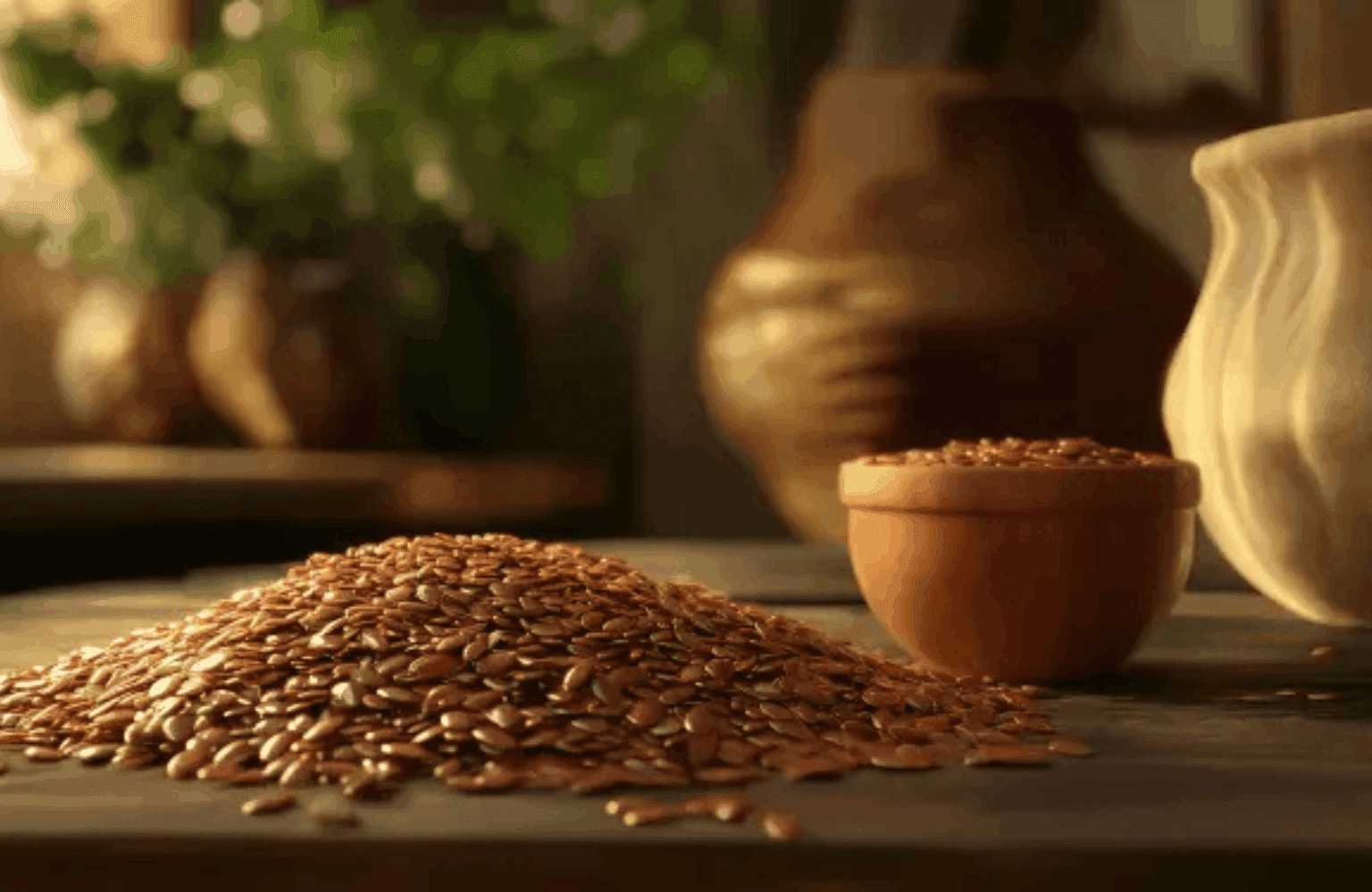
The Flax plant is an erect annual herb that grows 0.6–1.2 meters high. The medicinal part is the seed, which is small, oval, flattened, and reddish-brown with a glossy, minutely pitted surface. When soaked in water, the seed coat swells and produces a transparent, colourless mucilage. In Ayurveda, it is valued for its ability to pacify Vata dosha due to its heavy and oily nature, though it is traditionally considered detrimental to eyesight if used in excess.
3. Source / Part Used
- Plant Source: Herbal / Plant-based.
- Part Used: Dried Ripe Seed (Bīja). The Oil (Taila) derived from the seeds is also used.
4. Ayurvedic Properties
According to the Ayurvedic Pharmacopoeia of India, Flaxseed possesses the following qualities:
- Rasa (Taste): Madhura (Sweet) and Tikta (Bitter). (Note: The oil is described as Sweet and Sour).
- Guna (Qualities): Guru (Heavy) and Snigdha (Unctuous/Oily).
- Virya (Potency): Uṣṇa (Hot).
- Vipaka (Post-digestive effect): Kaṭu (Pungent).
- Dosha Effect: Vātaghna (Destroys/Pacifies Vata dosha). The oil specifically aggravates Pitta and Rakta (blood) due to its heating nature.
5. Key Benefits
- Balances Vata: Highly effective in pacifying Vata disorders due to its hot, heavy, and oily nature.
- Skin Health: Used to treat Kuṣṭha (skin diseases/leprosy).
- Anthelmintic: Acts as Kṛmighna, helping to destroy worms and parasites.
- Metabolic Support: Beneficial in Prameha (urinary disorders/metabolic syndrome).
- Relieves Headaches: Useful in Śiroroga (diseases of the head/headache).
6. Uses / Indications
Flaxseed is indicated in Ayurveda for the following conditions:
- Kṛmiroga: Worm infestation.
- Kuṣṭha: Various skin disorders and leprosy.
- Prameha: Urinary disorders, including diabetes-related urinary issues.
- Śiroroga: Diseases of the head and headaches.
- Vraṇa: Ulcers or wounds (used in specific formulations).
- Galagaṇḍa: Goiter (used in external pastes like Sarṣapādi Pralepa).
7. How It Works
- Vata Alleviation: Being Guru (heavy) and Snigdha (oily), it lubricates the channels and weighs down the light/dry quality of Vata. Its Uṣṇa (hot) potency combats the cold nature of Vata.
- Mucilaginous Action: The testa (seed coat) becomes mucilaginous when soaked, which can provide soothing properties.
- Maturant: In external applications (poultices), it helps in the ripening or resolving of swellings and inflammation.
8. Dosage
The recommended dosage according to the Ayurvedic Pharmacopoeia of India is:
- Powder (Churna): 3 to 6 grams.
9. Safety Information
Flaxseed is generally considered safe when used in recommended dosages for specific therapeutic conditions. It is a common ingredient in external applications (lepa) for glandular swellings.
10. Side Effects
- Eye Health: Ayurveda explicitly categorizes Atasī as Acakṣuṣya, meaning it is "not good for the eyes" or may harm vision if used excessively.
- Heat Aggravation: The oil is Uṣṇa (hot) and Katu Vipaka (pungent after digestion), which can vitiate Rakta (blood) and Pitta (bile), potentially causing bleeding or acidity issues in sensitive individuals.
11. Precautions
- Pitta Disorders: Individuals with bleeding disorders (Raktapitta) or high body heat should use Flaxseed oil with caution as it aggravates Rakta and Pitta.
- Vision Issues: Those suffering from eye diseases should avoid excessive consumption due to its Acakṣuṣya property.
12. Storage Instructions
- Store the seeds in a cool, dry place.
- Keep in an air-tight container to prevent the oil within the seeds from becoming rancid.
13. References
-
WHO Monographs on Selected Medicinal Plants
(World Health Organization – includes monograph standards for medicinal seeds and plant materials)
https://apps.who.int/iris/handle/10665/42052
-
WHO Global Report on Traditional and Complementary Medicine
https://www.who.int/publications/i/item/9789241515436
-
National Medicinal Plants Board (NMPB)
https://nmpb.nic.in
-
PubMed – Linum usitatissimum Research Articles
https://pubmed.ncbi.nlm.nih.gov/?term=Linum+usitatissimum
-
ScienceDirect – Flaxseed Phytochemistry & Pharmacology
https://www.sciencedirect.com/topics/agricultural-and-biological-sciences/linum-usitatissimum
-
SpringerLink – Flaxseed Nutritional & Clinical Studies
https://link.springer.com
-
Wiley Online Library – Flaxseed Research
https://onlinelibrary.wiley.com
-
Bhavaprakasha Nighantu – Atasi (Flaxseed) Description
E-text (NIIMH – Ministry of AYUSH)
https://niimh.nic.in/ebooks
-
Dhanvantari Nighantu – Atasi Reference
https://niimh.nic.in/ebooks
14. FAQs
** **Q. Can it be taken daily?
While it is nutritious, Ayurveda suggests it increases Pitta and is not beneficial for the eyes (Acakṣuṣya), so long-term daily use should be monitored, especially for those with heat or eye issues.
Q. When should it be taken?
It is often taken as a powder for internal conditions or applied externally as a poultice (Pralepa) for swellings.
Q. Can it be taken with milk/water?
Yes, the powder can be taken with water. When used as a poultice for glandular conditions, it may be processed with sour buttermilk (Amla Takra).
Consult a Doctor
- NG5.0Dr Nandini gaur
Ayurveda1 yrs exp
- KC5.0Dr. Kamesh chand sharma
Ayurveda2 yrs exp
- PP4.4Dr prince patel
Ayurveda22 yrs exp
- KH4.4Dr Kowshalya H S
Ayurveda3 yrs exp