Peppermint Benefits and Uses
Reviewed by medical experts · For informational purposes only
Introductory summary
Peppermint known as Pudina or Peppermint Satva in Ayurveda refers to the crystalline extract Menthol obtained from Mentha species. It possesses Pungent and Bitter tastes with Sharp Light and Unctuous qualities. Despite the initial cooling sensation on the tongue it has a Hot potency and Pungent post digestive effect which allows it to pacify Kapha dosha. It is highly valued as a digestive stimulant or Dipana and mouth cleanser or Mukhasodhana removing bad breath. Therapeutically it acts as a powerful pain reliever known as Sulaprasamana making it effective for abdominal colic and indigestion. It also possesses Putihara properties helping to remove foul odors and acts as a carminative.
Peppermint
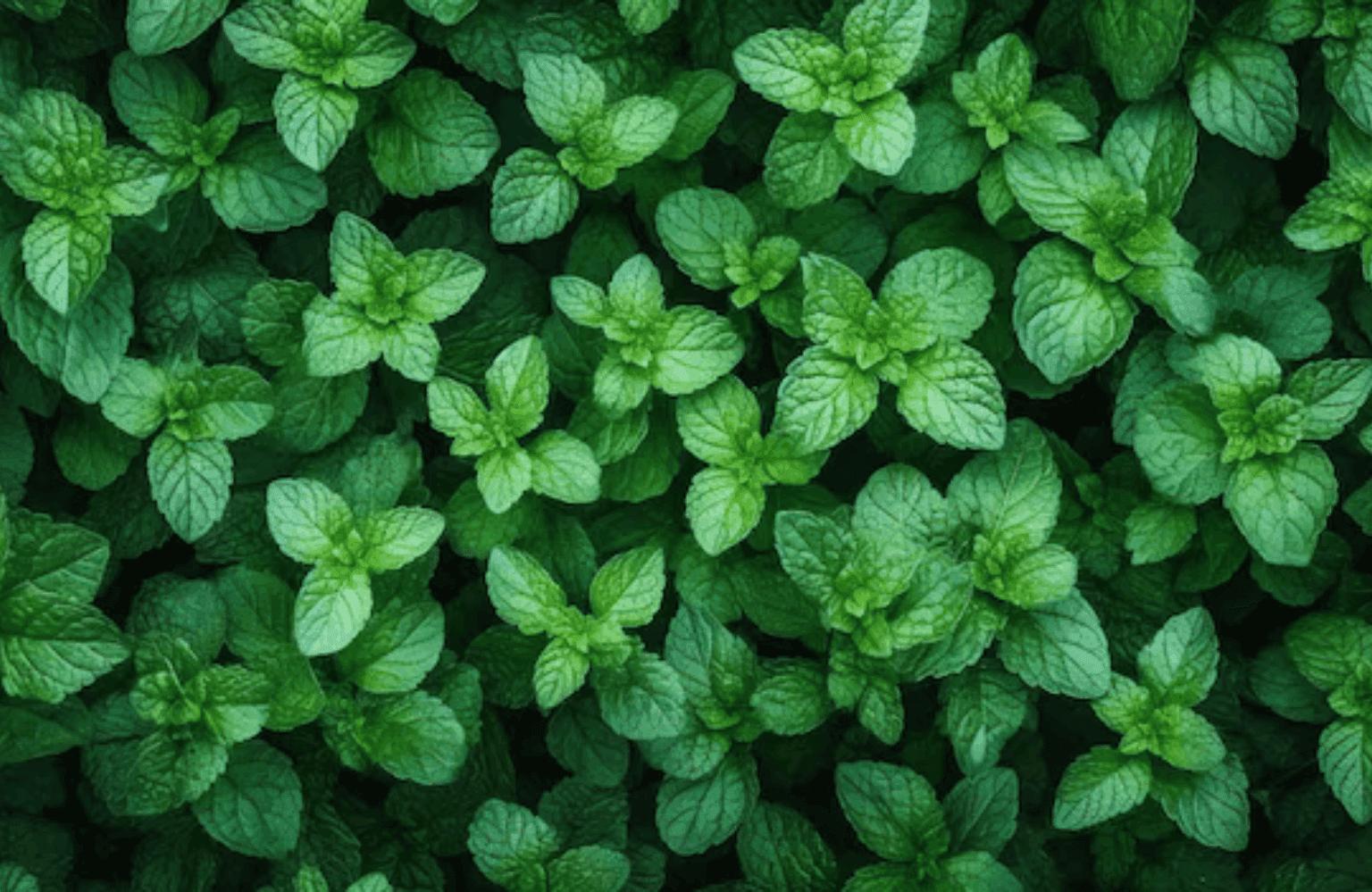
Peppermint is a popular aromatic herb known globally for its distinct flavor and cooling sensation. In Ayurveda, while the whole plant (Pudina) is used, specific importance is given to Peppermint-Satva (Menthol), which is the natural crystalline extract obtained from the plant. It is highly valued for its ability to relieve pain, clear the mouth, and stimulate digestion through its sharp and aromatic properties.
1. Name of the Herb
- Common Name: Peppermint, Pipermint.
- Scientific Name: Mentha sps. (yielding Peppermint-Satva); Mentha viridis Linn. (Pudina).
- Ayurvedic/Sanskrit Name: Peppermint-Satva, Pudina.
2. Brief Description
Peppermint is an aromatic plant belonging to the Lamiaceae family. The Ayurvedic Pharmacopoeia primarily describes Peppermint-Satva (Menthol), which consists of colourless, hexagonal crystals or crystalline powder. It has a strong, pleasant, peppermint-like odor. Uniquely, when tasted, it produces a warm and aromatic sensation followed by a distinct cool sensation. It is traditionally used to treat digestive and respiratory discomforts.
3. Source / Part Used
- Plant Source: Herbal / Plant-based.
- Part Used:
- Satva (Extract): Natural laevo-rotatory menthol obtained from various species of Mentha.
- Aerial Part: Leaves and stems are used for Pudina.
4. Ayurvedic Properties
According to the Ayurvedic Pharmacopoeia of India, the properties of Peppermint-Satva are:
- Rasa (Taste): Tikta (Bitter) and Kaṭu (Pungent).
- Guna (Qualities): Tīkṣṇa (Sharp), Snigdha (Unctuous/Oily), Laghu (Light), and Viśada (Clear/Non-slimy).
- Virya (Potency): Uṣṇa (Hot). (Note: Despite the cooling sensation it creates on the skin or tongue, its internal metabolic action is heating).
- Vipaka (Post-digestive effect): Kaṭu (Pungent).
- Dosha Effect: Kaphahara (Pacifies Kapha dosha).
5. Key Benefits
- Cleanses the Mouth: Acts as Mukha-sodhana, clearing the oral cavity and refreshing breath.
- Relieves Pain: Possesses Śūlapraśamana properties, making it effective for relieving colic and local pain.
- Stimulates Digestion: Acts as Dīpana (appetizer) and Pācana (digestive), aiding in the breakdown of food.
- Removes Bad Odor: It is Pūtihara, meaning it removes foul smells (anti-putrefactive).
- Reduces Kapha: Its sharp and hot nature helps reduce excess mucus (Kapha).
6. Uses / Indications
- Digestive Disorders: Traditionally used to ease dyspepsia (indigestion).
- Pain Relief: Applied or ingested to relieve pain (Śūla) due to its analgesic properties.
- Oral Hygiene: Used to cleanse the mouth and remove bad breath (Mukha-sodhana).
- Respiratory & Kapha Issues: Used to pacify Kapha dosha, which is associated with congestion and mucus.
7. How It Works
- Digestive Action: Its Tīkṣṇa (Sharp) and Uṣṇa (Hot) qualities stimulate the digestive fire, while its Pācana property helps digest toxins.
- Sensory Stimulation: The aromatic and sharp qualities stimulate the sensory organs, clearing the mouth and masking bad odors (Putihara).
- Pain Modulation: It acts as a counter-irritant and analgesic (Śūlapraśamana) to soothe localized pain.
8. Dosage
- Peppermint-Satva (Crystals): The dosage for the concentrated extract (Satva) is typically very small.
- Note: While specific grammage for Peppermint Satva is not explicitly detailed in the provided text snippet, similar potent extracts like Yavani Satva are dosed at 25-125 mg. Always consult a physician for precise dosage.
- Pudina (Whole Herb): Used in larger culinary quantities.
9. Safety Information
- Peppermint-Satva is a concentrated extract and should be used with caution.
- It is generally considered safe when used in appropriate medicinal doses or as a flavoring agent.
10. Side Effects
- Due to its Uṣṇa (Hot) and Tīkṣṇa (Sharp) potency, excessive use may cause a burning sensation in the stomach or irritation in sensitive individuals, despite the initial cooling feeling.
11. Precautions
- Pregnancy & Breastfeeding: Consult an Ayurvedic physician before using concentrated extracts like Satva. The NCCIH notes that oral peppermint in food amounts is likely safe during pregnancy.
- Storage: Because it is a volatile substance, improper storage can lead to loss of potency.
12. Storage Instructions
- Store in a well-closed container.
- Keep in a cool place to prevent the crystals from melting or evaporating.
- Protect from light.
13. References
-
WHO Monographs on Selected Medicinal Plants – Menthae piperitae folium
https://apps.who.int/iris/handle/10665/42052
-
WHO Global Report on Traditional and Complementary Medicine
https://www.who.int/publications/i/item/9789241515436
-
European Scientific Cooperative on Phytotherapy (ESCOP) – Peppermint Leaf & Oil
https://escop.com
-
Commission E Monographs – Peppermint Leaf & Oil (Germany)
https://www.herbal-ahp.org
-
PubMed – Mentha piperita Research Articles
https://pubmed.ncbi.nlm.nih.gov/?term=Mentha+piperita
-
NCBI Taxonomy Database – Mentha × piperita
https://www.ncbi.nlm.nih.gov
-
ScienceDirect – Peppermint Phytochemistry & Pharmacology
https://www.sciencedirect.com/topics/pharmacology-toxicology-and-pharmaceutical-science/mentha-piperita
-
SpringerLink – Clinical Studies on Peppermint Oil
https://link.springer.com
-
Wiley Online Library – Peppermint Research
https://onlinelibrary.wiley.com
14. FAQs
** **Q. Can it be taken daily?
Fresh leaves (Pudina) can be consumed daily in food. The concentrated extract (Satva) should be used as a medicine for specific conditions like pain or indigestion.
Q. When should it be taken?
It is beneficial when there is a need to freshen the mouth, relieve pain, or aid digestion.
Q. Can it be taken with milk/water?
It is often mixed with suitable vehicles. Historically, aromatic herbs are used in infusions or teas (water) to ease dyspepsia.
Consult a Doctor
- NG5.0Dr Nandini gaur
Ayurveda1 yrs exp
- KC5.0Dr. Kamesh chand sharma
Ayurveda2 yrs exp
- PP4.4Dr prince patel
Ayurveda22 yrs exp
- KH4.4Dr Kowshalya H S
Ayurveda3 yrs exp