

Appendicitis Causes and Symptoms
Reviewed by medical experts · For informational purposes only
Introductory summary
Appendicitis is understood in Ayurveda as Antar-Vidradhi or an internal abscess located in the lower abdomen or Kukshi. It results from the vitiation of Pitta and Rakta which creates intense inflammation and eventually suppuration in the intestinal region. The condition presents with severe colic pain fever thirst and a burning sensation. In the early unripe stage known as Ama therapies focus on cooling the body and purifying the blood through Raktamokshana. However classical texts emphasize that once the abscess ripens or forms pus it becomes a critical condition. At this stage surgical intervention is strictly advised to drain the pus and prevent internal rupture which is considered life threatening.
Appendicitis
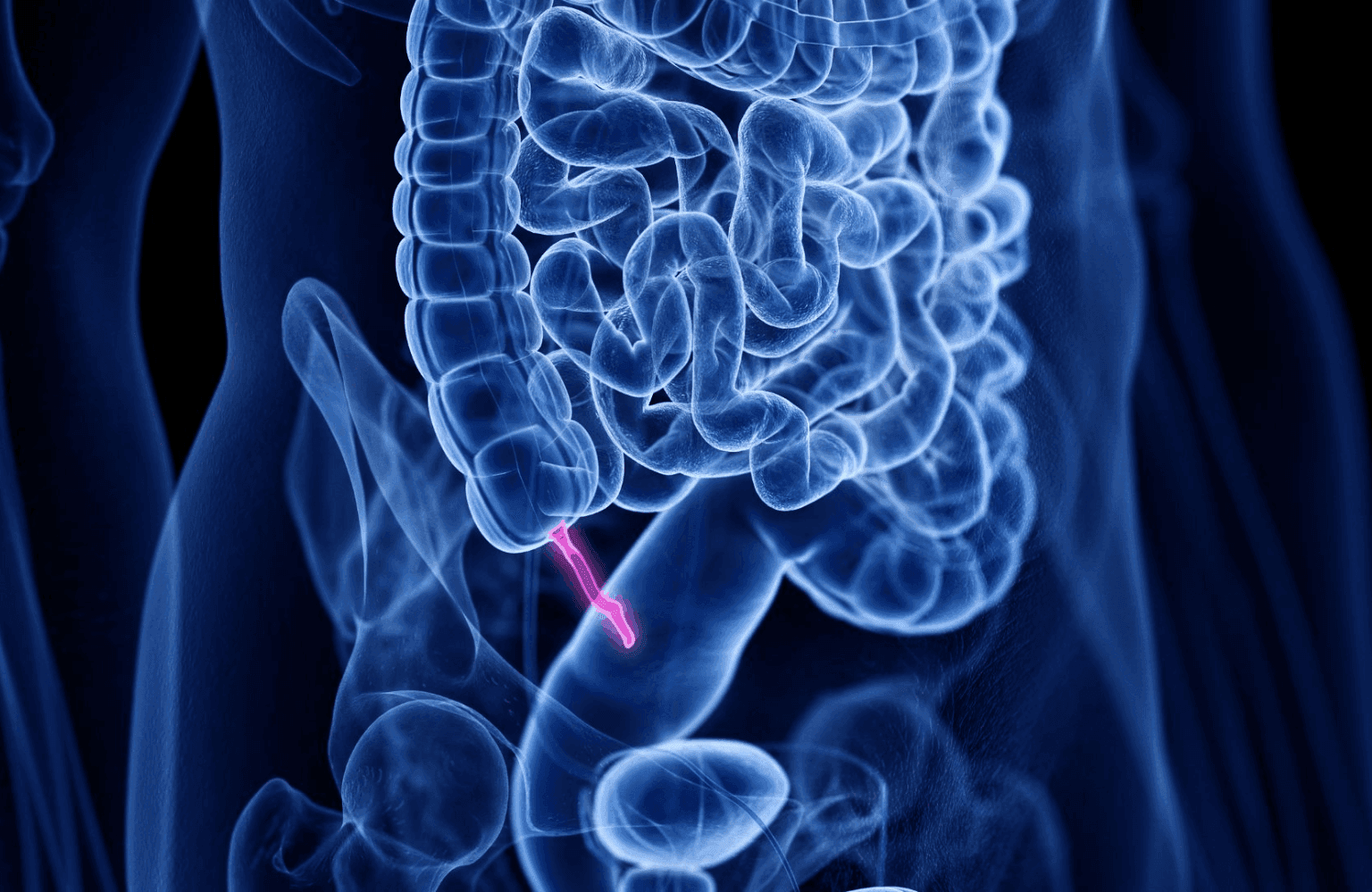
Appendicitis is the inflammation of the appendix, a small finger-shaped pouch projecting from the colon on the lower right side of the abdomen. In Ayurveda, this condition is best understood under the spectrum of Antar-Vidradhi (Internal Abscess) or Pakvashaya-gata Shotha (Inflammation of the large intestine). It represents a critical condition where vitiated Doshas (bio-energies) accumulate in the gut, leading to severe pain, inflammation, and potential suppuration (pus formation).
1. Definition
Modern Definition: The appendix is a small, closed-ended, narrow pouch that projects from the large intestine. Appendicitis is the painful swelling and infection of this organ.
Ayurvedic Definition: In Ayurveda, when the vitiated Doshas (Vata, Pitta, Kapha) lodge in the Kukshi (abdominal flank) or Antra (intestines) and corrupt the Rakta (blood) and Mamsa (flesh), they create a deep-seated, painful swelling known as Vidradhi (Abscess). When this occurs inside the abdominal cavity, it is called Antar-Vidradhi.
2. Etymology & Conceptual Meaning
-
Literal Meaning:
-
Vidradhi: Derived from the root Vidaha (burning or rapid destruction). It implies a swelling that causes "burning" pain and has a tendency to liquefy or rot the tissues.
-
Antar: Internal.
-
-
Conceptual Interpretation: Ayurveda views this as a condition of Rakta Dushti (blood vitiation). Just as an external abscess boils and fills with pus, an internal abscess in the intestine (Unduka or Pakvashaya) goes through stages of inflammation (Ama) and suppuration (Pakva). If untreated, it acts like a "fire" in the belly.
3. Causes (Nidana)
Dietary Causes
-
Irritant Foods: Excessive consumption of pungent (Katu), sour (Amla), and hot (Ushna) foods.
-
Incompatible Diet: Eating Viruddha Ahara or stale/dry food.
-
Indigestible Items: Eating heavy substances or foreign bodies (stones/seeds) that obstruct the flow of Vata in the gut.
Lifestyle Causes
-
Physical Strain: Excessive exertion or sleeping over uneven beds.
-
Suppression of Urges: Withholding natural urges (Vegadharana) causes Vata to move in reverse (Udavarta).
4. Journey of the Disease (Pathogenesis/Samprapti)
-
Dosha: Primarily Pitta (inflammation/suppuration) and Rakta. Vata causes colic pain.
-
Dushya (Tissues): Rakta, Mamsa, Twak.
-
Srotas (Channels): Annavaha and Purishavaha.
-
Agni (Digestion): Mandagni → Ama.
-
Adhisthana (Site): Kukshi or Vasti.
-
Process: Aggravated Doshas lodge in intestinal walls → Obstruction (Avarodha) → swelling (Shotha) → if Pitta ↑ → ripens (Pakva) → pus formation/rupture.
5. Symptoms (Lakshana)
Early Symptoms (Ama Avastha)
- Mild Pain, Gulma-like feeling, Mandagni
Advanced Symptoms (Pakva Avastha)
- Severe Pain, Daha & Jwara, Thirst, Vomiting
6. Different Types or Classification (Bheda)
Ayurveda classifies Vidradhi into six types based on the dominant Dosha:
- Vataja: Severe pricking pain, blackish discoloration.
- Pittaja: High fever, burning sensation, rapid suppuration.
- Kaphaja: Mild pain, heaviness, slow progression.
- Sannipataja: Combination of all three Doshas; very difficult to treat.
- Raktaja: Caused by vitiated Rakta; intense heat and dark appearance.
- Kshataja: Caused by trauma (injury or foreign body ingestion).
7. Diagnosis
-
Ayurvedic Diagnosis (Roga Pariksha):
-
Sparshana (Touch): Palpation reveals a hard, painful, elevated swelling (Granthi) in the lower abdomen.
-
Darshana (Observation): Signs of pain, posture (guarding the abdomen), Ama or Paka (inflammation/abscess).
-
-
Differential Diagnosis: Differentiate from Gulma (abdominal tumor/gas).
8. Disease Management
Management depends on whether the abscess is unripe (Ama) or ripe (Pakva).
Diet (Ahara)
-
Light Diet: Yavagu (gruels), soups.
-
Avoid: Heavy, oily, solid foods; constipation causing foods.
Medicines (Aushadhi)
-
Shigru (Moringa): Reduces swelling and inflammation.
-
Dashamula: Pacifies Vata pain.
-
Varunadi Gana: Breaks hardness in internal abscesses.
-
Guggulu Preparations: Triphala Guggulu, Kaishora Guggulu.
Panchakarma (Procedures)
-
Raktamokshana (Bloodletting): Jalauka or venesection in early stages.
-
Virechana (Purgation): Mild purgation with Trivrit.
-
Basti (Enema): Contraindicated in acute stage; Dashamula Basti in chronic Vata pain.
Surgical Intervention
- Bhedana (Incision): Required once Pakva Vidradhi forms. Referenced in Sushruta Samhita and Madhava Nidana.
9. Prognosis
-
Early Stage: Curable with cooling and blood-purifying treatments.
-
Advanced Stage: Pakva → critical condition.
-
Complications: Rupture → peritonitis → fatal (Asadhya).
10. Modern Correlations
-
Similarities:
-
Kukshi-Shula ≈ McBurney’s point tenderness.
-
Progression: Ama → Pakva ≈ catarrhal → gangrenous appendicitis.
-
Internal rupture = peritonitis.
-
-
Differences: Ayurveda: systemic Rakta vitiation; Modern: luminal obstruction by fecaliths or lymphoid hyperplasia.
11. References
-
Mayo Clinic – Appendicitis Overview:
Comprehensive details on symptoms, causes (e.g., blockage, infection), risk factors, and complications such as abscess or rupture. (Mayo Clinic) -
MSD Manual Professional Edition – Appendicitis:
Authoritative clinical reference covering etiology (obstruction by lymphoid hyperplasia/fecalith), signs such as McBurney’s point tenderness, and progression to perforation or abscess. (MSD Manuals) -
JAMA Network – Acute Appendicitis:
Peer‑reviewed article summarizing clinical presentation (initial periumbilical pain localizing to right lower quadrant), common symptoms, and prevalence data. (JAMA Network) -
Diagnosis and Treatment of Appendicitis: Systematic Review and Meta‑Analysis (SAGES):
Evidence synthesis on best practices for evaluation and management of uncomplicated and complicated appendicitis in adults and children. (SAGES) -
StatPearls – Appendicitis:
Clinical overview including causes (appendicoliths, tumors, parasites), bacterial involvement, and differences in pathogenesis across age groups. (NCBI)
-
International Journal of Ayurvedic Medicine – “Acute Appendicitis – A Review”:
Recent review from an integrative Ayurveda perspective summarizing current understanding of appendicitis, diagnosis challenges, and clinical classifications. (Ijam) -
Concept of Vidradhi WSR to Abscess – Ayurvedic Review:
Scholarly review linking classical Ayurvedic descriptions of Vidradhi (abscess) and its management principles (including Shalya Tantra surgical insights), relevant for correlating appendicitis with Antar‑Vidradhi. (International Surgery Journal) -
Case Report on Ayurvedic Management of Antar Vidradhi (Appendicitis Type):
Case‑level evidence of Ayurvedic intervention in a child with appendiceal inflammation correlated with Pitta Kapha Gulma/Antar Vidradhi, noting resolution without recurrence. (IJRAP) -
Ashtanga Hrudayam – Vidradhi, Vriddhi, Gulma Nidana:
Classical Ayurvedic source explaining pathogenesis and diagnosis of internal abscesses and abdominal swellings (Vidradhi), foundational for Ayurvedic interpretation of appendix inflammation. (Pocket Ayurveda) -
Ayurvedic Perspective on Appendix Treatment (Ask Ayurveda):
Practical overview of Ayurvedic dietary and supportive therapies (e.g., herbs, Panchakarma) to balance doshas and support digestive health relevant to appendiceal inflammation contexts. (Ask Ayurveda)
12. FAQ Section
Q: Can Ayurveda cure Appendicitis without surgery?
A: In the very early stage (called Ama or unripe stage), Ayurvedic medicines and blood-letting (Raktamokshana) can reduce inflammation and potentially prevent the need for surgery. However, classical texts warn that once pus forms (Pakva), surgery is necessary to prevent fatal rupture.
Q: What is the Ayurvedic term for Appendicitis?
A: It is most accurately correlated with Antar-Vidradhi (Internal Abscess) located in the Kukshi (lower abdomen/cecum area).
Q: Are there home remedies for appendicitis pain?
A: Acute appendicitis is a medical emergency. While Ayurveda suggests cooling plasters (like licorice or sandalwood) for external inflammation, internal abdominal pain of this nature requires immediate professional assessment to rule out rupture. Self-medication is dangerous.
Q: What foods should be avoided?
A: One should avoid seeds (which can get stuck), excessive dry or spicy foods, and foods that cause constipation (Vistambhi), as these aggravate Vata and can worsen the obstruction.
Consult a Doctor
- KC5.0Dr. Kamesh chand sharma
Ayurveda2 yrs exp
- PP4.4Dr prince patel
Ayurveda22 yrs exp
- PJ5.0Dr. P. JOTEENDRA
Ayurveda2 yrs exp
- S4.6Dr. Shan
Ayurveda4 yrs exp