Psoriasis
Reviewed by medical experts · For informational purposes only
Introductory summary
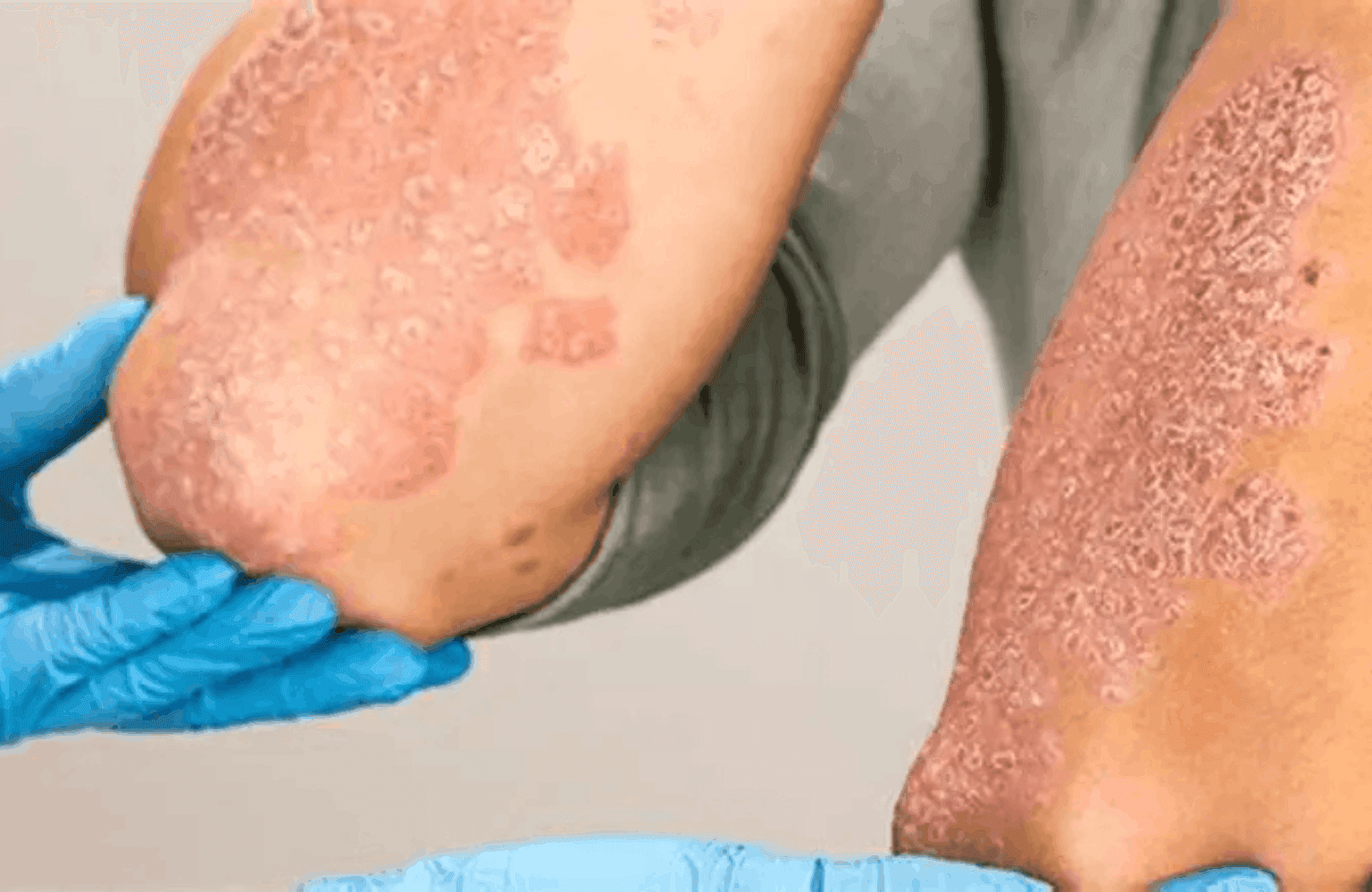
Psoriasis correlates with the Ayurvedic condition Ekakustha characterized by the absence of sweating extensive spread and fish-like scaling known as Matsyashakalopamam. Another variation called Kitibha presents with rough dark and hard patches. The pathology involves the vitiation of Vata and Kapha doshas contaminating the skin blood and lymph often triggered by incompatible foods like fish with milk and suppression of natural urges. Management emphasizes bio-purification through Panchakarma therapies specifically Vamana and Virechana to eliminate deep-seated toxins. External treatments such as Takradhara and Pizhichil using medicated oils alongside the application of herbal pastes and internal administration of bitter medicated ghee are essential to pacify the doshas and restore skin health.
Psoriasis
Psoriasis is a chronic autoimmune condition that causes the rapid buildup of skin cells, leading to scaling on the skin's surface. In Ayurveda, all skin diseases are classified under the broad umbrella of Kustha. Among the various types of Kustha, Psoriasis is most closely correlated with Ekakustha (characterized by extensive scaling resembling fish skin) and Kitibha (characterized by rough, dark, and hard patches). These conditions are primarily attributed to the vitiation of Vata and Kapha doshas affecting the skin (Twak), blood (Rakta), flesh (Mamsa), and lymph (Lasika).
1. Definition
Modern Definition: An immune-mediated disease that causes raised, red, scaly patches to appear on the skin.
Ayurvedic Definition:
- Ekakustha: A type of skin disease characterized by the absence of sweating (Asvedanam), extensive spread over the body (Mahavastu), and appearance resembling fish scales (Matsyashakalopamam).
- Kitibha: A condition where the skin becomes blackish/dark (Shyava), rough/coarse to the touch (Kina-khara), and hard (Parusha).
2. Etymology & Conceptual Meaning
- Kustha: Derived from the root Kush, meaning to destroy or disfigure. It refers to that which destroys the skin and underlying tissues.
- Ekakustha: Eka means "one" or "extended," and Kustha means skin disease. It implies a condition that covers a large ("single") area of the body or has a singular dominant shape.
- Conceptual Interpretation: Ayurveda views skin diseases not just as surface-level issues but as deep-seated systemic disorders involving the corruption of the seven bodily constituents (Sapta Dhatu), specifically the skin, blood, flesh, and lymph.
3. Causes (Nidana)
The causes of Kustha are multifactorial, involving diet, lifestyle, and past actions.
- Dietary Causes:
- Viruddha Ahara: Consumption of incompatible foods, such as fish with milk.
- Excessive intake of liquid (Drava), unctuous (Snigdha), and heavy (Guru) foods.
- Consumption of new grains (Navanna), curd (Dadhi), and fish (Matsya).
- Lifestyle Causes:
- Vegadharana: Suppression of natural urges, particularly vomiting (Chardi).
- Mithya Vihara: Improper activities such as exercising immediately after a heavy meal, or sudden changes from heat to cold (e.g., drinking cold water when heated).
- Divaswapna: Sleeping during the day, which aggravates Kapha.
- Psychological/Karmic Factors:
- Sinful acts (Papakarma) and disrespect towards elders or teachers are traditionally cited as potent causes for severe skin diseases.
4. Journey of the Disease (Pathogenesis/Samprapti)
- Samprapti Ghataka (Components):
- Dosha: Tridosha (Vata, Pitta, Kapha) are always involved, but Vata and Kapha are usually dominant in Psoriasis-type conditions.
- Dushya (Tissues): The "Sevenfold Pathogenic Substance" (Sapta Dravya Sangrah) includes the three Doshas plus Twak (Skin), Rakta (Blood), Mamsa (Flesh), and Lasika (Lymph/Plasma).
- Pathogenesis:
- Due to the etiological factors (like incompatible diet), the three Doshas become vitiated.
- They travel through the vessels and lodge in the skin and external tissues.
- They contaminate the Twak, Rakta, Mamsa, and Lasika.
- This contamination leads to the formation of discolored, scaly, and rough patches on the skin known as Kustha.
5. Symptoms (Lakshana)
The symptoms vary based on the specific presentation (correlating with Psoriasis subtypes):
- Ekakustha (Resembles Plaque Psoriasis):
- Asvedanam: Absence of perspiration/sweating in the affected area.
- Mahavastu: Covers a large surface area.
- Matsyashakalopamam: Scaling that resembles the scales of a fish (silvery scales).
- Kitibha (Resembles Hyperkeratotic Psoriasis):
- Shyava: Blackish, dark, or gray discoloration.
- Kina-kharasparsha: Rough to the touch, like a scar or callus.
- Parusha: Hard and dry skin.
- Sidhma (Resembles Guttate/Dusty Psoriasis):
- Alabupushpavarnam: Color resembling the flower of a bottle gourd (white/copper).
- Vimunchati Rajo: Sheds dust/powder when rubbed.
6. Different Types or Classification (Bheda)
Ayurveda classifies Kustha into two main categories:
- Maha Kustha (Major Skin Diseases): There are 7 types, including Sidhma and Mandala.
- Kshudra Kustha (Minor Skin Diseases): There are 11 types, including Ekakustha and Kitibha. Note: Although labeled "minor" (Kshudra), Ekakustha presents with significant symptoms correlating to Psoriasis.
7. Diagnosis
- Ayurvedic Diagnosis (Roga Pariksha):
- Darshana (Observation): Checking for the "fish scale" appearance (Matsyashakalopamam) or specific coloration (Shyava for Kitibha, Tamra for Sidhma).
- Sparshana (Palpation): Assessing roughness (Kharatva) and lack of sweating (Asvedanam).
- Prashna (Questioning): History of incompatible foods (Viruddha Ahara) and suppression of urges.
8. Disease Management
Management focuses on Shodhana (Purification) to expel deep-seated Doshas, followed on Shamana (Pacification) and topical therapies.
Medicines
- Tikta Ghrita: Medicated ghee with bitter herbs is highly praised for skin diseases (Kustha), as bitter taste pacifies Pitta and Kapha.
- Khadira (Acacia catechu): Considered the best herb for skin diseases.
- Aragvadha (Cassia fistula): Used in pastes and decoctions to cleanse the skin and cure ringworm/psoriasis-like lesions.
- Guggulu: Kaishora Guggulu or Amritadi Guggulu are used for inflammatory skin conditions.
- Gandhaka (Sulphur): Used in various formulations to treat itching (Kandu) and skin diseases.
Panchakarma
- Vamana (Emesis): The primary treatment for Kapha-dominant skin diseases. It is indicated for Kustha to eliminate toxins from the upper body.
- Virechana (Purgation): The primary treatment for Pitta and Rakta (blood) vitiation. It is essential for clearing the blood in skin disorders.
- Raktamokshana (Bloodletting): For localized, stubborn patches, letting out impure blood is prescribed.
- Patra Pinda Sweda: A sudation therapy using a bolus of heated medicinal leaves. It is explicitly indicated for Twak Rogas (skin diseases) like Psoriasis to reduce roughness and scale formation.
Diet (Ahara)
- Pathya (Beneficial): Light foods, bitter vegetables (like pointed gourd/Patola), old grains.
- Apathya (Harmful): Sour foods, curd, milk with fish, jaggery, sesame, and heavy meats.
9. Prognosis
- Sadhya (Curable): Skin diseases involving only one Dosha and not deep-seated are curable.
- Krichrasadhya (Difficult to Cure): Conditions involving two Doshas (e.g., Vata-Kapha in Ekakustha) or those that are chronic are difficult to treat.
- Asadhya (Incurable): If the disease involves all three Doshas (Tridoshaja), affects the bone/marrow, or presents with worms (Krimi), it is considered incurable.
10. Modern Correlations
- Ekakustha: The symptom "resembling fish scales" (Matsyashakalopamam) is a direct morphological correlation to Plaque Psoriasis.
- Kitibha: The description of "rough, dark, hard skin" correlates with Hyperkeratotic Psoriasis or Lichen Planus.
- Sidhma: The release of dust/powder upon rubbing correlates with the Auspitz sign or general scaling seen in Guttate Psoriasis or Pityriasis Versicolor.
11. References
World Health Organization (WHO)
Psoriasis – global burden, impact, and care
https://www.who.int/news-room/fact-sheets/detail/psoriasis
National Institute of Arthritis and Musculoskeletal and Skin Diseases (NIAMS – NIH)
Psoriasis overview, causes, and treatment
https://www.niams.nih.gov/health-topics/psoriasis
Centers for Disease Control and Prevention (CDC)
Psoriasis basics and associated conditions
https://www.cdc.gov/psoriasis/index.html
Mayo Clinic
Psoriasis: symptoms, causes, diagnosis, and management
https://www.mayoclinic.org/diseases-conditions/psoriasis/symptoms-causes/syc-20355840
Ekakushtha / Kitibha (Ayurvedic correlation of Psoriasis)
https://www.ncbi.nlm.nih.gov/pmc/articles/PMC5452224/
12. FAQ Section
Q: Is Psoriasis contagious according to Ayurveda?
A: Ancient texts list Kustha (skin disease) as a condition that can spread through close contact (Gatrasamsparsha), sharing clothes, or eating together. However, modern science defines Psoriasis as non-contagious. The Ayurvedic description likely encompasses both infectious and non-infectious skin conditions under the single term Kustha.
Q: Can Panchakarma cure Psoriasis?
A: Panchakarma, particularly Vamana (emesis) and Virechana (purgation), is highly effective in managing Psoriasis. It detoxifies the body, removes the root cause (vitiated Doshas), and prevents recurrence better than surface-level creams alone.
Q: What is the best oil for Psoriasis?
A: Oils containing Tuvaraka (Hydnocarpus) or Khadira are traditionally used. Externally, therapies like Patra Pinda Sweda (leaf bolus steam) using medicated oils are specifically indicated for Psoriasis to reduce scaling and roughness.
Q: Why is "Fish and Milk" bad for Psoriasis?
A: Ayurveda classifies fish and milk taken together as Viruddha Ahara (incompatible diet). Fish is hot in potency while milk is cold; their combination vitiates the blood (Rakta) and obstructs the channels (Srotas), which is a primary cause of skin diseases like Psoriasis.
Consult a Doctor
- MS4.2Midun s kumar
Ayurveda4 yrs exp
- SP4.5Dr Sreelekha P Nair
Ayurveda6 yrs exp
- VR4.2Vaidya Rohit Kumar
Ayurveda3 yrs exp
- V4.1Vairamuthu
Ayurveda8 yrs exp
Buy Medicine
 Prescribed to you4.5₹82 cashback
Shvitrari Ras (Kalera) Kalera
Treats vitiligo, skin pigmentation
Strip of 30 Tablets
4.5
₹820.01Get ₹82 Cashback