
Burns
Reviewed by medical experts · For informational purposes only
Introductory summary
Burns termed Agnidagdha in Ayurveda are exogenous injuries caused by fire heat or chemicals like alkalis known as Ksharadagdha. This condition primarily involves the rapid vitiation of Pitta dosha and Rakta dhatu leading to intense burning sensation or Daha redness and tissue destruction. Ayurvedic management prioritizes cooling therapies to pacify the aggravated heat and prevent suppuration. Immediate treatment often involves the external application of a mixture of Madhu or honey and Sarpi or ghee to soothe pain and promote healing. Specialized formulations like Brahmi Ghrita are explicitly indicated for treating accidental burns. The regimen includes Pitta pacifying diet and avoiding sour or pungent foods while severe cases may require specific wound care using medicated oils and pastes.
Burns
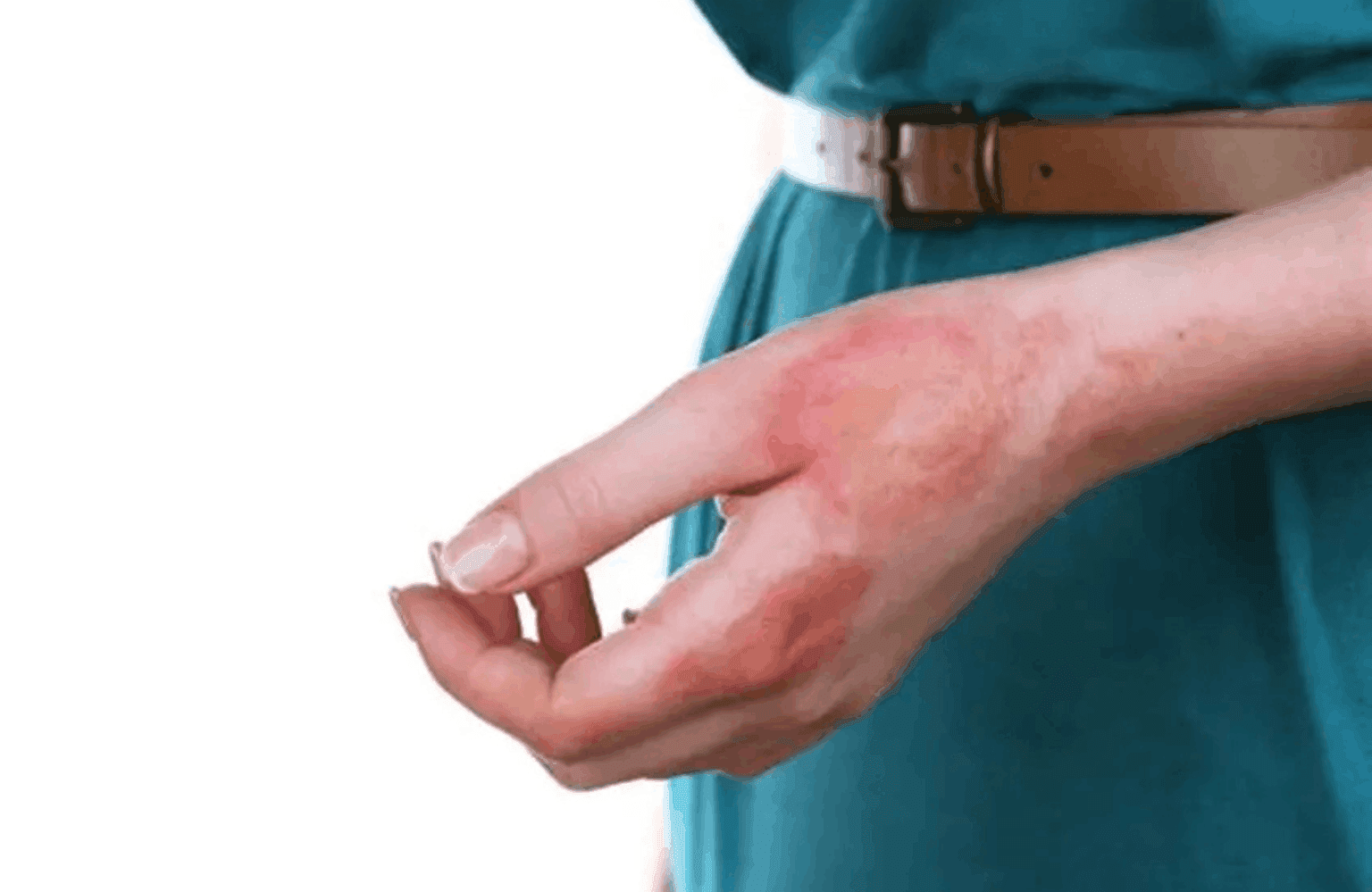
Burns are injuries to the skin or other organic tissue primarily caused by heat or radiation, radioactivity, electricity, friction, or contact with chemicals. In Ayurveda, this condition is known as Agnidagdha (burnt by fire) or Dagdha Vrana (burn wound). It is classified as an exogenous injury (Agantuja) that fundamentally involves the vitiation of the Pitta Dosha (Fire element) and Rakta (Blood), leading to intense burning sensation (Daha) and tissue destruction.
1. Definition
Modern Definition: Tissue damage that results from scalding, overexposure to the sun or other radiation, contact with fire, chemicals, or electricity, or smoke inhalation.
Ayurvedic Definition: Agnidagdha refers to a condition where the body parts are burnt by fire (Agni), chemicals (Kshara), or hot substances, resulting in a wound known as Dagdha Vrana. It is characterized by the immediate aggravation of Pitta, causing burning pain, redness, and suppuration (formation of pus).
2. Etymology & Conceptual Meaning
- Agnidagdha: Derived from Agni (Fire) and Dagdha (Burnt).
- Dagdha Vrana: Vrana means wound. This refers to the ulcer or lesion resulting from a burn.
- Conceptual Interpretation: In Ayurveda, fire (Agni) is hot (Usna) and sharp (Tikshna). When it contacts the skin, it instantly increases the Pitta dosha (which shares the same qualities) and the Rakta (blood). This excess heat "cooks" or destroys the local tissues (Dhatus), creating a wound.
3. Causes (Nidana)
The causes are primarily external (Agantuja), originating outside the body.
- Physical Causes:
- Contact with direct fire (Agni).
- Ushma (Steam): Improper administration of steam therapy (Bashpa Sweda) during Panchakarma can cause burns if not monitored.
- Vidyut/Ashani: Lightning or electricity.
- Daghda: Sunburn from excessive exposure to the sun (Atapa).
- Chemical Causes:
- Kshara: Strong Alkalis. Ayurveda notes that Kshara behaves like fire (Agni); it causes burning, ripening, and tearing of tissues.
- Iatrogenic Causes (Medical treatment):
- Improper application of Cauterization (Agnikarma) or heat therapies.
4. Journey of the Disease (Pathogenesis/Samprapti)
- Samprapti Ghataka (Components):
- Dosha: Primarily Pitta (responsible for heat, redness, and burning). Vata is involved in the transmission of pain (Ruja). Rakta (Blood) is quickly vitiated.
- Dushya (Tissues): Twak (Skin), Mamsa (Muscle), Rakta (Blood), and Lasika (Lymph).
- Adhisthana (Site): The skin and underlying tissues.
- Pathogenesis:
- Contact with the heat source (Fire, Steam, Chemical) occurs.
- This external heat immediately aggravates Pitta and Rakta in the local area.
- The intense heat causes "paka" (cooking/suppuration) of the skin and flesh.
- Vata is aggravated by the trauma, leading to pain.
- Blisters (Visphota) form due to the accumulation of heat and fluid (Pitta and Lasika).
5. Symptoms (Lakshana)
The symptoms align with the characteristics of Pitta aggravation:
- Daha: Intense burning sensation.
- Raga: Redness or coppery discoloration of the skin.
- Visphota: Appearance of blisters or vesicles.
- Ushma: Localized heat.
- Paka: Suppuration or rotting of the flesh (in severe or infected burns).
- Shula: Pain, often described as stinging or burning.
- Jvara: Fever may arise in severe cases due to Pitta aggravation.
6. Different Types or Classification (Bheda)
While specific degrees (1st, 2nd, 3rd) are described in surgical texts (Sushruta), the provided sources classify burns based on the cause or the resulting wound type:
- Agnidagdha: Burns caused by dry heat or fire.
- Kshara Dagdha: Chemical burns caused by alkalis. These are treated similarly to fire burns but are noted for their penetrating nature.
- Sadyo Vrana: Burns are classified under "fresh traumatic wounds".
- Visphota: Blisters caused by burns, classified under Pittaja Visphota (red, burning blisters).
7. Diagnosis
- Ayurvedic Diagnosis (Roga Pariksha):
- Pratyaksha (Observation): Visible redness, charring, or blisters.
- Sparshana (Touch): The area feels hot (Ushna) and is tender to touch.
- Prashna (Questioning): History of contact with fire, steam, or chemicals.
- Differential Diagnosis:
- Must be distinguished from Visarpa (Erysipelas), particularly Agni Visarpa, which looks like a burn but spreads rapidly without external heat contact.
8. Disease Management
Management focuses on Pitta Shamana (pacifying heat) and Ropana (healing).
Immediate Management (First Aid)
- Cooling Therapy: Ayurveda recommends Shita (cold) measures for conditions afflicted by heat.
- Topical Applications:
Medicines (External & Internal)
- Jatyadi Ghrita: A medicated ghee used externally for Dagdha Vrana (burn ulcers). It helps in healing non-healing wounds and deep burns.
- Brahmi Ghrita: Indicated internally for Agnidagdha (burns) to promote healing and reduce shock.
- Narayana Taila: Used for Agnidagdha (burns) to relieve pain and Vata aggravation.
- Jyotishmati Taila: Indicated for Dagdha Vrana (burn ulcers).
- Shatadhauta Ghrita: (Implied via Ghrita references) Ghee washed 100 times is a classic cooling remedy for burns.
- Sala (Shorea robusta): Prescribed for Agnidaha (burns).
Diet (Ahara)
- Pitta-Pacifying Diet: Foods that are Madhura (Sweet), Tikta (Bitter), and Kashaya (Astringent) are recommended.
- Avoid: Hot, spicy, sour (Amla), and salty (Lavana) foods, as they aggravate the burning sensation and suppuration.
9. Prognosis
- Sadhya (Curable): Superficial burns (Sadyo Vrana) in a person with good strength generally heal well with topical application of Jatyadi Ghrita.
- Krichrasadhya (Difficult): Burns that have become infected (Dushta Vrana) or cover a large surface area are difficult to treat.
- Asadhya (Incurable): If the burn causes severe loss of fluids, shock (Murcha), or affects vital organs (Marma), it can be fatal.
10. Modern Correlations
- Thermal Burns: Correlates with Agnidagdha.
- Scalds: Correlates with burns from liquid or steam (Ushma/Bashpa).
- Chemical Burns: Correlates with Kshara Dagdha.
- Cellulitis/Sepsis: The description of Visarpa (spreading inflammation) as a complication correlates with infected burns.
11. References
- Global burden, causes, prevention, and management
- National Health Service (NHS – UK)
Burns and Scalds- First aid, symptoms, treatment, and recovery
- Link: https://www.nhs.uk/conditions/burns-and-scalds/
- MedlinePlus (U.S. National Library of Medicine)
Burns- Types of burns, causes, diagnosis, and care
- Link: https://medlineplus.gov/burns.html
- Mayo Clinic
Burns: First aid- Immediate care, home treatment, and when to seek help
- Link: https://www.mayoclinic.org/first-aid/first-aid-burns/basics/art-20056649
- StatPearls – NCBI
Burn Injury- Clinical classification, pathophysiology, and management
- Link: https://www.ncbi.nlm.nih.gov/books/NBK430730/
12. FAQ Section
Q: Is Ghee good for burns according to Ayurveda?
A: Yes. Ghrita (Ghee) is highly recommended. It is cooling, pacifies Pitta and Vata, and promotes wound healing (Ropana). Mixing it with honey is a specific remedy for steam burns.
Q: Can Aloe Vera be used on burns?
A: Yes. Ghritakumari (Aloe Vera) is explicitly mentioned as a treatment for burns caused by steam or heat. It has cooling properties that reduce the burning sensation.
Q: What is Jatyadi Ghrita?
A: Jatyadi Ghrita is a famous Ayurvedic herbal ghee used externally. It is specifically indicated for healing Dagdha Vrana (burn wounds), deep ulcers, and non-healing wounds.
Q: What foods should I avoid if I have a severe burn?
A: You should avoid Sour (Amla), Salty (Lavana), and Pungent (Katu) foods (like chili and vinegar). These tastes increase Pitta (heat) and can cause suppuration (pus formation) and increased burning in the wound.
Consult a Doctor
- DS4.2Deeksha sharma
Ayurveda4 yrs exp
- MS4.2Midun s kumar
Ayurveda4 yrs exp
- DR4.3Dr.Prajwal Raj Biradar
Ayurveda1 yrs exp
- BY4.3Bapodara yash kanabhai
Ayurveda3 yrs exp