
Sunburn
Reviewed by medical experts · For informational purposes only
Introductory summary
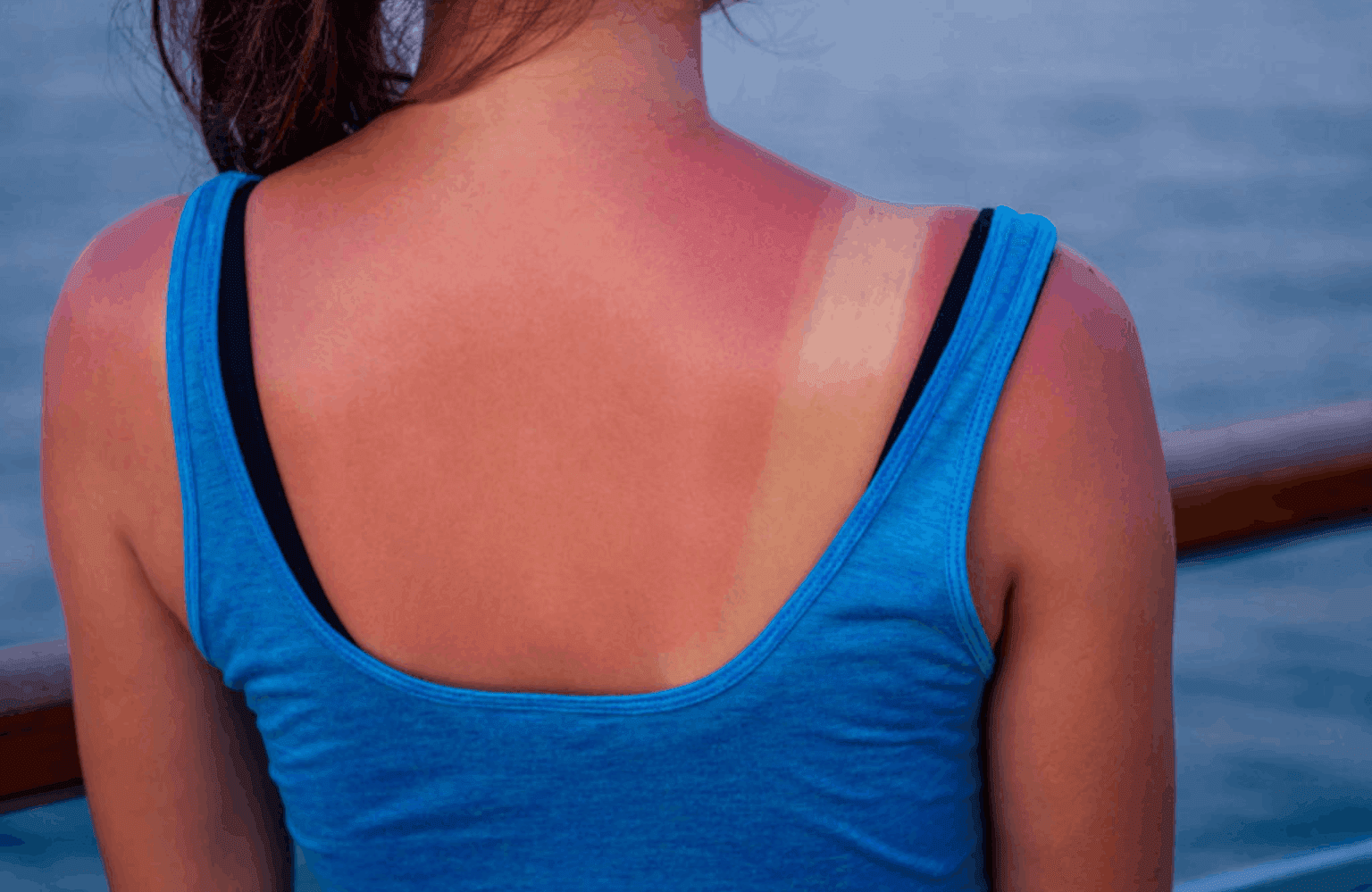
Sunburn is viewed in Ayurveda as an exogenous injury termed Atapa dagdha or Agantuja Daha caused by excessive exposure to the suns heat or Tejas. This external heat vitiates Bhrajaka Pitta located in the skin and the Rakta dhatu or blood tissue leading to redness burning sensation and blisters known as Visphota. It is aggravated by hot spicy foods and the Autumn season. Management focuses on cooling Pitta and soothing the skin. The Practical Handbook of Panchakarma Procedures recommends applying Ghrita or ghee Madhu or honey and Ghritakumari or Aloe vera to burns. Internally cooling remedies like Chandana or sandalwood and hydration with sugar water or Sarkara are advised to relieve thirst and internal heat while spicy and sour foods must be avoided.
Sunburn
Sunburn is the skin's reaction to excessive exposure to ultraviolet (UV) radiation from the sun. In Ayurveda, this is not described as a standalone internal disease but is classified as an Agantuja (exogenous/external) injury caused by Atapa (sun heat). It is treated as a type of Dagdha (burn) or Daha (burning sensation) where the Pitta Dosha (Fire element) and Rakta Dhatu (Blood tissue) are instantaneously vitiated by external heat.
1. Definition
- Modern Definition: Red, painful skin that feels hot to the touch, appearing usually within a few hours after being out in the sun too long.
- Ayurvedic Definition: A condition described as Atapa-Dagdha (scorched by the sun). It falls under the category of Agantuja Vrana (exogenous wound/injury). It is characterized by Daha (burning sensation), Raga (redness), and Ushnata (heat) in the skin due to the intense contact with Tejas (fire/heat) from the sun.
2. Etymology & Conceptual Meaning
- Atapa: Means "Sunshine" or "Heat of the sun."
- Dagdha: Means "Burnt" or "Scorched."
- Daha: Means "Burning sensation."
- Conceptual Interpretation: Ayurveda views sunburn as an external assault. The sun is the source of Tejas (fire energy). When this external fire is excessive, it penetrates the skin (Twak) and boils the blood (Rakta) and the body's internal fire (Pitta). It is considered an Agantuja (external) cause that eventually disturbs the Nija (internal) Doshas.
3. Causes (Nidana)
The primary cause is external, but internal factors can make one more susceptible.
- External Cause (Agantuja):
- Atapa Sevana: Excessive exposure to the sun. The texts explicitly list "exposure to the sun" (Atapa) as a cause for vitiating Rakta (blood) and Pitta.
- Dietary Susceptibility:
- Consuming Ushna (hot), Tikshna (sharp), and Vidahi (burning/acidic) foods makes the blood "hotter" and more prone to burning.
- Excessive intake of alcohol, sour foods (like vinegar/curd), and salt predisposes the skin to inflammation.
- Lifestyle Factors:
- Working outdoors during midday (Pitta time).
- Sarat (Autumn) season: Exposure to the sun in Autumn is considered particularly aggravating for Pitta and Blood.
4. Journey of the Disease (Pathogenesis/Samprapti)
- Samprapti Ghataka (Components):
- Pathogenesis:
- Contact: The skin comes into contact with intense Atapa (Sun heat).
- Aggravation: This external heat aggravates the Bhrajaka Pitta (pitta in the skin) and heats up the Rakta (blood).
- Localization: The heat gets trapped in the skin layers.
- Manifestation: This results in Raga (redness), Daha (burning), and in severe cases, Visphota (blisters) caused by the boiling effect of Pitta on the blood/fluids.
5. Symptoms (Lakshana)
- Early Symptoms:
- Raga: Redness of the skin (Erythema).
- Sparsha-asahishnuta: Tenderness or intolerance to touch.
- Ushnata: The skin feels hot.
- Advanced Symptoms (Severe Sunburn):
- Daha: Intense burning sensation, described as if the body is on fire.
- Visphota: Formation of blisters or bullae containing fluid (indicative of Pitta-Rakta involvement).
- Jwara: Fever may arise if the burn covers a large area (Sunstroke).
- Trishna: Excessive thirst due to loss of body fluids.
6. Different Types or Classification (Bheda)
While "Sunburn" is a general term, Ayurveda classifies burns (Dagdha) into degrees (based on Sushruta Samhita concepts referenced in Madhava Nidana context):
- Plusta Dagdha (Singed): Skin color changes (redness), extreme burning. This correlates with First-degree sunburn.
- Durdagdha (Blistered): Severe burning, formation of blisters (Visphota), and redness. This correlates with Second-degree sunburn.
- Samyak Dagdha: Not typically applicable to sunburn (refers to therapeutic cauterization).
7. Diagnosis
- Ayurvedic Diagnosis (Roga Pariksha):
- Prashna (Questioning): History of recent sun exposure (Atapa sevana).
- Darshana (Observation): Observing the Red (Rakta) or Coppery (Tamra) color of the skin.
- Sparshana (Touch): The skin is hot (Ushna) and tender.
- Differential Diagnosis:
- Must be distinguished from Visarpa (Erysipelas), which is a spreading infection. Sunburn is localized to the area exposed to the sun, whereas Visarpa spreads.
8. Disease Management
The treatment principle is Pitta-Shamana (Pacifying Pitta), Rakta-Prasadana (Soothing the blood), and Sheeta Upachara (Cooling treatments).
Diet (Ahara)
- Beneficial: Cooling and sweet foods.
- Grapes (Draksha): Recommended for burning sensation (Daha) and thirst.
- Milk and Ghee: Vital for internal cooling.
- Hydration: Drink cold water, coconut water, or water processed with Usheera (Vetiver) or Chandana (Sandalwood).
- Avoid: Hot spices, sour foods (pickles, vinegar), alcohol, and salty foods which aggravate burning.
Lifestyle (Vihara)
- Avoid Sun: Strictly avoid further Atapa (sun) exposure.
- Clothing: Wear light, soft cotton.
- Environment: Stay in a cool room, or a place cooled by moon rays or fans.
Medicines (External Application - Lepa)
- Shatadhauta Ghrita: Ghee washed 100 times in water. It is the specific remedy for burns (Agni-dagdha) and Visarpa. It cools the skin and heals wounds.
- Chandana (Sandalwood) Paste: Applying a paste of Sandalwood is the classic remedy for Daha (burning sensation).
- Aloe Vera (Kumari): Pulp of Aloe Vera is soothing for burns and blisters.
- Dashanga Lepa: A paste of 10 herbs used for inflammation, Visarpa, and burns. It contains Chandana, Usheera, and Yashtimadhu.
Medicines (Internal)
- Sarikadi / Sarivadyasava: Blood purifiers that reduce burning.
- Guluchyadi Kashaya: Reduces burning sensation and Pitta.
- Kamadudha Rasa: A mineral preparation (calcium based) used for severe burning and heat.
Panchakarma
- Lepa (Application of Pastes): The primary therapy. Cold pastes of Chandana, Usheera, and Manjistha are applied.
- Sek (Sprinkling): Sprinkling the area with cold milk or decoctions of banyan bark (Nyagrodhadi).
- Virechana (Purgation): If the patient has severe heatstroke or systemic Pitta aggravation, mild purgation with grapes (Draksha) or Trivrit is advised to expel heat.
9. Prognosis
- Sadhya (Curable): Mild to moderate sunburns are easily curable with external cooling applications.
- Krichrasadhya (Difficult): If the burn covers a large surface area leading to dehydration and fever (Jwara), or if blisters become infected, it requires intensive care.
10. Modern Correlations
- Sunburn: Matches the Ayurvedic description of Atapa-Dagdha.
- Solar Erythema: Correlates with Raga (redness).
- Photodermatitis: Correlates with Pittaja Visarpa (spreading inflammation due to heat).
11. References
-
Mayo Clinic – Sunburn: Symptoms & Causes
https://www.mayoclinic.org/diseases-conditions/sunburn/symptoms-causes/syc-20355922
-
Cleveland Clinic – Sunburn
https://my.clevelandclinic.org/health/diseases/21858-sunburn
-
MedlinePlus – Sunburn
https://medlineplus.gov/sunburn.html
-
CDC – Sun Safety & Sunburn Prevention
https://www.cdc.gov/cancer/skin/basic_info/sun-safety.htm
-
World Health Organization (WHO) – UV Radiation & Skin Damage
https://www.who.int/news-room/questions-and-answers/item/radiation-ultraviolet-(uv)
12. FAQ Section
Q: What is the best immediate Ayurvedic remedy for sunburn?
A: Shatadhauta Ghrita (washed ghee) or Aloe Vera (Kumari) gel. If these are not available, applying cold Milk or a paste of Sandalwood (Chandana) provides immediate relief from burning (Daha).
Q: Can I drink water during sunburn?
A: Yes, hydration is critical. Ayurveda recommends drinking water boiled with Usheera (Vetiver) or Shadanga Paniya (a six-herb water) to cool the body from within and relieve thirst (Trishna).
Q: Does eating spicy food make sunburn worse?
A: Yes. According to Ayurveda, Katu (pungent/spicy) and Amla (sour) foods aggravate Pitta Dosha and Rakta (blood), which can increase the burning sensation and inflammation of the skin.
Q: Is coconut oil good for sunburn?
A: Yes. Coconut oil is cooling (Sheeta) in nature and helps pacify Pitta. It is often used in medicated oils for burns. However, in the acute phase of burning, Ghee or Aloe Vera is often preferred.
Consult a Doctor
- MS4.2Midun s kumar
Ayurveda4 yrs exp
- SP4.5Dr Sreelekha P Nair
Ayurveda6 yrs exp
- VR4.2Vaidya Rohit Kumar
Ayurveda3 yrs exp
- V4.1Vairamuthu
Ayurveda8 yrs exp