
Impetigo
Reviewed by medical experts · For informational purposes only
Introductory summary
In Ayurveda impetigo is closely identified with skin conditions known as Visphota or specific types of Kshudraroga such as Pama. These disorders are primarily caused by the vitiation of Pitta dosha and Rakta or blood tissue leading to the accumulation of intense heat. According to Madhava Nidana Visphota manifests as blisters that resemble burns accompanied by symptoms like fever thirst and burning sensations. The pathology involves the corruption of the skin often triggered by dietary factors that aggravate Pitta. Management principles found in texts like Ayurveda Prakasha emphasize the use of purified minerals such as Haritala and Gandhaka to treat spreading blisters and itching. Treatment also focuses on blood purification and the application of cooling herbal pastes to reduce inflammation.
Impetigo
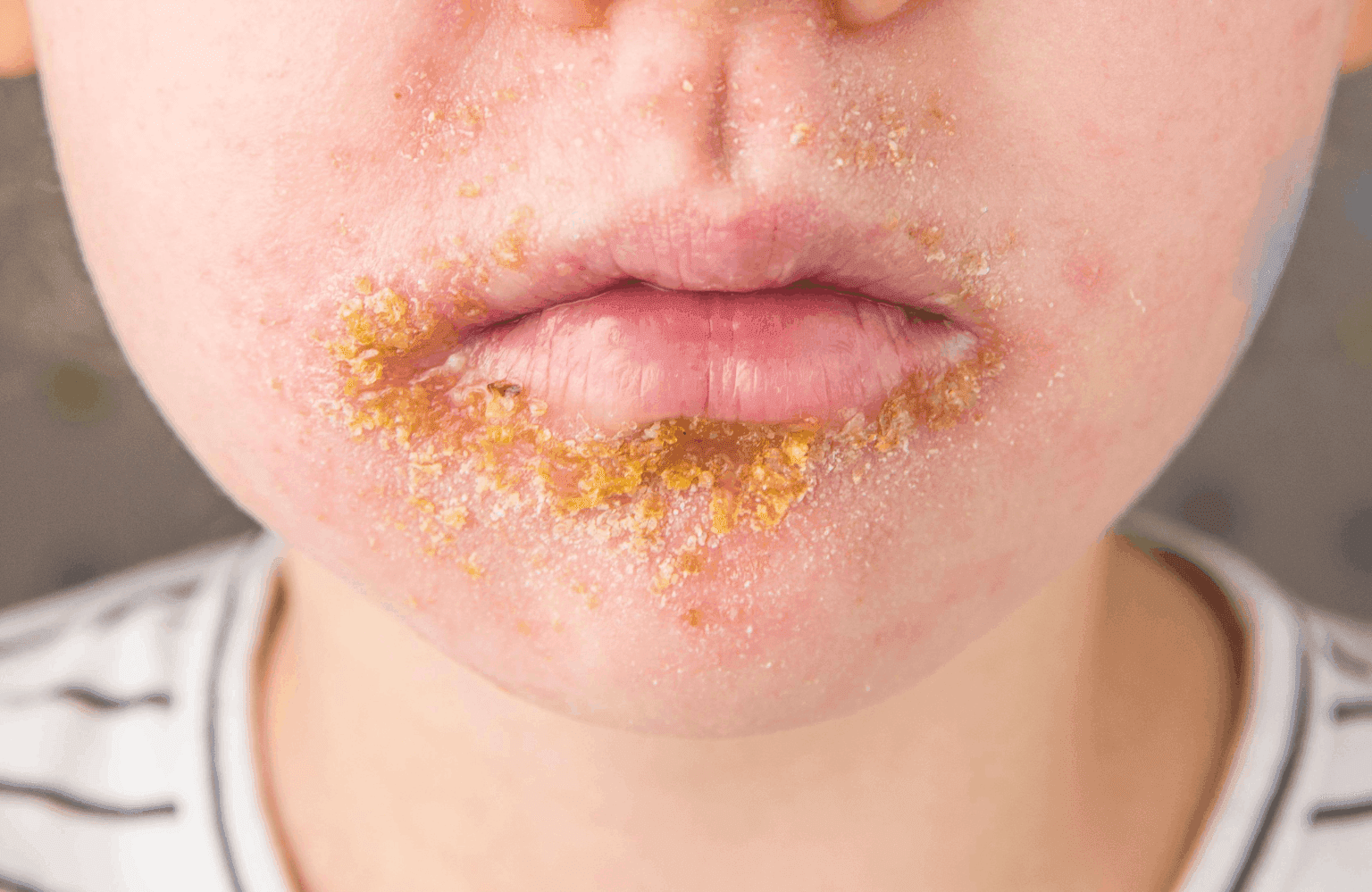
Impetigo is a common and highly contagious bacterial skin infection that mainly affects infants and children. It typically appears as red sores on the face, especially around the nose and mouth, and on the hands and feet. In Ayurveda, the clinical presentation of Impetigo correlates with various skin conditions described under Kushtha (skin diseases), Visphota (blistering eruptions), and Kshudra Roga (minor diseases). (britannica.com)
1. Definition
In Ayurveda, Impetigo-like conditions are seen as Visphota, characterized by blisters resembling burns, with redness, burning sensation, and suppuration. They may also fall under Kshudraroga, such as Ajagallika (pustules common in children) or Pama, often with itching and discharge. These conditions primarily stem from Rakta Dhatu contamination.
2. Etymology & Conceptual Meaning
-
Literal Meaning: Visphota means “to burst/blister.” Kshudraroga means “minor disease.”
-
Conceptual Interpretation: Skin infections are systemic heating of the blood. Aupasargika Roga (contagious disease) spreads via contact, shared clothes, or sleeping together (Madhava Nidana).
3. Causes (Nidana)
Dietary Causes
-
Pitta-Aggravating Foods: Sour (Amla), salty (Lavana), pungent (Katu).
-
Incompatible Foods: Viruddha Ahara like fish with milk.
-
Fermented Foods: Curd, vinegar, fermented liquids.
Lifestyle Causes
-
Hygiene & Contact: Touching infected persons.
-
Environmental Factors: Heat, sun, wind.
-
Sleep: Daytime sleep (Divaswapna), aggravates Kapha.
Psychological Factors
- Emotional Stress: Anger (Krodha), increases Pitta, affecting blood quality.
4. Journey of the Disease (Pathogenesis/Samprapti)
-
Dosha: Primarily Pitta and Kapha, with Rakta involvement.
-
Dushya (Tissues): Twak (skin), Rakta, Mamsa, Lasika.
-
Agni: Impaired digestion → Ama formation, blocking skin channels.
-
Adhisthana (Site): External pathway (Bahya Roga Marga).
-
Process: Vitiated Pitta and Rakta lodge in skin → vesicles (Sphota) → burst → crust.
5. Symptoms (Lakshana)
Early Symptoms
-
Redness, discoloration.
-
Itching (Kandu), burning (Daha).
-
Slight fever (Jwara).
Advanced Symptoms
-
Blisters: Vesicles (Sphota), burn-like.
-
Suppuration: Pus-filled (Puyapoornata).
-
Crusting: Oozing/scab in Pama or Vicharchika.
-
Pain: Pricking (Toda), burning depending on Dosha.
6. Different Types (Bheda)
- Vataja: Blackish, rough, painful.
- Pittaja: Red/yellow/copper, hot, burning (Bullous Impetigo).
- Kaphaja: Pale, itchy, hard, slow.
- Raktaja: Blood-vitiated, red eruptions, bleeding.
- Aja-gallika: Pustules in children.
7. Diagnosis
Ayurvedic Diagnosis
-
Visual (Darshana): Observe color/discharge.
-
Pulse (Nadi): Detect Pitta/Kapha aggravation.
-
History: Dietary and contact assessment.
Differential Diagnosis
-
Masurika (Chickenpox): Systemic, generalized vesicles.
-
Visarpa: Rapidly spreading, deeper tissues.
8. Disease Management
Diet (Ahara)
-
Avoid: Sour, salty, spicy, curd, jaggery.
-
Recommended: Bitter vegetables (Patola, Karvellaka), old rice, green gram (Mudga).
Lifestyle (Vihara)
- Maintain hygiene, avoid contact, sun, scratching.
Medicines
-
External (Lepa): Shirisha, Madhuka, Neem, Shatadhouta Ghrita.
Panchakarma
-
Virechana: Purges Pitta/blood toxins.
-
Raktamokshana: Bloodletting; Jalauka (leech therapy) for obstinate cases.
9. Prognosis
-
Curable: Limited to skin (Twak) → Sadhya with hygiene/external application.
-
Complications: Can spread → Visarpa or chronic Kushtha.
10. Modern Correlations
-
Similarities: Visphota (blisters), Aja-gallika (pustules) ↔ Impetigo (Bullous/Non-bullous).
-
Differences: Modern medicine: Staphylococcus aureus, Streptococcus pyogenes. Ayurveda: Dosha imbalance (Pitta/Rakta).
-
Limitations: Herbal remedies for mild/moderate cases; severe infections may require integrative care.
11. References
- Sugathi Ayurveda – Impetigo
https://sugathiayurveda.com/impetigo/ - Jiva Ayurveda – Impetigo
https://www.jiva.com/diseases-ayurveda/hair-and-skin/impetigo - AYUSH – Scientific basis of Kushtha
https://ayusoft.ayush.gov.in/scientific-basis-of-ayurvedic-management-of-skin-disorders-kushtha/
12. FAQ Section
Q: Is Impetigo contagious according to Ayurveda?
A: Yes. Ayurveda explicitly categorizes skin diseases (Kushtha and related ailments) as Aupasargika Roga, meaning they spread through contact (Gatrasamsparsha) and sharing items like clothes.
Q: What is the best herb for washing Impetigo sores?
A: A decoction (tea) made from Neem (Nimba) leaves or Triphala is excellent for washing the sores due to their antimicrobial and wound-healing properties,.
Q: Should I change my diet if I have skin blisters?
A: Yes. You should strictly avoid sour foods (pickles, vinegar), salty items, and curd (yogurt), as these aggravate Pitta and Rakta, worsening the pus and inflammation,.
Q: Can leeches help with skin infections?
A: Yes, Jalauka (leeches) are prescribed in Ayurveda for Raktaja (blood-borne) skin diseases to remove the impure blood from the localized area, reducing swelling and burning instantly
Consult a Doctor
- SP4.5Dr Sreelekha P Nair
Ayurveda6 yrs exp
- SJ3.9SUMEDH JOSHI
Ayurveda7 yrs exp
- VH3.9Vaidya Harsh
Ayurveda9 yrs exp
- GG3.0Dr GN Govinda
Ayurveda1 yrs exp