Migraine
Reviewed by medical experts · For informational purposes only
Introductory summary
Migraine correlates with the Ayurvedic condition Ardhavabhedaka characterized by intense piercing pain restricted to one half of the head. It is primarily caused by the vitiation of Vata dosha often associated with Kapha or Pitta due to dry diet and suppression of natural urges. Symptoms include severe hemicrania giddiness and sensory sensitivity. Management emphasizes Shiro virechana or errhine therapy using medicated oils like Shadbindu Taila and Anu Taila to clear head channels. The Ayurvedic Pharmacopoeia of India recommends herbs like Lohitaniryasa and Satapatri specifically for this condition. Internal medicines such as Mahalakshmivilasa Rasa and external applications like Pathyadi Lepa are employed to pacify Vata and relieve pain. Untreated cases can lead to sensory impairment including blindness or deafness.
Migraine
Migraine is a neurological condition frequently characterized by intense, debilitating headaches, often localized to one side of the head. In Ayurveda, this condition correlates with Ardhavabhedaka (literally "half-penetrating pain"). It is classified under Shiro-Roga (Diseases of the Head). While headaches can be symptoms of various imbalances, Ardhavabhedaka is a specific disease entity caused primarily by the vitiation of Vata Dosha (wind/air element), often combined with Kapha (earth/water element) or Pitta (fire element), leading to severe, cutting pain in half of the cranium.
1. Definition
- Modern Definition: A recurrent throbbing headache that typically affects one side of the head and is often accompanied by nausea and disturbed vision.
- Ayurvedic Definition: Ardhavabhedaka is defined as a severe type of headache where piercing or splitting pain is felt in half of the head. It affects the neck, eyebrows, temples, ears, eyes, and forehead on one side. If left untreated, it is considered capable of destroying sight or hearing [Madhava Nidana, Charaka Samhita].
2. Etymology & Conceptual Meaning
- Literal Meaning:
- Ardha: Half.
- Avabhedaka: Breaking, splitting, or piercing.
- Meaning: A condition characterized by "splitting pain in half of the head."
- Conceptual Interpretation: The pain is described as violent, comparable to the sensation of an Arani (a wooden stick used to churn fire) being bored into the head, or being bitten by a wood-boring insect [Madhava Nidana].
3. Causes (Nidana)
According to Madhava Nidana and Charaka Samhita, the following factors aggravate Vata and contribute to head diseases:
- Dietary Causes:
- Excessive intake of Ruksha (dry) foods.
- Adhyashana: Eating before the previous meal has been digested [Madhava Nidana].
- Atyashana: Overeating.
- Lifestyle Causes:
- Vegadharana: Suppression of natural urges (such as sneezing, yawning, or defecation) [Madhava Nidana].
- Avashyaya: Exposure to dew, frost, or fog.
- Pratvata: Exposure to strong direct winds (specifically Eastern winds).
- Vyavaya: Excessive sexual indulgence.
- Ayasa: Excessive physical exertion [Madhava Nidana].
4. Journey of the Disease (Pathogenesis/Samprapti)
- Samprapti Ghataka (Components):
- Dosha: Vata (Primary), often associated with Kapha or Pitta.
- Dushya (Tissues): Rakta (Blood), Sira (Blood vessels/nerves).
- Srotas (Channels): Pranavaha and Rasavaha Srotas in the head.
- Adhisthana (Site): Half of the head (Shiro-ardha).
- Pathogenesis:
- Due to the consumption of dry foods and suppression of urges, the Vata Dosha gets aggravated.
- This Vata, sometimes unaccompanied (Kevala) and sometimes combined with Kapha, moves upward.
- It seizes half of the head, lodging in the neck, eyebrow, temple, and ear of that side.
- It produces excruciating pain in the blood vessels (Sira) and nerves, manifesting as Ardhavabhedaka [Madhava Nidana].
5. Symptoms (Lakshana)
- General Symptoms:
- Ati-Vedana: Severe, excruciating pain in one half of the head [Madhava Nidana].
- Bhrama: Giddiness or vertigo [Madhava Nidana].
- Shankha-Nistoda: Pricking pain in the temples.
- Netra-Karna-Ruja: Pain radiating to the eye and ear on the affected side.
- Specific Sensations:
- The pain is described as if the head is being churned or split open [Madhava Nidana].
- Sudden recurrence of attacks (paroxysmal nature).
6. Different Types or Classification (Bheda)
While Ardhavabhedaka is the primary term for Migraine, Ayurveda distinguishes other related headaches based on triggers:
- Ardhavabhedaka (Hemicrania): Pain strictly in half the head. Vata-dominant.
- Suryavarta (Sun-pain): A headache that starts at sunrise, increases with the sun's intensity, and subsides at sunset. This is often correlated with frontal sinusitis or specific circadian migraines [Madhava Nidana].
- Anantavata: Involves pain in the back of the neck, eyes, and eyebrows, accompanied by jaw stiffness and eye tremors (often correlated with Trigeminal Neuralgia, but shares symptoms with severe migraine) [Madhava Nidana].
7. Diagnosis
- Ayurvedic Diagnosis (Roga Pariksha):
- Prashna (Questioning): History of suppression of urges, digestive habits, and unilateral nature of pain.
- Darshana (Observation): Observing signs of Vata aggravation such as dryness or exhaustion.
- Differential Diagnosis:
8. Disease Management
Treatment focuses on Vata-Shamana (pacifying wind) and Snehana (Oleation) of the head.
Diet (Ahara)
- Beneficial: Consumption of Ghrita (Ghee), milk, and warm, unctuous foods.
- Avoid: Dry, cold, and stale foods; irregular eating habits.
Medicines
- Shadbindu Taila: An oil used for Nasya (nasal drops). It is indicated for Shiro-roga (Head diseases), hair loss, and loose teeth. It expels morbid humors from the head [AFI, Part I, 8:58].
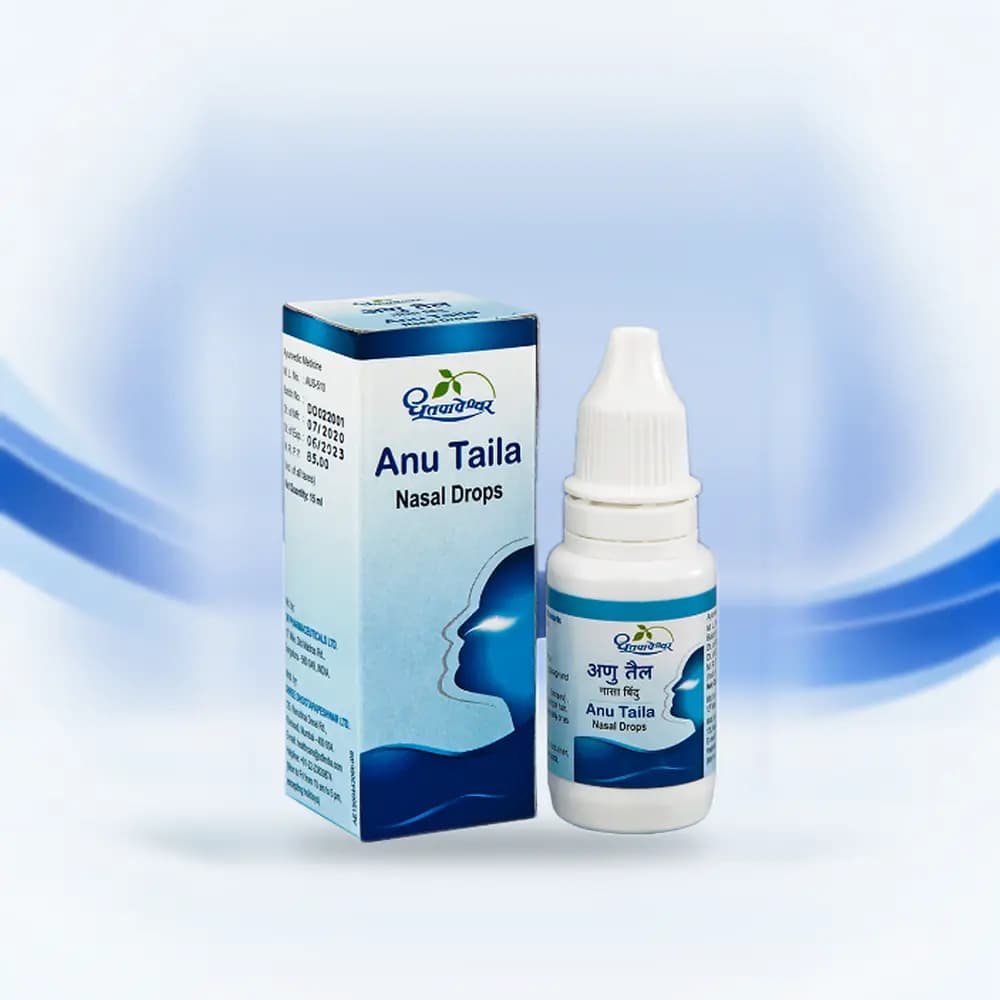
- Anu Taila: A medicated oil used for Nasya, beneficial for diseases of the head and neck (Urdhva-Jatrugata Roga) [AFI, Part I, 8:1].
- Lohitaniryasa (Dragon's Blood): The exudate of Dracaena cinnabari. It is explicitly listed as a therapeutic agent for Ardhavabhedaka (Migraine) and Shirahshula (Headache) [API, Vol 6].
- Pathyadi Lepa: A paste applied externally to the forehead for fever and inflammation, often used in headaches [AFI, Part I, 11:7].
- Lakshmivilasa Rasa (Naradya): Used for chronic diseases, including headache (Shirahshula) and sinusitis (Pinas) [AFI, Part I, 20:38].
- Godanti Bhasma: (Often used in practice for headaches, though specific text reference in uploaded source focuses on Lohitaniryasa).
Panchakarma (Therapies)
- Nasya (Errhine Therapy): The administration of medicated oils (like Shadbindu Taila) through the nostrils is the most critical treatment. It clears the head channels [Chakradatta].
- Shirovasti: Holding medicated oil on the head using a cap-like structure. This is specific for Vata disorders of the head [Panchakarma Handbook].
- Shirodhara: Pouring a continuous stream of oil on the forehead. Indicated for Shirahshula (Headache) and Insomnia [Panchakarma Handbook].
- Shiro-Abhyanga: Head massage with oils like Kshirabala Taila or Dhanvantara Taila [Panchakarma Handbook].
9. Prognosis
- Krichrasadhya (Difficult to Cure): Ardhavabhedaka can be difficult to cure if it becomes chronic.
- Complications: According to Madhava Nidana, if Ardhavabhedaka is not treated properly, it can lead to Nayan-nasha (Loss of vision) or Karna-nasha (Loss of hearing) [Madhava Nidana].
10. Modern Correlations
- Similarities:
- Ardhavabhedaka perfectly matches Migraine or Hemicrania in terms of unilateral location and severity.
- Suryavarta correlates with Frontal Sinusitis or Cluster Headaches due to the periodicity related to daylight.
- Differences: Ayurveda emphasizes the "drying" effect of Vata and digestive impurities (Ama) as the root, whereas modern medicine focuses on neurovascular changes.
11. References
-
World Health Organization (WHO) – Headache disorders
https://www.who.int/news-room/fact-sheets/detail/headache-disorders
-
National Institute of Neurological Disorders and Stroke (NINDS – NIH) – Migraine
https://www.ninds.nih.gov/health-information/disorders/migraine
-
Centers for Disease Control and Prevention (CDC) – Migraine and severe headache
https://www.cdc.gov/arthritis/basics/headaches.htm
-
Mayo Clinic – Migraine
https://www.mayoclinic.org/diseases-conditions/migraine-headache
-
StatPearls (NCBI Bookshelf) – Migraine Headache
https://www.ncbi.nlm.nih.gov/books/NBK560787/
-
National Health Portal of India – माइग्रेन (Migraine)
https://www.nhp.gov.in/disease/neurological/migraine
-
Ministry of Health & Family Welfare, Government of India – तंत्रिका रोग
https://www.mohfw.gov.in/
12. FAQ Section
Q: What is the Ayurvedic name for Migraine?
A: It is primarily known as Ardhavabhedaka (pain in half the head). Another related condition is Suryavarta (Sun-headache) [Madhava Nidana].
Q: Can Ayurvedic oils help with Migraine?
A: Yes. Nasya (nasal drops) using Shadbindu Taila or Anu Taila is highly recommended to clear the channels of the head and relieve pain [AFI, Part I].
Q: What lifestyle changes does Ayurveda suggest for Migraine?
A: One should avoid suppressing natural urges (like sneezing or using the toilet), avoid direct exposure to strong winds and fog, and avoid eating dry or stale foods [Madhava Nidana].
Q: Is there a specific herb mentioned for Migraine in the Pharmacopoeia?
A: Yes. Lohitaniryasa (Dragon's blood exudate) is listed in the Ayurvedic Pharmacopoeia of India (Vol 6) specifically for treating Ardhavabhedaka (Migraine).
Q: Can Migraine lead to other problems if ignored?
A: According to Ayurvedic texts, untreated Ardhavabhedaka can impair the sensory organs, potentially leading to blindness or deafness [Madhava Nidana].
Consult a Doctor
- AK4.8Dr. Amalnath K Viswanathan
Ayurveda4 yrs exp
- AI4.9Dr. Aayush Ishwar
Ayurveda2 yrs exp
- KJ4.6Dr Kruti Jaxesh Bhavsar
Ayurveda1 yrs exp
- MS4.2Midun s kumar
Ayurveda4 yrs exp
Buy Medicine
 Prescribed to you4.3₹20 cashback
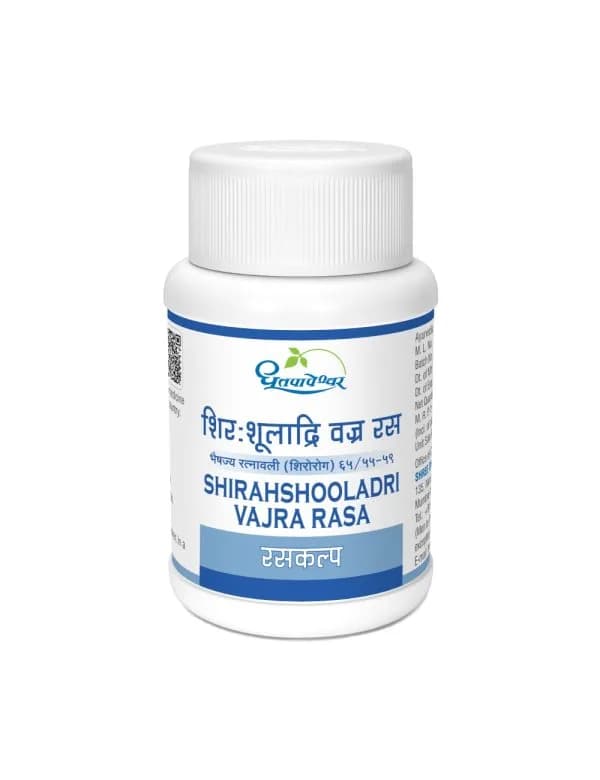
Shirahshooladri Vajra Rasa (Dhootapapeshwar) SDL
SDLसिरदर्द से राहत में सहायक
Strip of 30 Tablets
4.3
₹205Get ₹20 Cashback