
Nerve pain
Reviewed by medical experts · For informational purposes only
Introductory summary
Nerve pain correlates with Ayurvedic conditions classified as Vatavyadhi specifically Snayugata Vata or Majjagata Vata. It arises when aggravated Vata dosha affects the nerves and marrow causing shooting pain numbness and stiffness. Common forms include Gridhrasi known as sciatica and Viswachi affecting the arms. Causes involve dry and cold foods excessive exertion and suppression of urges. Management focuses on pacifying Vata through Snehana or oleation and Swedana or fomentation. Key therapies include Abhyanga using medicated oils like Mahanarayana Taila and Patra Pinda Sweda which uses heated herbal boluses. Basti or medicated enema is the primary treatment while localized procedures like Kati Vasti and Nasya help restore nerve function and reduce pain.
Nerve Pain
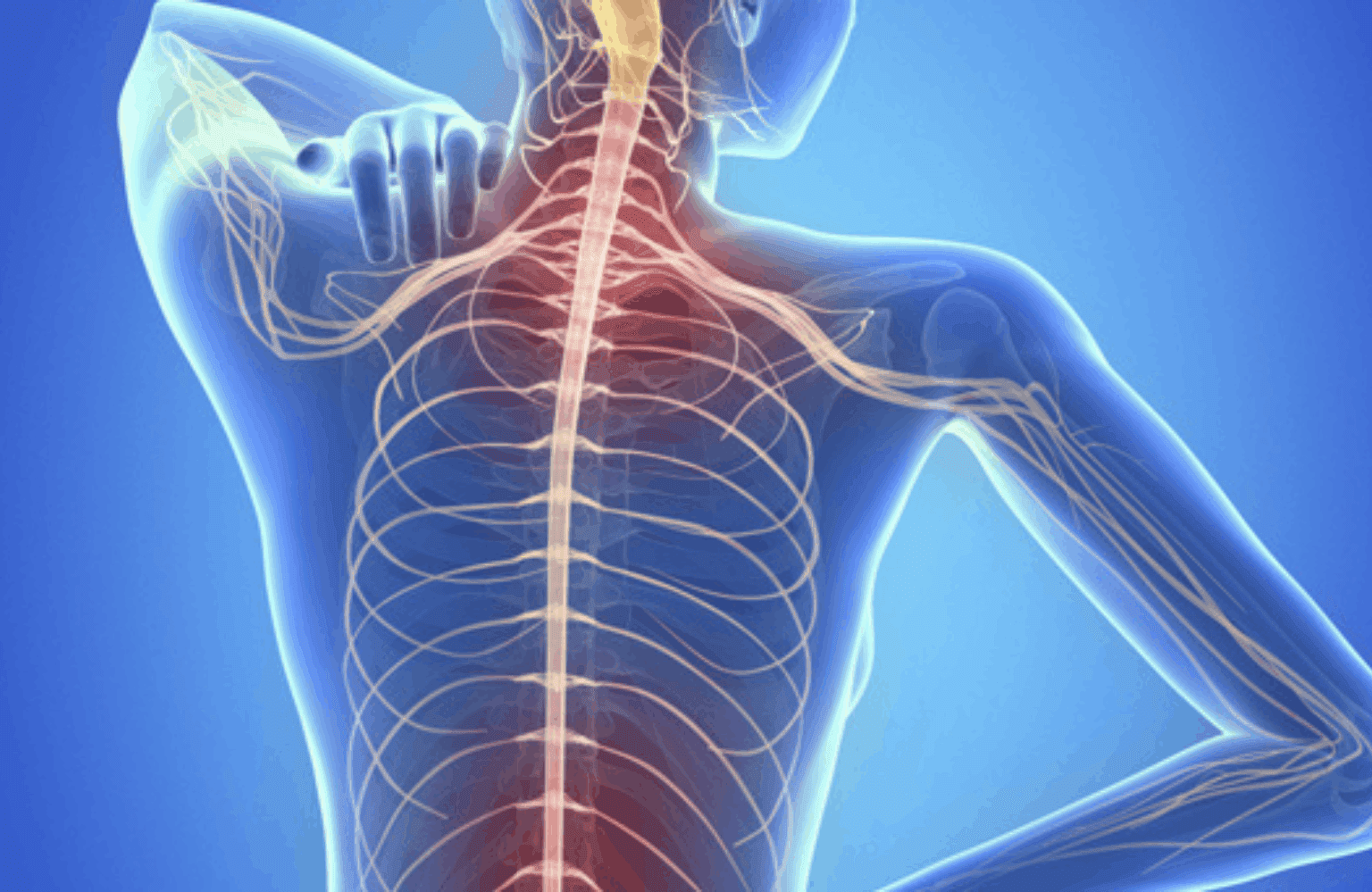
Nerve Pain (Neuropathic pain) is a chronic condition where pain arises from damage or dysfunction in the nervous system. In Ayurveda, the entire nervous system and the sensation of pain are governed by Vata Dosha (the bio-energy of air and ether). Nerve pain is broadly classified under Vatavyadhi (Vata diseases) or more specifically as Snayugata Vata (Vata affecting ligaments/nerves) or Majjagata Vata (Vata affecting marrow/nerve tissue). It manifests as shooting, burning, or stabbing sensations often accompanied by numbness or tingling.
1. Definition
Modern Definition:
Pain caused by a lesion or disease of the somatosensory nervous system, often described as burning, shooting, or "pins and needles."
Ayurvedic Definition:
Nerve pain is defined as Shula (pain) or Ruk (distress) caused by the aggravation of Vata in the Sira (vessels/nerves), Snayu (ligaments/nerves), or Majja (marrow/nerve tissue). It is characterized by intense, irregular pain that may migrate or radiate, often compared to the sensation of being pierced by needles (Toda) or electric shock-like movement.
2. Etymology & Conceptual Meaning
- Vatavyadhi: A compound word where Vata refers to the biological humor responsible for movement and sensation, and Vyadhi means disease.
- Snayu: Often translated as ligaments, tendons, or nerves.
- Gridhrasi (Sciatica): A specific type of nerve pain where the patient walks like a vulture (Gridhra) due to severe pain radiating from the back to the leg.
- Conceptual Interpretation: Ayurveda views nerve pain as a dysfunction of Srotas (microchannels). Loss of Sneha (unctuousness) in nerve tissue leads to pain.
3. Causes (Nidana)
Dietary Causes
- Excessive intake of Ruksha, Sheeta, and Laghu foods
- Excess use of Katu, Tikta, and Kashaya tastes
- Langhana (fasting)
Lifestyle Causes
- Ativyayama – excessive exertion
- Jagarana – night awakening
- Vegadharana – suppression of urges
- Abhighata – trauma to Marma
Psychological Factors
4. Journey of the Disease (Samprapti)
- Dosha: Vata (Vyana Vayu, Apana Vayu)
- Dushya: Majja, Rakta, Snayu
- Srotas: Majjavaha Srotas
5. Symptoms (Lakshana)
- Supti – numbness
- Shula – severe pain
- Stambha – stiffness
- Sankocha – contraction
- Kampa – tremors
- Daha – burning sensation
6. Different Types (Bheda)
Nerve pain is classified based on the location and the specific Vata disorder:
-
Gridhrasi: Sciatic nerve pain.
-
Viswachi: Arm/Brachial nerve pain.
-
Khalli: Neuralgic pain with cramps.
-
Shiroshula: Neuralgic headache.
-
Doshic Subtypes:
◦ Vataja: Intense pain, dryness.
◦ Vata-Kaphaja: Pain with heaviness, drowsiness, and stiffness.
◦ Vata-Pittaja: Pain with burning sensation (Daha).
7. Diagnosis
• Ayurvedic Diagnosis (Roga Pariksha):
◦ Prashna (Questioning): Identifying the nature of pain (radiating vs. localized) and triggers (cold vs. movement).
◦ Sparshana (Palpation): Checking for coldness (Vata), heat (Pitta), or stiffness.
• Differential Diagnosis: Differentiating between Amavata (Rheumatoid Arthritis - systemic joint pain) and Vatavyadhi (Neurological/Nerve pain - localized or radiating along nerve paths).
8. Disease Management
Medicines
- Yogaraja Guggulu
- Kaishora Guggulu
Oils
- Mahanarayana Taila
- Vishagarbha Taila
- Ksheerabala Taila
Herbs
- Ashwagandha
- Rasna
- Guduchi
- Lashuna
Panchakarma
- Abhyanga
- Swedana
- Basti
- Kati Vasti
- Greeva Vasti
- Nasya
9. Prognosis
• Curable (Sadhya): New cases occurring in strong patients without complications are generally curable.
• Difficult (Krichra): Chronic cases, those affecting the marrow (Majja), or involving muscle wasting are difficult to treat.
• Incurable (Asadhya): If accompanied by severe complications like complete loss of sensation or severe deformities.
10. Modern Correlations
• Sciatica: Correlates directly with Gridhrasi (pain radiating from back to leg).
• Brachial Neuralgia: Correlates with Viswachi.
• Peripheral Neuropathy: Correlates with Supti (numbness) and Vatavyadhi involving sensory loss.
• Trigeminal Neuralgia: Correlates with facial types of Vataja Shula or Ardita.
11. References
-
Mayo Clinic – Peripheral Neuropathy
https://www.mayoclinic.org/diseases-conditions/peripheral-neuropathy/symptoms-causes/syc-20352061
Detailed explanation of nerve damage, causes, symptoms (burning, tingling, numbness), and treatment.
-
Cleveland Clinic – Neuropathic Pain
https://my.clevelandclinic.org/health/diseases/15833-neuropathic-pain
Clear overview of what nerve pain is, how it differs from other pain, diagnosis, and management.
-
Johns Hopkins Medicine – Peripheral Neuropathy
https://www.hopkinsmedicine.org/health/conditions-and-diseases/peripheral-neuropathy
Trusted academic source explaining nerve injury, causes like diabetes, infections, trauma.
-
NIH – National Institute of Neurological Disorders and Stroke
https://www.ninds.nih.gov/health-information/disorders/peripheral-neuropathy
Authoritative research-based information on nerve disorders and neuropathic pain.
-
AIIMS – Neurological Disorders (India)
https://www.aiims.edu/en/departments-and-centers/neurology.html
Clinical information and research related to nerve disorders in the Indian population.
-
1mg Hindi – नसों का दर्द
https://www.1mg.com/hi/diseases/neuropathic-pain-503
Hindi explanation of nerve pain causes, symptoms, and treatment options.
12. FAQ Section
Q: What is the best Ayurvedic oil for nerve pain?
A: Mahanarayana Taila is widely considered the best oil for general nerve pain and Vata disorders. It nourishes the tissues and reduces pain. For severe stiffness, Vishagarbha Taila is often used.
Q: Is Panchakarma effective for sciatica?
A: Yes. Therapies like Kati Vasti (oil pooling on the back) and Basti (medicated enema) are highly effective for Sciatica (Gridhrasi) as they treat the root cause of Vata aggravation in the lower body.
Q: Can diet affect nerve pain?
A: Yes. According to Ayurveda, eating dry, cold, and rough foods (like crackers, raw salads, cold water) increases Vata dosha, which can worsen nerve pain. A diet of warm, cooked, and slightly oily food is recommended.
Q: What herbs help with nerve regeneration in Ayurveda?
A: Ashwagandha is a premier herb known for strengthening the nervous system (Balya) and is often used in conditions involving nerve weakness or degeneration. Guduchi is also used for its rejuvenating properties.
Consult a Doctor
- AG4.5Dr Anshuman Gupta
Ayurveda8 yrs exp
- MS4.2Midun s kumar
Ayurveda4 yrs exp
- SP4.5Dr Sreelekha P Nair
Ayurveda6 yrs exp
- D4.3Dr Divya
Ayurveda2 yrs exp