Amritarishta Uses and Properties
Reviewed by medical experts · For informational purposes only
Introductory summary
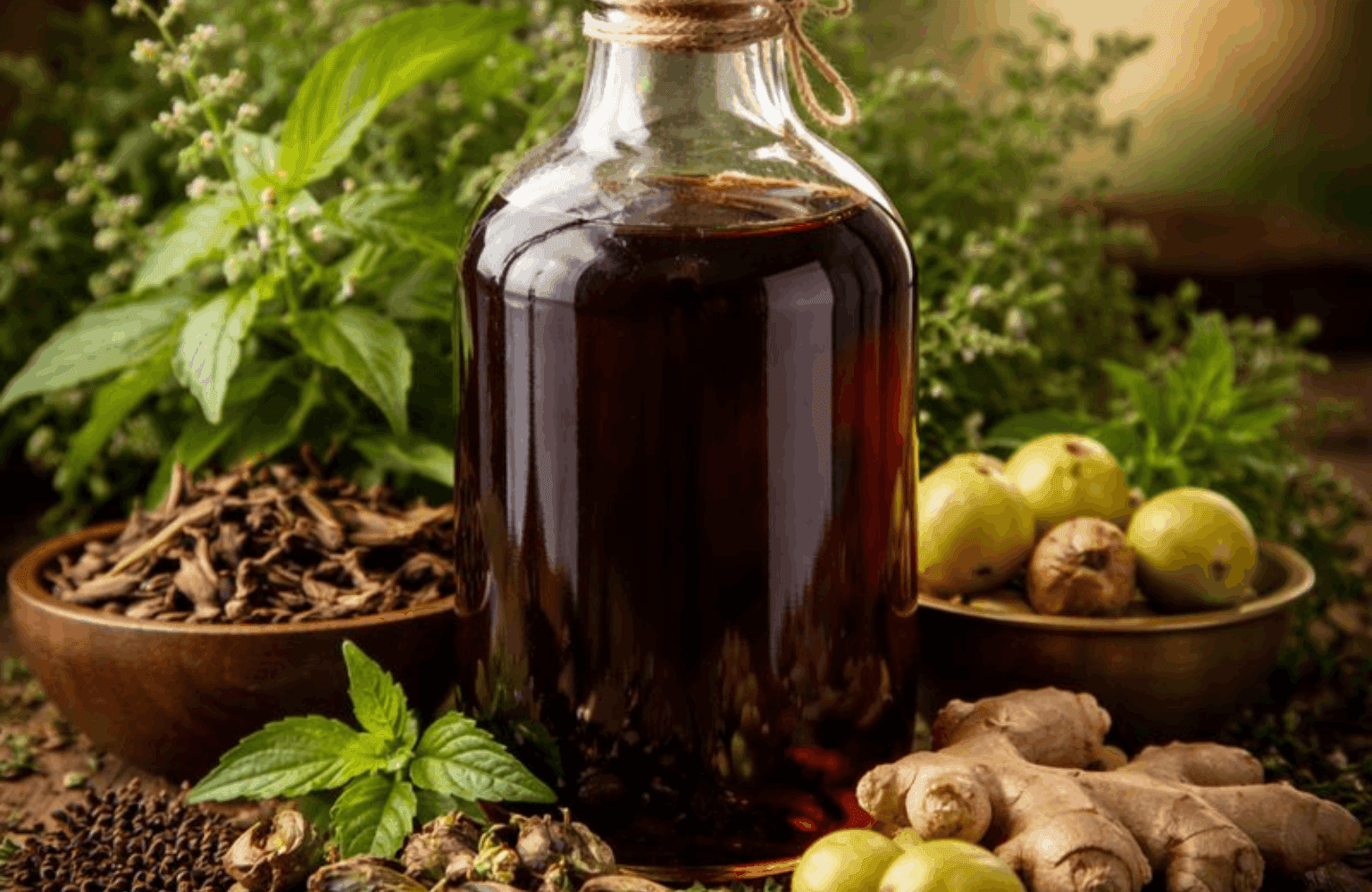
Amritarishta is a fermented liquid Ayurvedic formulation primarily derived from the stem of Guduchi also known as Amrita. It is extensively described in the Ayurvedic Formulary of India and Bhaishajyaratnavali as a potent remedy. The preparation involves fermenting a decoction of Guduchi and Dashamula roots with jaggery and Dhataki flowers along with digestive spices like ginger and cumin. It is therapeutically renowned for treating Sarva Jvara or all types of fevers including chronic and intermittent varieties. By digesting metabolic toxins known as Ama and boosting immunity it aids in post fever recovery and restoring strength. The recommended dosage is typically 12 to 24 ml taken twice daily after meals often mixed with an equal amount of water.
Amritarishta
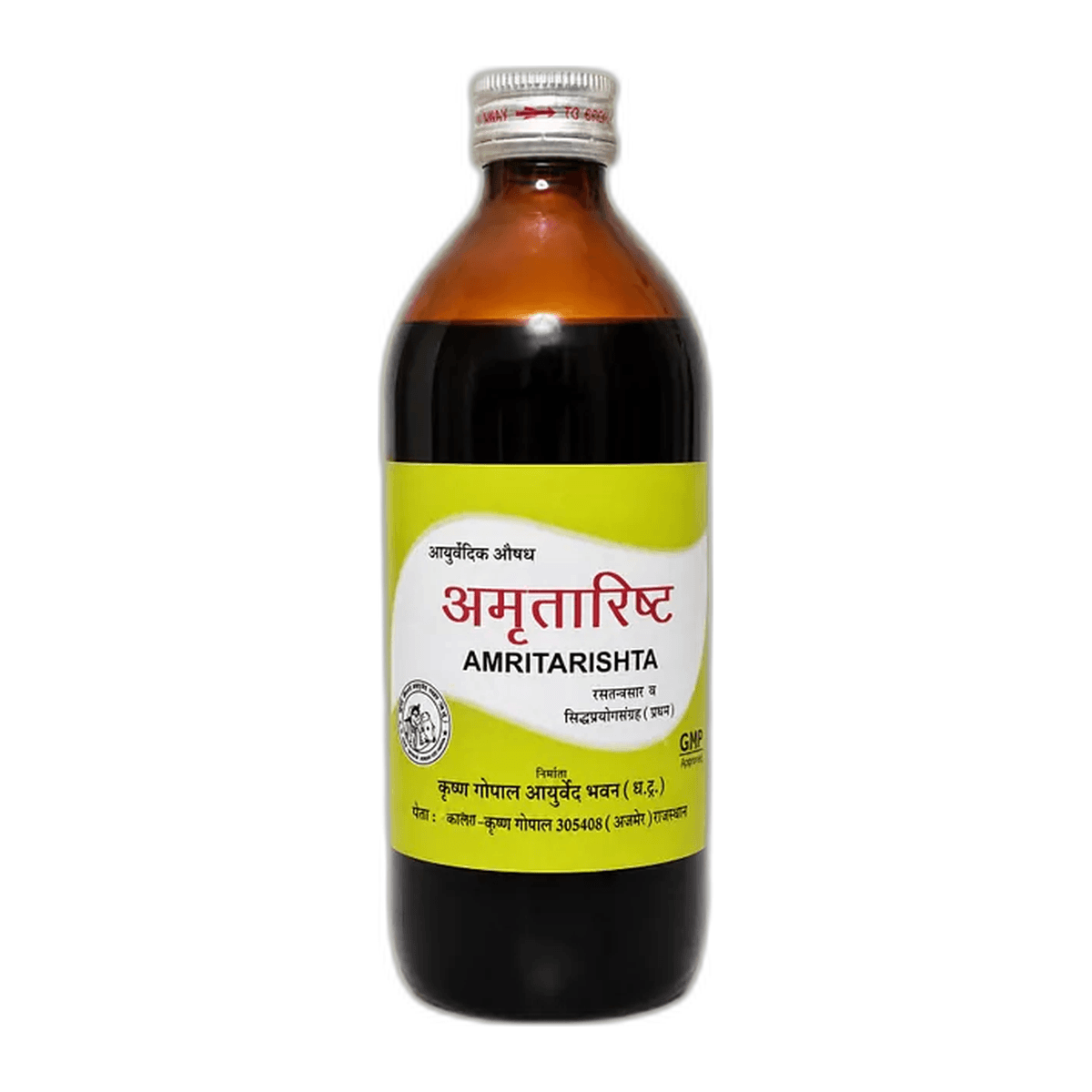
Amritarishta is a widely used Ayurvedic liquid medicine (fermented tonic) known for its potent immunomodulatory and fever-reducing properties. It is named after its primary ingredient, Amrita (Guduchi/Giloy), which is revered as "Nectar" in Ayurveda for its ability to bestow longevity and health. This formulation is classically prescribed for treating all types of fevers (Sarva Jvara), boosting immunity, and restoring strength after illness.
1. Name of the Medicine
- Common Name: Amritarishta.
- Classical Name: Amṛtāriṣṭa.
- Main Ingredient: Guduchi (Tinospora cordifolia), also known as Amrita.
2. Brief Description
Amritarishta is a dark brown, fermented liquid preparation classified as an Arishta. Arishtas are self-generated herbal wines prepared by fermenting decoctions of herbs with jaggery (Guda) and initiating fermentation with the flowers of Dhataki (Woodfordia fruticosa). It acts as a natural tonic, anti-pyretic (fever reducer), and rejuvenator. It is extensively used to treat chronic fevers, boost digestive power, and improve vitality following debilitating illnesses.
3. Source / Part Used
- Type: Polyherbal Fermented Liquid (Arishta).
- Key Ingredients & Parts Used:
- Amrita (Guduchi) - Stem (St.): The primary ingredient.
- Bilva, Shyonaka, Gambhari, Patala, Agnimantha (Dashamula roots/bark): For reducing inflammation and Vata.
- Shalaparni, Prishniparni, Brihati, Kantakari, Gokshura (Laghu Panchamula): For respiratory and urinary support.
- Jaggery (Guda): The source of sugar for fermentation.
- Dhataki Flowers: The fermentation initiator.
- Spices (Praksepa Dravyas): Cumin, Ginger, Black Pepper, Long Pepper, Nagakeshara, Kutki, Ativisha, Indrayava.
4. Ayurvedic Properties
Based on its ingredients (dominated by Guduchi and Dashamula):
- Rasa (Taste): Tikta (Bitter) and Kashaya (Astringent), with a sweet undertone from the jaggery.
- Guna (Qualities): Laghu (Light) and Ushna (Heating/digestive).
- Virya (Potency): Ushna (Hot) - helps in digesting Ama (toxins).
- Vipaka (Post-digestive effect): Madhura (Sweet).
- Dosha Effect: Tridosha Shamaka (Balances all three doshas), specifically effective against Vata and Pitta associated fevers.
5. Key Benefits
- Reduces Fever: Highly effective in Sarva Jvara (all types of fevers), including chronic, intermittent, and viral fevers.
- Boosts Immunity: Guduchi is a renowned immunomodulator (Rasayana), helping the body fight infections.
- Improves Digestion: Contains digestive spices like Trikatu (Ginger, Pepper, Long Pepper) that clear Ama (metabolic toxins) and improve appetite.
- Post-Fever Recovery: Restores strength and relieves body aches and fatigue caused by long-standing illness.
- Blood Purification: Ingredients like Katuki and Indrayava help detoxify the liver and blood.
6. Uses / Indications
Amritarishta is indicated in Ayurveda for the following conditions:
- Fevers: Sarva Jvara (All types of fevers), Visama Jvara (Intermittent fever/Malaria), and Jirna Jvara (Chronic fever).
- Digestive Issues: Agnimandya (Digestive impairment) and indigestion.
- Liver & Spleen: Useful in liver disorders and spleen enlargement due to its bitter ingredients.
- Rheumatic Conditions: Helps in Amavata (Rheumatoid arthritis) by digesting toxins.
- Respiratory: Useful in cough and cold when associated with fever.
7. How It Works
- Anti-pyretic & Anti-inflammatory: The main ingredient, Guduchi, reduces body temperature and inflammation.
- Deepana-Pachana: The formulation stimulates the digestive fire (Agni) and digests the toxic waste product (Ama) which is often the root cause of fever in Ayurveda.
- Immunomodulation: It enhances the body's non-specific immunity and resistance against pathogens.
- Channel Cleaning: The fermented alcohol (generated during preparation) acts as a vehicle (Yogavahi) to deliver the medicinal properties of herbs deep into the micro-channels (Srotas) of the body.
8. Dosage
(General guidance based on Ayurvedic Formulary of India):
- Liquid: 12 to 24 ml.
- Instructions: To be taken twice daily, usually after meals.
- Anupana (Vehicle): Often mixed with an equal amount of water.
9. Safety Information
Amritarishta is generally considered safe when taken in the recommended dosage. It is a fermented product containing self-generated alcohol (usually 5-10%).
10. Side Effects
- Gastric Irritation: In rare cases, or if taken on an empty stomach, it may cause slight burning sensation or acidity due to the spices and self-generated alcohol.
- Overdose: Excessive consumption may cause intoxication or stomach upset.
11. Precautions
- Pregnancy: Consult an Ayurvedic physician before use.
- Diabetes: Since it contains jaggery, diabetic patients should use it with caution and monitor blood sugar levels, or consult a physician for sugar-free alternatives if available.
- Children: Lower dosage is required; consult a pediatrician or Ayurvedic doctor.
12. Storage Instructions
- Store in a cool, dry place.
- Keep the bottle tightly closed after use to prevent evaporation or contamination.
- Keep out of reach of children.
13. References
-
Ayurvedic Formulary of India – Official Government of India reference for Amritarishta formulation
https://www.ayush.gov.in/site/ayurveda-formulary
-
World Health Organization – WHO Guidelines on Good Manufacturing Practices (GMP) for Herbal Medicines
https://apps.who.int/iris/handle/10665/43343
-
Immunomodulatory and antipyretic activity of Tinospora cordifolia – Journal of Ethnopharmacology
https://pubmed.ncbi.nlm.nih.gov/21782837/
-
Pharmacological properties of Tinospora cordifolia: A review – Phytotherapy Research
https://pubmed.ncbi.nlm.nih.gov/16397924/
-
Clinical evaluation of Amritarishta in pyrexia – AYU Journal (Indexed)
https://www.ncbi.nlm.nih.gov/pmc/articles/PMC3611652/
-
Antioxidant and anti-inflammatory potential of Tinospora cordifolia – International Journal of Pharmaceutical Sciences Review and Research
https://globalresearchonline.net/journalcontents/v28-2/15.pdf
-
Hepatoprotective effect of Tinospora cordifolia – Indian Journal of Pharmacology
https://pubmed.ncbi.nlm.nih.gov/16397923/
-
Standardization and quality control of Ayurvedic Arishta preparations – Journal of Ayurveda and Integrative Medicine
https://www.sciencedirect.com/science/article/pii/S0975947616300527
-
Pharmacognostical and physicochemical evaluation of Amritarishta – International Journal of Pharmaceutical Sciences
https://www.ijpsonline.com/articles/pharmacognostical-and-physicochemical-evaluation-of-amritarishta.pdf
14. FAQs
** **Q. Can it be taken daily?
It is usually prescribed for a specific duration (e.g., 2-4 weeks) during or after a fever. Long-term daily use should be under physician guidance.
Q. When should it be taken?
It is generally taken after meals to prevent gastric irritation.
Q. Can it be taken with milk/water?
It is typically taken with an equal amount of water. Mixing with milk is generally not standard for Arishtas unless specified by a physician.
Consult a Doctor
- KC5.0Dr. Kamesh chand sharma
Ayurveda2 yrs exp
- PP4.4Dr prince patel
Ayurveda22 yrs exp
- KH4.4Dr Kowshalya H S
Ayurveda3 yrs exp
- AK4.8Dr. Amalnath K Viswanathan
Ayurveda4 yrs exp
Buy Medicine
 Prescribed to you4.6₹16 cashback
Amritarishta (Kalera) Kalera
Daily support for immune booster
Bottle of 450 ml
4.6
₹166Get ₹16 Cashback
₹18812% off