
Measles
Reviewed by medical experts · For informational purposes only
Introductory summary
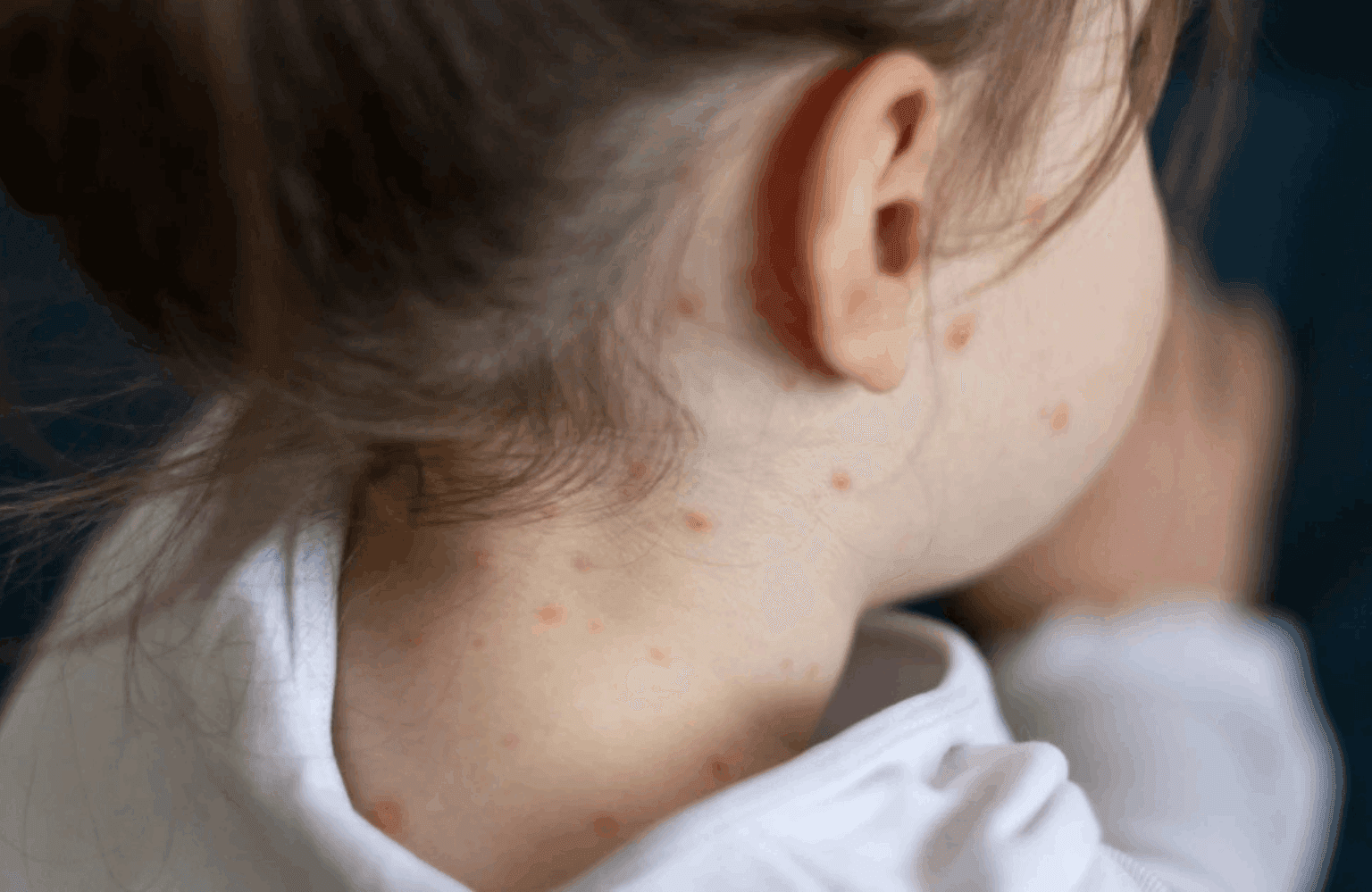
Measles correlates with the Ayurvedic condition Romantika characterized by dense red papules resembling hair follicles or Romakupa unnati sama. It arises from the vitiation of Kapha and Pitta doshas affecting the blood or Rakta. Key symptoms include antecedent fever or Jvara persistent cough or Kasa and anorexia or Arochaka distinguishing it from the larger pustules of Masurika. The pathology involves the obstruction of skin channels by heat and toxins. Management focuses on pacifying Pitta and purifying the blood using bitter and cooling herbs like Nimba and Chandana. Light diet and isolation are recommended to manage the internal heat and prevent spread reflecting its contagious nature attributed to Graha dosha in ancient texts.
Measles
Measles, known as Romantika in Ayurveda, is a highly contagious viral infection characterized by a distinct red rash, fever, and respiratory symptoms. In Ayurvedic classification, it falls under the category of Kshudra Roga (Minor Diseases) or is grouped with eruptive fevers like Masurika (Smallpox/Chickenpox) and Visphota (Blisters). It is primarily a condition caused by the vitiation of Kapha and Pitta doshas affecting the blood (Rakta).
1. Definition
- Modern Definition: An acute viral respiratory illness characterized by a prodrome of fever, cough, coryza, and conjunctivitis, followed by a generalized maculopapular rash.
- Ayurvedic Definition: Romantika is defined as the appearance of numerous, dense, reddish eruptions on the skin that are the size of hair follicles (Romakupa). These eruptions are accompanied by specific symptoms like cough (Kasa), loss of appetite (Arochaka), and fever (Jvara) [Madhava Nidana].
2. Etymology & Conceptual Meaning
- Literal Meaning: The word Romantika is derived from Roma, referring to body hair or hair follicles.
- Conceptual Interpretation: The name signifies the nature of the rash—the eruptions are raised and small, resembling the elevation of hair follicles or goosebumps (Romakupa-unnati-sama). Unlike the larger, lentil-sized blisters of Masurika (Smallpox/Chickenpox), Romantika presents as a fine, papular rash [Madhava Nidana].
3. Causes (Nidana)
Ayurveda attributes eruptive fevers to dietary and external factors that vitiate the Doshas and the Blood.
- Dietary Causes:
- Excessive consumption of Katu (pungent), Amla (sour), and Lavana (salty) foods.
- Intake of Kshara (alkaline substances) and Viruddha Ahara (incompatible food combinations, such as fish with milk).
- Consumption of contaminated or unwholesome vegetables (Dushta Nishpava Shaka) [Madhava Nidana, WJPR].
- External Factors:
- Graha Dosha: Ancient texts often attribute sudden, contagious eruptive fevers to invisible external influences or planetary factors (Graha), which can be understood today as viral pathogens [WJPR].
4. Journey of the Disease (Pathogenesis/Samprapti)
- Samprapti Ghataka (Components):
- Dosha: Kapha and Pitta are the primary doshas involved. Kapha causes the cough and heaviness, while Pitta causes the fever and redness [Madhava Nidana].
- Dushya (Tissues): Rakta (Blood) and Tvak (Skin).
- Srotas (Channels): Raktavaha (Blood-carrying) and Pranavaha (Respiratory) channels.
- Agni: Impaired digestive fire (Jatharagni) leading to fever.
- Pathogenesis:
- Due to causative factors, Kapha and Pitta doshas become aggravated.
- They interact with the digestive fire, creating Jvara (fever).
- The vitiated doshas enter the blood circulation (Rakta) and reach the skin (Tvak).
- They manifest as small, red, raised papules (Romantika) appearing like hair follicles, accompanied by respiratory congestion (Cough) [Madhava Nidana].
5. Symptoms (Lakshana)
- Early Symptoms (Purvarupa):
- Jvara-purvika: The condition is invariably preceded by fever [Madhava Nidana].
- Advanced Symptoms:
6. Different Types or Classification (Bheda)
While Masurika (Smallpox/Chickenpox) is classified into many types based on Doshas (Vataja, Pittaja, Kaphaja, etc.), Romantika is generally described as a single entity in Madhava Nidana, characterized specifically by its Kapha-Pitta nature. It is distinguished from other eruptions like:
- Masurika: Lentil-sized, deeper blisters (Chickenpox/Smallpox).
- Visphota: Large blistering eruptions.
- Sheetala: Often a synonym for smallpox or related goddesses, but medically distinct in severity [Madhava Nidana].
7. Diagnosis
- Ayurvedic Diagnosis (Roga Pariksha):
- Differential Diagnosis:
- Must be differentiated from Laghu Masurika (Chickenpox), which presents with watery blisters (Sphotadi) rather than the fine papules of Measles [WJPR, Madhava Nidana].
8. Disease Management
Management focuses on pacifying Pitta and Kapha, purifying the blood, and relieving fever.
Diet (Ahara)
- Beneficial: Light, easily digestible foods. Bitter (Tikta) taste is beneficial to reduce Pitta and Kapha.
- Avoid: Sour, salty, pungent, and heavy foods. Fried items and incompatible foods must be strictly avoided [WJPR].
Medicines
- Nimbadi Kvatha: Decoction of Neem (Nimba) is highly effective for Pitta-origin skin diseases and fevers [Chakradatta].
- Khadirarishta: Used for blood purification and skin ailments (Kushtha/Visphota) [AFI].
- Maha Manjishthadi Kvatha: A classic blood purifier used for skin eruptions [AFI].
- Haridra (Turmeric): Used to reduce inflammation and purify blood [Chakradatta].
Lifestyle & Procedures (Vihara)
- External Application (Lepa): Pastes of Chandana (Sandalwood) or Nimba (Neem) can be applied to relieve burning sensation (Daha) and itching [Chakradatta].
- Isolation: Since the disease is caused by Graha Dosha (contagious/invisible factors), hygiene and separation from others are implied [WJPR].
9. Prognosis
- Sadhya (Curable): Romantika is generally considered a self-limiting and curable condition.
- Factors Affecting Prognosis: It can become difficult to treat if it involves severe Sannipata (vitiation of all three doshas) or if the patient is very weak with compromised immunity [Madhava Nidana].
10. Modern Correlations
- Similarities:
- Romantika corresponds to Measles (Rubeola).
- The Ayurvedic description of "reddish eruptions size of hair follicles" matches the Maculopapular rash of measles.
- The symptom Kasa (Cough) in Romantika matches the cough seen in the measles prodrome (The "3 Cs": Cough, Coryza, Conjunctivitis).
- Differences: Ayurveda categorizes it based on the visual morphology of the rash (hair follicle vs. lentil) and Dosha dominance, whereas modern medicine classifies it by the specific viral pathogen (Paramyxovirus).
11. References
-
World Health Organization (WHO) – Measles
https://www.who.int/health-topics/measles
-
Centers for Disease Control and Prevention (CDC) – Measles (Rubeola)
https://www.cdc.gov/measles/
-
National Institute of Allergy and Infectious Diseases (NIAID – NIH) – Measles
https://www.niaid.nih.gov/diseases-conditions/measles
-
Mayo Clinic – Measles
https://www.mayoclinic.org/diseases-conditions/measles
-
StatPearls (NCBI Bookshelf) – Measles
https://www.ncbi.nlm.nih.gov/books/NBK448068/
-
National Health Portal of India – खसरा (Measles)
https://www.nhp.gov.in/disease/communicable-diseases/measles
-
Ministry of Health & Family Welfare, Government of India – खसरा एवं रूबेला
https://www.mohfw.gov.in/
12. FAQ Section
Q: What is the difference between Masurika and Romantika in Ayurveda?
A: Masurika refers to eruptions that are the size of a lentil (Masura), often correlated with Chickenpox or Smallpox. Romantika refers to smaller, dense eruptions the size of hair follicles, accompanied prominently by cough (Kasa), correlated with Measles [Madhava Nidana].
Q: Is cough a symptom of Ayurvedic measles?
A: Yes. Madhava Nidana explicitly states that Romantika is accompanied by Kasa (cough) and Arochaka (anorexia).
Q: Can Neem be used for Measles?
A: Yes. Neem (Nimba) is a primary herb in Ayurveda for cooling the body, purifying blood, and treating Pitta-type skin eruptions and fevers [Chakradatta].
Q: What doshas are involved in Measles?
A: According to classical texts, Romantika is caused by the vitiation of Kapha and Pitta doshas [Madhava Nidana].
Consult a Doctor
- MS4.2Midun s kumar
Ayurveda4 yrs exp
- SP4.5Dr Sreelekha P Nair
Ayurveda6 yrs exp
- VR4.2Vaidya Rohit Kumar
Ayurveda3 yrs exp
- V4.1Vairamuthu
Ayurveda8 yrs exp