

Dark Circles Home Remedies and the Ayurvedic View
Reviewed by medical experts · For informational purposes only
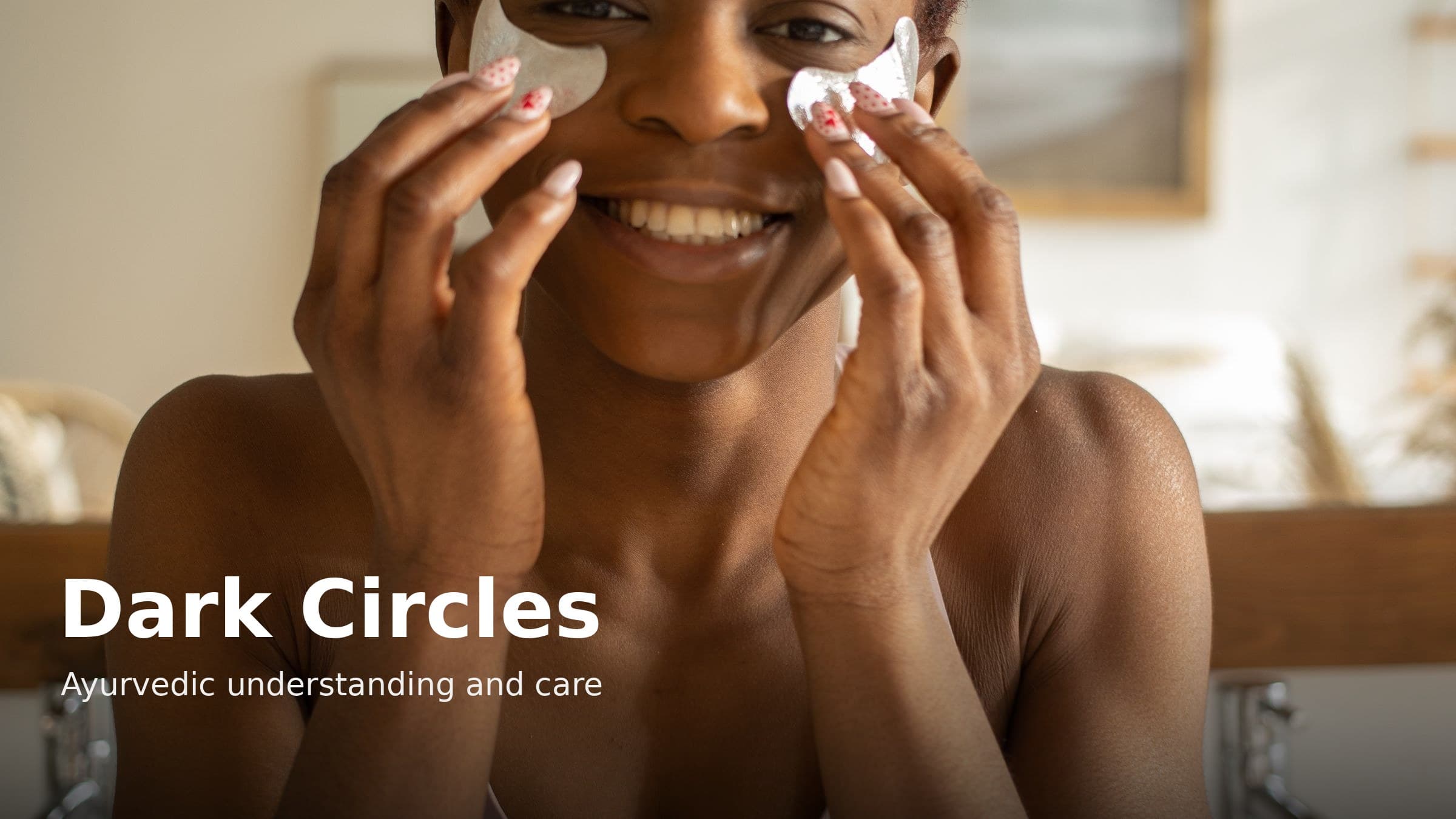
Introductory summary
Dark circles are mostly genetics and anatomy, not illness. What drives them, what genuinely helps, the classical view, and when to check.
1. Definition
Dark circles (periorbital hyperpigmentation) are darkening of the skin under the eyes, sometimes with puffiness or a hollow, tired look. They are extremely common, usually harmless, and mostly cosmetic - driven by genetics, skin tone, thin under-eye skin, allergies, rubbing, and sleep. They are not, despite the popular belief, a reliable sign of disease.
Classical Ayurveda reads the face as a mirror of the doshas: the under-eye region is sensitive to Vata (dryness, thinness, dark tone) and Pitta (pigmentation), and the texts link facial lustre (Varna) to sleep, digestion and stress. These are traditional interpretive frameworks, not exact translations of a modern dermatologic finding.
2. Etymology & Conceptual Meaning
- Varna is complexion and skin lustre, a classical marker of health and dosha balance.
- Akshi/Netra terms cover the eye region; classical facial mapping ties the under-eye to Vata.
- Shotha means swelling - the classical frame for under-eye puffiness.
- Ojas and sleep (Nidra) are linked in the texts to facial brightness and tissue nourishment.
These terms explain a traditional model of appearance and vitality. Modern dermatology explains dark circles through pigment, visible blood vessels under thin skin, shadowing from anatomy, and puffiness - usually several at once.
3. Causes (Nidana)
In the traditional account, under-eye darkening follows Vata-aggravating habits: poor or short sleep, late nights, worry, irregular meals, and dehydration, with Pitta-type pigmentation in some constitutions. These are traditional explanations.
In modern dermatology, the causes are: genetics (the strongest factor - it runs in families and is commoner in deeper skin tones), thin under-eye skin showing vessels and muscle beneath, pigmentation from sun exposure and rubbing (allergies, eczema, hay fever drive the rubbing), hollowing with age casting shadows, fluid retention causing puffiness, and yes, poor sleep and dehydration - which make all of the above look worse. Iron-deficiency anaemia is an occasional contributor worth checking when fatigue accompanies.
4. Journey of the Disease (Pathogenesis / Samprapti)
In the traditional account, sleeplessness and strain aggravate Vata, drying and thinning the delicate under-eye tissue; disturbed Pitta adds pigmentation; Kapha imbalance contributes puffiness - and the face loses its lustre. This is a traditional explanatory model, not a proven account of periorbital skin biology.
In modern understanding, "dark circles" are usually a combination: true pigment (melanin), visible vasculature through thin skin, structural shadowing from tear-trough hollowing, and edema. That is why no single cream fixes them - the mix differs per person, and treatment follows the dominant component.
Samprapti Ghataka: a traditional interpretive framework
| Component | Traditional interpretation, not a laboratory diagnosis |
|---|---|
| Dosha | Vata predominant; Pitta in pigmentation; Kapha in puffiness |
| Dushya | Twak (skin), Rakta (blood), traditional concepts |
| Srotas | Channels of the face, traditional concept |
| Srotodushti | Kshaya (tissue thinning), a traditional concept |
| Agni | Linked traditionally via digestion and sleep |
| Ama | Sometimes implicated traditionally |
| Adhisthana | Akshi-pradesha (under-eye region) |
These are not validated categories for assessing dark circles; clinical examination does that.
5. Symptoms (Lakshana)
Brown, blue or purple darkening under the lower eyelids, sometimes with puffiness, fine lines or a hollow groove; usually both eyes, long-standing, and worse after short sleep or allergy flares. Itching suggests allergy or eczema is driving rubbing.
Dark circles alone are not a medical concern. Worth checking with a doctor: sudden swelling of one eye or the face, darkening with unexplained fatigue and pallor (check for anaemia), or under-eye changes with other new symptoms. An eye that is red, painful or has vision changes is a different problem entirely and needs prompt assessment.
6. Different Types or Classification (Bheda)
Dermatologists sort dark circles into pigmented (melanin), vascular (visible vessels), structural (shadow from anatomy) and mixed - the dominant type directs treatment, from pigment creams to allergy control to filler for hollowing.
The classical tradition describes Vata-type (dry, dark, thin), Pitta-type (pigmented, warm) and Kapha-type (puffy) presentations. Traditional pattern labels cannot separate pigment from vessels from shadow; a dermatologist's examination does that.
7. Diagnosis
Diagnosis is by looking: a dermatologist stretches the skin and views it in good light (and sometimes with a Wood's lamp) to tell pigment from vessels from shadowing. Blood tests are only for suspicion of a contributor like anaemia or thyroid or allergy work-up.
In the traditional framework, a practitioner assesses sleep, digestion, stress and dosha balance. This cannot classify the type of dark circle; examination does that when treatment is wanted.
8. Disease Management
Food (Ahara)
No food removes dark circles, but regular meals, hydration, iron-rich foods (especially if anaemic) and limiting excess salt (which worsens puffiness) are sensible. Classical texts tie facial lustre to good digestion and sleep - a frame that at least points the right direction.
Lifestyle (Vihara)
The effective basics: regular, sufficient sleep; managing allergies (treating hay fever and eczema, and not rubbing the eyes - rubbing deepens pigment); daily sunscreen including the under-eye area; a cold compress for morning puffiness; and propping the head slightly at night. Concealer remains the most reliable instant fix, and there is no shame in that. Cucumber slices and cold tea bags are harmless cool compresses - the cool, not the cucumber, does the work.
Medicines and traditional formulations
For true pigmentation, dermatologists use topical agents (such as vitamin C, retinoids, azelaic acid, or prescription lightening agents) and sometimes peels or lasers - with realistic expectations and sun protection. Classical care includes Kumkumadi oil and gentle herbal applications for facial lustre, with limited modern evidence; the under-eye skin is thin and irritable, so patch-test anything and keep products out of the eye itself. Be sceptical of dramatic "miracle" claims. Discuss any product with a dermatologist or a qualified Ayurvedic practitioner.
Panchakarma and external therapies
Classical facial care (Mukha-lepa, gentle oil massage) is a pleasant traditional routine with no proven effect on dark circles. Netra Tarpana is a specialist eye procedure, not a cosmetic treatment for the surrounding skin. Nothing invasive belongs near the eyes outside qualified hands.
9. Prognosis (Expected Course and Outcome)
Dark circles are chronic and cosmetic: they fluctuate with sleep, allergies and age, and they are stubborn because genetics and anatomy do most of the driving. Sleep, allergy control and sun protection improve them modestly; dermatological treatment helps selected types. A "cure" promise is a red flag in itself. They do not indicate failing health in the typical case.
10. Modern Correlations
Both traditions agree on the visible basics: sleep, stress and vitality show on the face. Modern dermatology adds the useful part - separating pigment, vessels, shadow and puffiness, since each has a different answer. Traditional terms should be presented as a separate framework, with its limits stated. Dark circles need no doctor in the typical case; a dermatologist helps when treatment is wanted, and traditional supportive care can only be an adjunct.
11. References
Traditional background
The Ayurveda notebook draws on discussions of Varna, facial complexion, Nidra and dosha effects on the eye region in Charaka Samhita (Sutra Sthana 5, Vimana Sthana 8), Sushruta Samhita (Uttara Tantra) and Ashtanga Hridaya. These are background for traditional concepts, not clinical proof of cosmetic effect. Exact verse citations and formulation indications should be checked by a qualified Ayurvedic editor before being quoted as direct text.
Modern clinical information
Government and institutional resources
The institutional links are general resources, not endorsements of the treatment claims in this article.
12. FAQ Section
Do dark circles mean I'm ill or sleep-deprived?
Usually neither - genetics and anatomy do most of the driving. Poor sleep makes them look worse, but plenty of well-rested, healthy people have dark circles.
What actually helps?
Sleep regularity, treating allergies and stopping eye-rubbing, daily sunscreen, cold compresses for puffiness, and concealer. Pigment-type circles may improve with dermatological creams; hollowing may need filler. No cream fixes all types.
Do home remedies like cucumber or potato juice work?
The cool temperature of a compress briefly reduces puffiness; beyond that, home remedies have no proven effect on pigment or structure. They are harmless, just modest.
Should I get my iron checked?
If you also have fatigue, pallor or heavy periods, yes - iron-deficiency anaemia is an occasional contributor and worth treating for its own sake.
When should I see a doctor?
When you want treatment (a dermatologist), or if darkening comes with unexplained fatigue, one-sided swelling, or other new symptoms.
Related reading
Browse our Disease A to Z for more conditions, including our articles on Pigmentation.
Medical disclaimer: This article is for education, not an individual diagnosis or prescription. Dark circles are usually cosmetic; see a doctor for sudden one-sided swelling, accompanying fatigue or pallor, or any eye pain or vision change. Discuss all products with a qualified clinician.
Consult a Doctor
- AI4.9Dr. Aayush Ishwar
Ayurveda2 yrs exp
- SJ3.9SUMEDH JOSHI
Ayurveda7 yrs exp
- VH3.9Vaidya Harsh
Ayurveda9 yrs exp
- GG3.0Dr GN Govinda
Ayurveda1 yrs exp