

Raynaud's Disease
Reviewed by medical experts · For informational purposes only
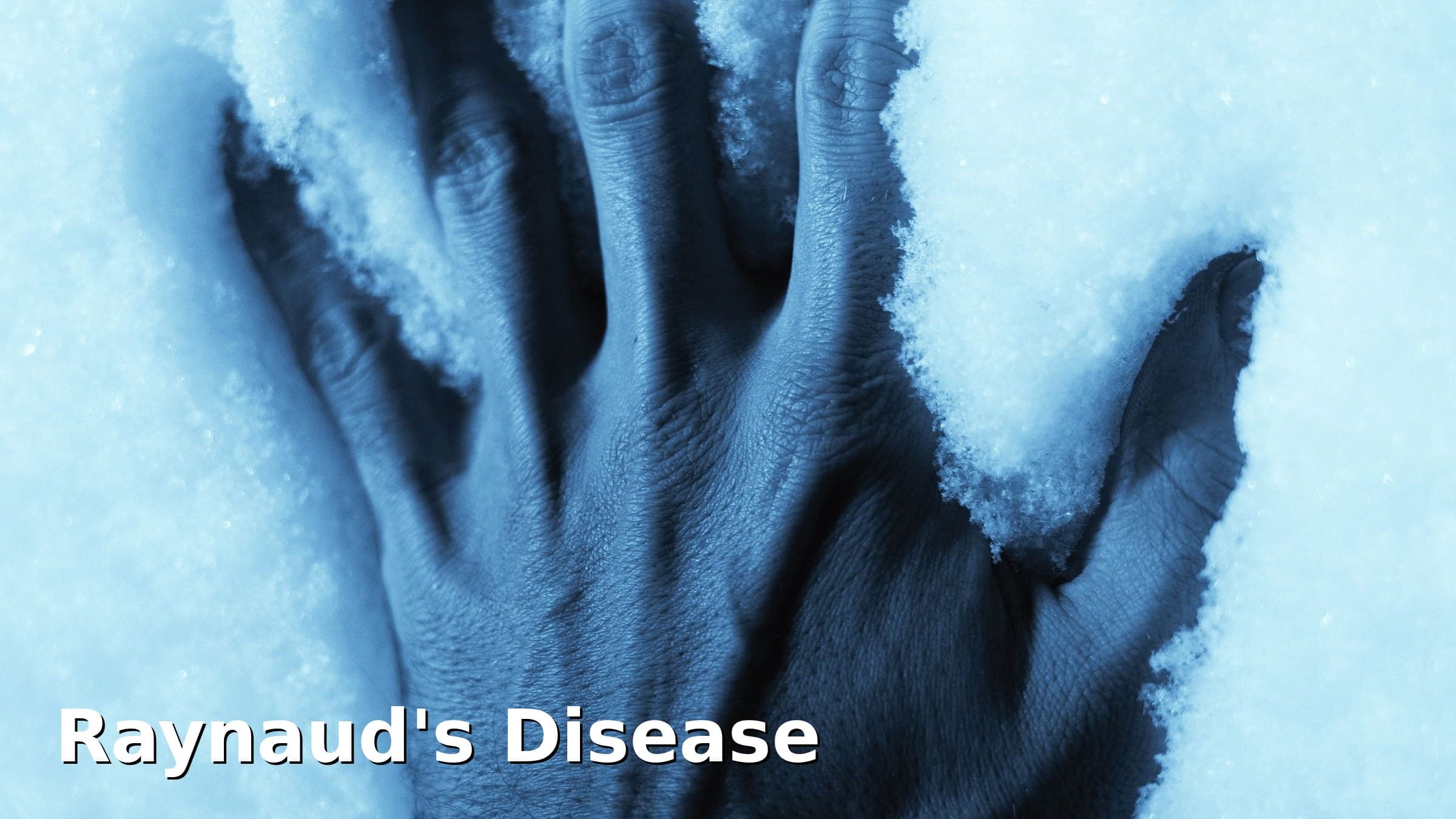
Introductory summary
Raynaud's disease explained the Ayurvedic way: how cold and stress trigger vessel spasm (Sira-sankocha) in fingers and toes, and how warmth, diet and Vata care help.
1. Definition
Raynaud's disease (also called Raynaud's phenomenon) is a condition in which the small blood vessels of the fingers and toes suddenly over-react to cold or emotional stress and tighten sharply. Blood flow to the digits drops for minutes at a time, and the fingers or toes turn white, then blue, then red as flow returns - often with numbness, tingling and pain.
Classical Ayurveda has no single verse naming this condition, but its full picture - cold-triggered vessel constriction, transient loss of sensation, colour change and burning pain on rewarming - is described under overlapping entities: Uttana Vatarakta (superficial vitiation of Vata and Rakta in the extremities, Charaka Samhita Chikitsa Sthana 29), Vatavyadhi with Sira-Sankocha (spasm of the vessels, Ashtanga Hridaya Sutra Sthana 12), and Raktavaha Srotodushti (disturbance of the blood-carrying channels, Charaka Samhita Vimana Sthana 5).
At its core, Ayurveda reads Raynaud's as a disturbance of Vyana Vayu - the sub-dosha of Vata that governs circulation to the periphery - acting on Rakta Dhatu and the Sira-Dhamani (vessels) of the fingers and toes.
2. Etymology & Conceptual Meaning
The modern name honours Maurice Raynaud, the French physician who described the condition in 1862. The Ayurvedic description is functional rather than named after a person:
- Sira-Sankocha literally means "constriction or spasm of the vessels" - the exact event at the heart of a Raynaud's attack
- Suptata and Sparsha-Agyanam mean numbness and loss of touch sensation
- The classical colour terms Pandu (pale-white), Shyava (dusky-blue) and Rakta-Tamra (red-coppery) mirror the white-blue-red sequence modern textbooks describe
Conceptually, the cold (Sheeta), dry (Ruksha) and mobile (Chala) qualities of aggravated Vata constrict the peripheral vessels; when warmth returns, Pitta-Rakta floods back in, producing redness, heat and burning. This is why the condition is understood through dosha qualities rather than a single disease label.
3. Causes (Nidana)
Aharaja Nidana (Dietary causes):
- Ati-Ruksha, Laghu and Shita Ahara - excess dry, light and cold foods (cold drinks, iced desserts, dry snacks, raw salads in winter) that raise systemic Vata
- Ati-Lavana (excess salt) - Charaka Samhita (Vimana Sthana 1/18) notes that chronic salt excess vitiates Rakta and degrades the vessels, promoting circulatory disorders
- Ati-Kashaya and Katu Rasa - excess astringent and pungent tastes that dry and stir the channels
- Viruddhashana (incompatible combinations), which create Ama-Rakta that clogs fine peripheral channels
Viharaja Nidana (Lifestyle and environmental causes):
- Sheeta-Sevana - direct exposure to cold wind, cold water, freezers and air conditioning; the single clearest trigger, matching the modern picture in the NHS overview of Raynaud's
- Ati-Vyayama and Ati-Adhva - over-exertion and repeated mechanical strain or vibration of the hands
- Ratri-Jagarana - habitual late nights, which dry the system and aggravate Vata
Manasika Nidana (Mental causes):
- Bhaya (fear), Shoka (grief) and Chinta (anxiety) excite Prana and Vyana Vayu and can trigger an immediate vascular spasm - which is why attacks often coincide with emotional stress and anxiety
4. Journey of the Disease (Pathogenesis / Samprapti)
The classical samprapti follows the attack sequence closely:
- Exposure to cold or a sudden emotional stress excites Vyana Vayu and Prana Vayu.
- Vitiated Vyana Vayu enters the peripheral vessels (Sira-Dhamani) supplying the fingers and toes (Kara-pada-anguli).
- Its cold and dry qualities cause sudden constriction of the vessel lumen (Sira-sankocha); blood flow to the digits is arrested (Srotosanga).
- The digits blanch (Pandu-varna) and lose sensation (Suptata). Stagnant, deoxygenated blood then produces the dusky blue phase (Shyava-varna).
- When warmth returns, reactive blood flow (Pitta-Rakta) brings redness, throbbing pain (Toda) and burning (Daha).
- Repeated, neglected episodes dry and damage the digital skin (Parusya, Sphutana - roughness and cracking), and in severe secondary cases can progress to ulceration (Kotha).
Samprapti Ghataka (the components of pathogenesis):
- Dosha: Vata predominant (Vyana Vayu and Prana Vayu), with Rakta-Pitta in the reactive phase and Kapha adding coldness and stiffness
- Dushya: Rakta Dhatu, Sira-Dhamani (vessels), Twak (skin)
- Srotas: Raktavaha, Rasavaha and Pranavaha Srotas
- Srotodushti: Sanga (obstruction) and Sankocha (spastic constriction)
- Agni: Vishamagni or Mandagni with Ama formation
- Ama: Ama-Rakta increasing vessel reactivity
- Adhisthana (site): fingers, toes and the peripheral vessels
- Roga Marga: Bahya Roga Marga (extremities, skin and surface channels)
5. Symptoms (Lakshana)
Early symptoms (Prarambhika Lakshana):
- Sheeta-Asahishnuta - marked intolerance of cold water, cold air or refrigerated items
- Suptata - transient numbness or "dead" feeling in fingers or toes during an attack
- Harshana - tingling or pins-and-needles in the digits
- Pandu-varna - the digits turn pale or white
Advanced symptoms (Pravriddha Lakshana):
- The classic three-phase colour change: white (Pandu), then blue (Shyava), then red (Rakta-Tamra) with burning on rewarming
- Toda and Bheda - sharp, pricking or throbbing pain as the vessels reopen
- Sphutana and Parusya - cracking, roughness and scaling of the digital skin from repeated poor circulation
- In severe secondary cases: digital ulcers or small areas of tissue damage at the fingertips
Skin colour changes can be harder to notice on darker skin tones, so numbness, tingling and pain are equally important clues, as NIAMS notes on Raynaud's symptoms. Ulcers, blackened skin or non-healing sores on a finger or toe need urgent medical review - do not manage these at home.
6. Types (Bheda)
Classical (dosha-based) types:
- Vataja type: dominant pricking pain, intense coldness, marked blanching, numbness and dry skin
- Vata-Pittaja (Raktaja) type: burning pain, coppery-red discoloration, local heat and swelling during rewarming
- Vata-Kaphaja type: heaviness, persistent coldness, clammy numbness and sluggish recovery after attacks
Modern classification with its Ayurvedic parallel:
- Primary Raynaud's disease - attacks without any underlying disease; this matches Nija or Kevala Vataja Sira-sankocha, a functional spasm without structural damage
- Secondary Raynaud's phenomenon - attacks linked to another condition such as scleroderma, lupus or rheumatoid arthritis; this matches the picture of Vatarakta or Vatavyadhi occurring on top of deeper systemic disease, and needs treatment of the root condition too
7. Diagnosis
Ayurvedic diagnosis (Roga-Rogi Pariksha):
- Darshana (inspection): observing the episodic blanching, duskiness and redness of the digits, and the state of the skin
- Sparshana (palpation): feeling the coldness of the fingertips, tactile loss and pulse quality
- Prashna (questioning): asking about cold triggers, stress sensitivity, vibration exposure, season and duration of episodes
- The broader Dashavidha Pariksha weighs tissue involvement, climate (Desa, Kala - attacks classically worsen in Hemanta and Shishira, the cold seasons), digestive fire and the person's Vata-Pitta constitution
Differential diagnosis (conditions it can be confused with):
- Frostbite: permanent tissue freezing from extreme cold, versus the reversible, repeating spasm of Raynaud's
- Neuropathy: persistent tingling or numbness without cold-triggered colour phases
- Varicose veins and deep vein thrombosis: venous pooling or clotting, which cause swelling and aching rather than episodic digital blanching
- Gambhira (deep) Vatarakta: joint-level swelling and deformity resembling gout or arthritis, versus the superficial vessel involvement of Uttana Vatarakta
A doctor confirms Raynaud's from the attack history and examination, and checks for secondary causes with blood tests and, when needed, nailfold capillaroscopy.
8. Disease Management (Chikitsa)
Management centres on pacifying Vata, protecting the vessels from cold and stress, and clearing Ama-Rakta from the channels. Medicines should be taken under a qualified practitioner's guidance.
Ahara (Diet):
- Pathya (favourable): warm, unctuous, easily digested food - warm water through the day (Ushnodaka, praised in Ashtanga Hridaya Sutra Sthana 5 for clearing channels), warm soups, old wheat, red rice (Rakta Sali) and cow's ghee
- Apathya (avoid): cold drinks, iced food, raw salads in winter, excess salt, sour curd, astringent-heavy and stale food
Vihara (Lifestyle):
- Nivata-Sevana - live and work in warm, draft-free surroundings; wear warm gloves and socks before stepping into cold, and avoid handling ice, cold water or frozen items directly
- Warm the hands gently after an attack; avoid sudden extreme heat on numb fingers
- Regular, moderate exercise rather than over-exertion; avoid prolonged vibration tools on the hands
- Regular sleep and stress management - breathing practices and routine help because emotional surges are a direct trigger
Classical formulations (traditionally prescribed):
- Guduchi-based preparations - Guduchi (Tinospora cordifolia) is the premier herb of the Vatarakta line of treatment
- Dashamula, Rasna and Bala-based decoctions for Vata disorders of the extremities
- Eranda Taila (castor oil) as a classical Vata-clearing adjunct, taken only under guidance
External and Panchakarma procedures (done only by a physician):
- Mridu Abhyanga - gentle massage with warm Vata-pacifying oils such as Sahacharadi Taila or Mahanarayana Taila, followed by mild fomentation to relax spastic vessels
- Nasya - Ashtanga Hridaya (Sutra Sthana 20/3) indicates Brimhana Nasya with preparations like Anu Taila or Kshirabala for Vata-driven channel stiffness
- Jalaukavacharana (medicinal leech therapy) is classically reserved for cases with severe congestive pain and blood pooling, performed only by a physician
These measures complement, not replace, medical care. People with secondary Raynaud's also need treatment of the underlying condition, and modern options like calcium-channel blockers may be advised by a doctor, as covered in the NIAMS treatment guidance.
9. Prognosis
- Sukha-Sadhya (responds well): early-stage primary Raynaud's in a young person without structural vessel change - attacks reduce well with warmth, diet correction and Vata-pacifying care
- Krichchhra-Sadhya to Yapya (needs long-term management): chronic or secondary Raynaud's linked to connective-tissue disease, fixed vessel-wall changes or digital ulcers - here the goal is control and protection rather than cure
The single biggest prognostic factor is trigger control: people who consistently protect their hands and feet from cold and manage stress usually cut both the frequency and severity of attacks. Untreated severe secondary disease risks fingertip ulcers and tissue loss, which is why new or worsening attacks in adulthood deserve a proper medical workup.
10. Modern Correlations
Modern medicine explains Raynaud's as exaggerated vasospasm of the digital arterioles from an over-reactive sympathetic response, alpha-2 adrenergic receptor sensitivity and endothelial dysfunction - triggered by cold or stress. The NHS describes the same white-blue-red sequence and triggers that the classical Sira-sankocha model maps.
The two systems align remarkably on the "what": cold and emotion trigger a reversible spasm, the digits change colour, sensation drops, and warmth restores flow with pain. They differ in language: modern medicine names receptors and autonomic pathways, while Ayurveda names Vyana Vayu, Sheeta Guna, Srotosanga and Rakta Dushti. The classical model cannot see capillaroscopy or antibody markers, so it cannot rule out secondary disease; the modern model often stops at vasodilators without addressing the person's cold-intolerant, Vata-heavy constitution. Together they offer both protection and root-level correction.
11. References
- Classical texts:
- Charaka Samhita, Chikitsa Sthana 29 (Vatarakta Chikitsa - Uttana and Gambhira types); Sutra Sthana 20 and 28 (Vata disorders and Srotodushti); Vimana Sthana 1/18 and 5 (salt, Rakta vitiation and Raktavaha Srotas)
- Ashtanga Hridaya, Sutra Sthana 5 (Ushnodaka), 12 (Vatavyadhi Nidana), 16 (Vatarakta Nidana), 20/3 (Nasya indications), 26 (Jalaukavacharana)
- Madhava Nidana, Vatavyadhi and Vatarakta Nidana chapters
- The Ayurvedic Pharmacopoeia of India - Guduchi, Dashamula, Rasna, Bala, Eranda
- Modern research:
- NHS (UK) - Raynaud's
- NIAMS (NIH) - Raynaud's Phenomenon
- Government / institutional sources:
- Ministry of AYUSH, Government of India
- Central Council for Research in Ayurvedic Sciences (CCRAS)
12. FAQ Section
Q: Is Raynaud's dangerous?
A: Primary Raynaud's is uncomfortable but usually not dangerous - attacks are reversible and limbs recover fully between episodes. It becomes serious in secondary Raynaud's, where repeated poor circulation can cause fingertip ulcers or tissue damage. Any sore, blackened area or non-healing crack on a finger or toe needs prompt medical care.
Q: Why do my fingers turn white even in mild cold?
A: In Raynaud's the small vessels of the digits over-react: even mild cold or a stressful moment makes them clamp down (what Ayurveda calls Sira-sankocha), briefly cutting off blood flow so the skin blanches. Ordinary cold response is milder and even; in Raynaud's the line between pale and normal skin is sharply demarcated and comes with numbness.
Q: Can stress alone trigger an attack?
A: Yes - emotional stress is a recognised trigger even without cold. Classical texts list fear, grief and anxiety (Bhaya, Shoka, Chinta) as direct exciters of Prana and Vyana Vayu, which govern peripheral circulation. This is why stress management is a real part of treatment, not an optional extra.
Q: Is there any permanent cure?
A: There is no guaranteed one-time cure, but primary Raynaud's can be managed so well that attacks become rare and mild. Secondary Raynaud's improves when the underlying condition is treated. Consistent cold protection, a warm Vata-pacifying diet and routine, and medicines where needed, give the best long-term control.
Q: Should I avoid cold water completely?
A: Protect, don't panic. Use warm or room-temperature water for daily washing in the cold season, wear gloves for fridge or freezer work, and keep hands and feet warm outdoors. Sudden immersion of numb hands in very hot water is also unsafe - rewarm gradually.
Q: When should I get tested for secondary causes?
A: If attacks begin after your mid-30s, are severe from the start, affect only one side, or come with joint pain, skin tightening, rashes or mouth ulcers, ask a doctor about tests for conditions like scleroderma or lupus. Early detection of a secondary cause changes both treatment and prognosis.
Medical disclaimer
This content is for education and does not replace a consultation. Ayurvedic treatment should be taken under the guidance of a qualified practitioner. In an emergency, contact local emergency services.
Related reading on Sanatan Ayurveda: Disease A-Z library · Stress · Arthritis · Neuropathy · Consult a doctor
Consult a Doctor
- KC5.0Dr. Kamesh chand sharma
Ayurveda2 yrs exp
- PP4.4Dr prince patel
Ayurveda22 yrs exp
- AG4.6Dr. Abhishek Gupta
Ayurveda1 yrs exp
- AB4.5Dr. Atul Bharadava
Ayurveda4 yrs exp