

Bunions Causes and Symptoms
Reviewed by medical experts · For informational purposes only
Introductory summary
Bunions correlate with the Ayurvedic concept of Adhyasthi signifying a bony overgrowth often exacerbated by Vata and Rakta vitiation similar to Vatarakta. This condition manifests as a painful inflamed prominence at the base of the big toe. Ayurvedic management prioritizes resolving inflammation and checking growth through internal potent formulations like Chandraprabha Vati and Amrutadi Guggulu which address granular swellings and gouty conditions. External therapies are vital employing medicated oils such as Mahavishgarbha Taila for massage and Upanaha or warm poultices to alleviate the pain and stiffness associated with bursitis. Treatment strategies focus on pacifying Vata purifying the blood and strengthening the Asthi dhatu to manage pain and arrest further deformity.
Bunions
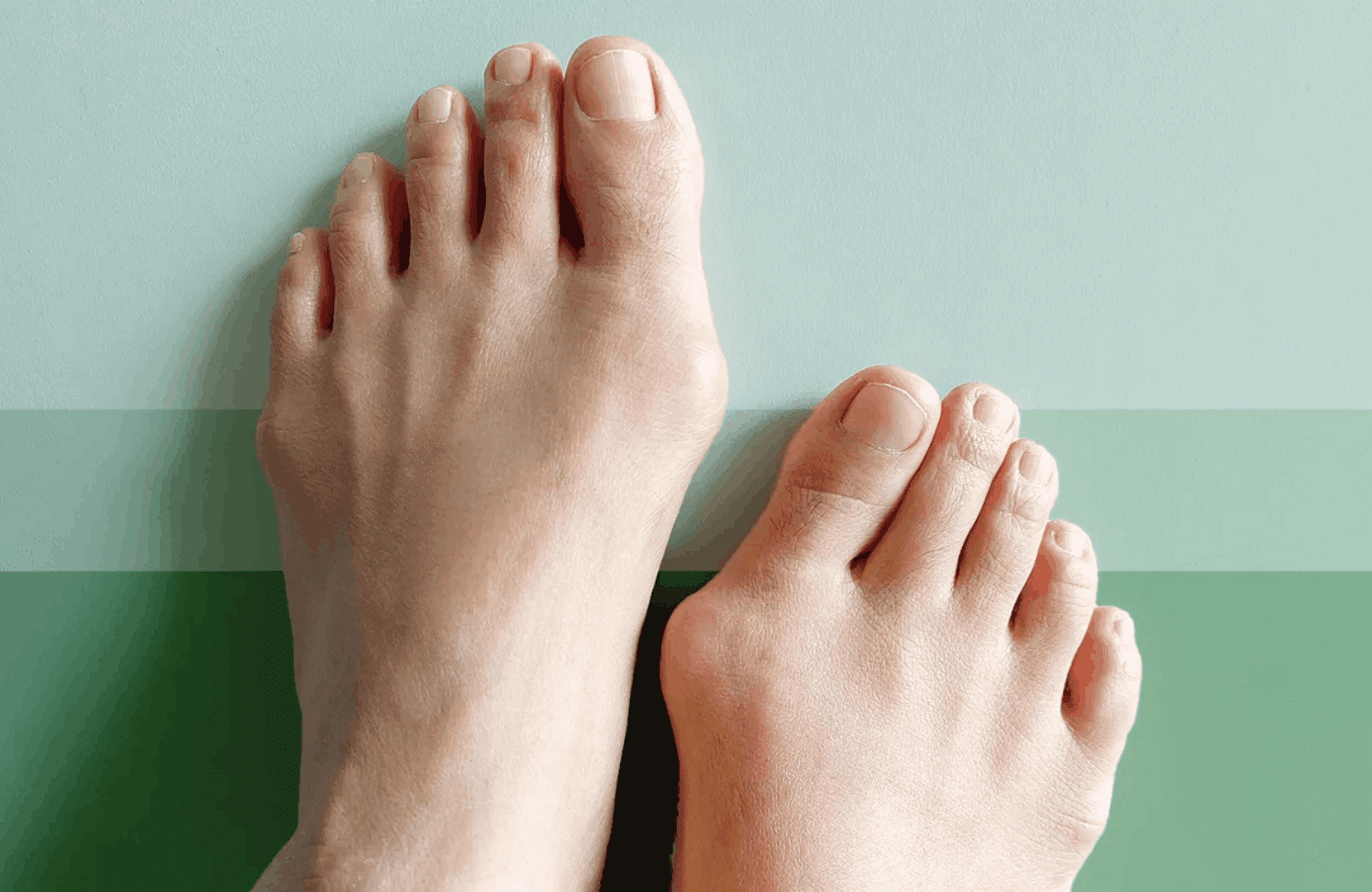
Bunions, known medically as Hallux Valgus, refer to a bony bump that forms on the joint at the base of the big toe. In Ayurveda, this condition is best described under the concept of Adhyasthi, which translates to "bone over bone" or an extra osseous growth. When the bunion is inflamed, red, and painful, it shares significant pathological similarities with Vatarakta (a condition affecting the feet causing pain and deformity).
1. Definition
Modern Definition: A bunion is a structural deformity of the bones in the foot and the joint between the foot and the big toe, often resulting in a painful, bony prominence.
Ayurvedic Definition:
- Adhyasthi: Defined as the formation of an extra bone or osseous growth over an existing bone. It is categorized as a disorder of the Asthi Dhatu (bone tissue).
- Vatarakta (Uttana): A condition where aggravated Vata and vitiated Blood (Rakta) obstruct each other, causing swelling, redness, and pain, specifically starting in the hands or feet (big toe).
2. Etymology & Conceptual Meaning
- Adhyasthi: Derived from Adhi (over/above) and Asthi (bone). It conceptually represents the hyper-calcification or outgrowth of bone tissue due to the vitiation of Vata dosha within the skeletal system.
- Conceptual Interpretation: Ayurveda views the deformity as a structural imbalance where Vata (responsible for shape and movement) dries out the joint, while Kapha and Meda (fat) may contribute to the tissue thickening and mass formation around the joint.
3. Causes (Nidana)
The formation of bunions is attributed to factors that aggravate Vata and Rakta (blood), and stress the foot joints.
- Dietary Causes:
- Consumption of incompatible foods (Viruddha Ahara) which vitiates the blood.
- Intake of dry, cold, or astringent foods that aggravate Vata.
- Lifestyle Causes:
- Abhighata: Trauma or injury to the foot.
- Atichankramana: Excessive walking or standing, which puts pressure on the feet.
- Wearing improper footwear (implied under trauma/pressure) which causes friction and pressure, leading to conditions like Kadara (corns/calluses) often seen with bunions.
- Sukumaranam: It is noted that people of tender constitution who indulge in improper diet and lifestyle are prone to Vatarakta of the feet.
4. Journey of the Disease (Pathogenesis/Samprapti)
- Samprapti Ghataka (Components):
- Dosha: Primarily Vata (Vyana Vayu) and Pitta/Rakta (in inflamed stages).
- Dushya (Tissues): Asthi (Bone), Sandhi (Joints), Mamsa (Muscle), and Twak (Skin).
- Adhisthana (Site): Pada-Sandhi (Joints of the foot).
- Pathogenesis:
- Due to excessive pressure (walking) or trauma, Vata becomes aggravated in the foot.
- Vata enters the Asthi Dhatu (bone tissue).
- If associated with Pitta and Rakta (blood), it leads to inflammation (Shotha) and burning sensation (Daha).
- Over time, the vitiated Vata leads to a distortion in the bone structure, creating Adhyasthi (extra bony growth).
- External friction may simultaneously cause Kadara (hardened skin/corns) over the prominence.
5. Symptoms (Lakshana)
- Cardinal Symptoms:
- Adhyasthi: Presence of a distinct, hard bony growth.
- Shula: Pain in the foot or the specific joint, often described as cutting or throbbing.
- Shotha: Swelling around the big toe joint.
- Associated Symptoms (if inflamed/Vatarakta type):
- Vaivarnya: Discoloration (redness or coppery color) of the joint.
- Sparshasahutva: Extreme tenderness or intolerance to touch.
- Stambha: Stiffness in the toe joint.
6. Different Types or Classification (Bheda)
While bunions are a single entity in modern terms, Ayurveda classifies the presentation based on the dominant Dosha:
- Vataja: Dominated by severe pain, throbbing, and roughness. The deformity is dry and hard.
- Raktaja/Pittaja: Dominated by redness, intense burning sensation, and heat. This resembles an acute flare-up of a bunion (bursitis).
- Kaphaja: Dominated by stiffness, heaviness, and a fixed, cold swelling.
7. Diagnosis
- Ayurvedic Diagnosis (Roga Pariksha):
- Darshana (Observation): Visual confirmation of the bony prominence (Adhyasthi) and checking for redness/swelling (Shotha).
- Sparshana (Palpation): Checking for hardness (indicating bone/callus) vs. fluid (indicating inflammation).
- Prashna (Questioning): Inquiry about walking habits, footwear, and nature of pain.
- Differential Diagnosis:
8. Disease Management
Management involves reducing inflammation (Shothahara), pacifying Vata (Vata-shamana), and scraping overgrowth (Lekhana).
Diet (Ahara)
- Pathya (Beneficial): Foods that do not aggravate Vata or Rakta. Old barley, wheat, and red rice are recommended.
- Apathya (Avoid): Sour, salty, and pungent foods which inflame the joints. Avoid incompatible food combinations (Viruddha Ahara).
Medicines
- Amrutadi Guggulu: Specifically indicated for Vatarakta and skin/bone disorders. It helps reduce inflammation and corrects the metabolic error leading to growths.
- Triphala Guggulu: Used for reducing inflammation (Shotha) and healing wounds or fistulas if the bunion becomes ulcerated.
- Kaishora Guggulu: (Implied via context of Vatarakta/Guggulu formulations) Effective for inflammatory conditions of joints.
- Dashamula Kwatha: A decoction used to pacify pain and inflammation in Vata disorders.
Panchakarma & External Therapies
- Abhyanga (Massage): Application of oils like Pinda Taila or Mahanarayana Taila to relieve pain and stiffness.
- Lepa (Poultice): Applying pastes of Dashanga Lepa or Aguru to reduce swelling and pain.
- Agnikarma (Cauterization): In cases of hard, painful growths like Kadara (corns) associated with bunions, thermal cautery is suggested to remove the mass.
- Raktamokshana (Bloodletting): If the bunion is red, hot, and acutely inflamed (Raktaja), removing vitiated blood via leeches is prescribed.
9. Prognosis
- Yapya (Manageable): Structural deformities like Adhyasthi are difficult to cure completely without surgery. However, the pain and progression can be managed (Yapya).
- Kashtasadhya (Difficult): If the condition is chronic (older than one year) or involves deep tissues (Gambhira), it is difficult to treat.
10. Modern Correlations
- Hallux Valgus: The deviation of the big toe.
- Exostosis: The formation of new bone on the surface of a bone, correlating with Adhyasthi.
- Bursitis: Inflammation of the fluid-filled sac near the joint, correlating with the Shotha (swelling) seen in Vatarakta.
- Gout: The symptoms of Vatarakta (pain in the big toe) strongly correlate with gouty arthritis, which can coexist with bunions.
11. References
Bunions (Hallux Valgus) – Mayo Clinic
https://www.mayoclinic.org/diseases-conditions/bunions/symptoms-causes/syc-20354714
Explains causes, risk factors, symptoms, diagnosis, and treatment options.
Bunions – Cleveland Clinic
👉 https://my.clevelandclinic.org/health/diseases/12110-bunions
Clear explanation of bunion progression, pain management, and surgery.
Current Concepts in Hallux Valgus – PubMed Review
https://pubmed.ncbi.nlm.nih.gov/31913913/
Review article on pathophysiology and management strategies.
Bunions (Hallux Valgus) – MSD Manual (Hindi)
https://www.msdmanuals.com/hi/home/bone-joint-and-muscle-disorders/foot-problems/bunions
Reliable Hindi explanation of causes, symptoms, and treatment.
बनियन क्या है? कारण और इलाज – 1mg (Hindi)
https://www.1mg.com/hi/diseases/bunions-284
Patient-friendly Hindi article with images and care advice.
12. FAQ Section
Q: Can Ayurveda cure a bunion completely?
A: Ayurveda describes Adhyasthi (bony overgrowth) as a condition of the bone tissue. While medicines and therapies can reduce pain, inflammation, and prevent further progression, fully dissolving an established bony deformity usually falls under the category of Asadhya (incurable) or Krichrasadhya (difficult) without surgical intervention.
Q: Is a bunion the same as Gout in Ayurveda?
A: Not exactly, but they are related. A bunion is a structural deformity (Adhyasthi). Gout is a metabolic disorder known as Vatarakta, characterized by intense pain and redness in the big toe. However, a person with a bunion can develop Vatarakta in that joint due to constant irritation.
Q: What oil is best for bunion pain?
A: Pinda Taila or Mahanarayana Taila are highly recommended. Pinda Taila is cooling and helps with the burning pain associated with Vatarakta, while Mahanarayana Taila strengthens the joint and pacifies Vata.
Q: Why does Ayurveda mention "corns" with bunions?
A: Kadara (corns/calluses) are classified as Kshudra Roga (minor diseases). They are caused by friction and pressure, similar to bunions. They often form on top of the bunion, adding to the pain.
Consult a Doctor
- NG5.0Dr Nandini gaur
Ayurveda1 yrs exp
- KC5.0Dr. Kamesh chand sharma
Ayurveda2 yrs exp
- PP4.4Dr prince patel
Ayurveda22 yrs exp
- KH4.4Dr Kowshalya H S
Ayurveda3 yrs exp