

Corns Causes and Symptoms
Reviewed by medical experts · For informational purposes only
Introductory summary
Corns are known as Kadara in Ayurveda and are classified under Kshudra Rogas or minor diseases. They develop due to repeated friction or pressure which vitiates Vata and Kapha doshas while affecting Meda or fat and Rakta or blood tissues. This pathology results in a hard painful and knotty growth on the sole of the foot often resembling an Indian plum or a nail. Ayurvedic management primarily focuses on surgical or para surgical procedures. The standard treatment involves Chedana or excision of the hardened mass followed by Agnikarma meaning thermal cauterization or Kshara Karma using alkalis to destroy the deep seated root and prevent recurrence. Medicated oils like Kasisadi Taila are also applied to soften the tissue and facilitate healing.
Corns
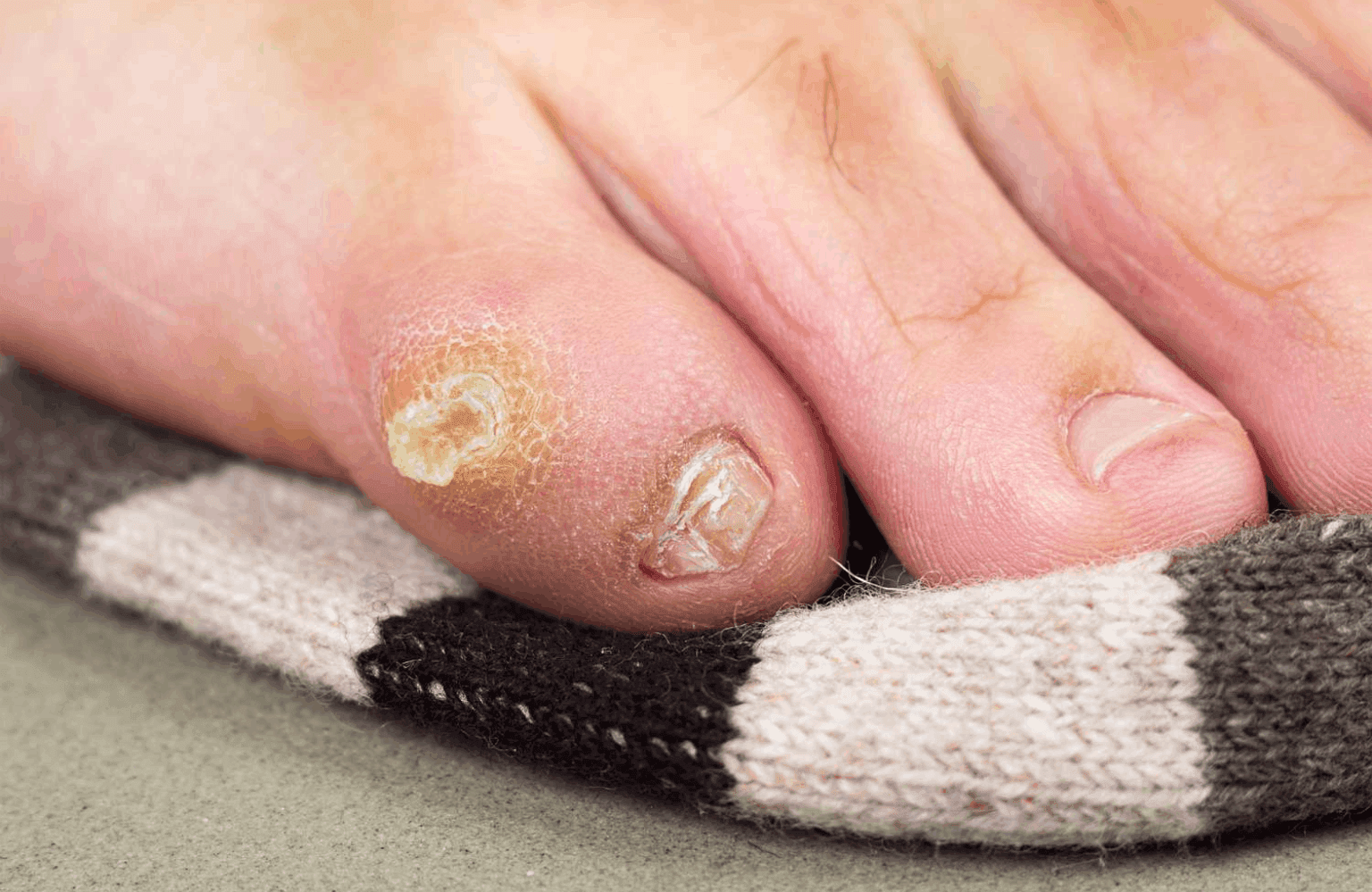
Corns are distinct, hard, localized thickenings of the skin, typically found on the feet, caused by friction or pressure. In Ayurveda, this condition is classified under Kshudra Rogas (Minor Diseases) and is specifically termed Kadara. It is clinically described as a hard, painful, knotty growth on the sole of the foot that resembles the shape of an Indian plum (Kola) or a nail.
1. Definition
Modern Definition: A corn (heloma) is a circumscribed hyperkeratosis (thickening) of the skin, usually cone-shaped, that occurs at sites of pressure or friction.
Ayurvedic Definition: Kadara is defined as a knotty, hard growth (Granthi) formed on the sole of the foot. It is caused by the localized vitiation of Meda (fat) and Rakta (blood) due to injury or friction. It is characterized by severe pain and a shape resembling a nail (Kila) or the seed of a plum.
2. Etymology & Conceptual Meaning
- Kadara: The term implies a hard, callous-like structure.
- Conceptual Interpretation: Ayurveda categorizes this as a disease of the foot (Padaroga). The comparison to a "nail" or "goad" (Kila) signifies its deeply rooted and pricking nature. It is structurally composed of hardened tissues resulting from the stagnation of blood and fat metabolism in the affected area.
3. Causes (Nidana)
The primary causes are traumatic and mechanical, leading to biological changes in the foot tissues.
- Physical Trauma:
- Kshata: Injuries to the sole of the foot.
- Kantaka: Pricking by thorns.
- Sharkara: Walking on gravel, stones, or uneven ground.
- Lifestyle Causes:
4. Journey of the Disease (Pathogenesis/Samprapti)
- Samprapti Ghataka (Components):
- Dosha: Kapha and Vata (Kapha causes the hardness/mass; Vata causes the pain).
- Dushya (Tissues): Meda (Adipose tissue) and Rakta (Blood).
- Adhisthana (Site): Pada-tala (Sole of the foot).
- Pathogenesis:
- External factors like thorns or gravel cause injury (Kshata) or constant pressure on the sole.
- This trauma vitiates the Meda (fat) and Rakta (blood) located in that specific area.
- The vitiated tissues, combined with aggravated Doshas, consolidate to form a hard lump (Granthi).
- This lump grows inwards and upwards, resembling a nail, resulting in Kadara.
5. Symptoms (Lakshana)
- Cardinal Symptoms:
- Kolavat: The growth looks like a Kola fruit (Indian plum/Jujube).
- Granthi: It presents as a hard knot or tumor.
- Rujavanta: It is painful (often described as piercing pain).
- Kila-vat: It is deeply rooted like a nail or spike.
- Sasrava: In some stages, it may discharge fluids or pus if infected/exudative.
6. Different Types or Classification (Bheda)
Ayurveda generally treats Kadara as a single entity under Kshudra Rogas. However, it is often discussed alongside other foot ailments:
- Kadara: The standard hard corn.
- Padadari: Cracked heels/soles (often confused but distinct; caused by Vata drying the skin).
- Alasa: A condition between the toes (similar to soft corns or fungal infection) involving moist, itching lesions.
7. Diagnosis
- Ayurvedic Diagnosis (Roga Pariksha):
- Darshana (Observation): Identifying the raised, hard, plum-shaped lesion on the sole.
- Sparshana (Palpation): Feeling the hardness (Kathinya) and checking for tenderness.
- Prashna (Questioning): History of walking on rough ground or footwear issues.
- Differential Diagnosis:
- Distinguished from Vatarakta (Gout), which affects the joints and causes burning/redness, whereas Kadara is a localized skin/tissue hardening.
8. Disease Management
The management of Kadara is primarily surgical or para-surgical (Shastra-Karma), supported by topical medications.
Surgical & Para-surgical Procedures
- Chedana (Excision): The hard mass (Kadara) should be excised or cut out (Utkrtya) surgically.
- Agnikarma (Cauterization): After excision, the site should be burned (cauterized) using hot oil (Taila) or fire (Agni). This destroys the root of the corn and prevents recurrence.
- Kshara Karma (Alkali Application): Application of strong alkaline pastes is used to chemically cauterize the lesion.
Medicines
- Kasisadi Taila: This medicated oil containing Kasisa (Iron sulphate) is indicated for Arsha (piles) and Kshudra Rogas like corns. It has corrosive and healing properties.
- Jatyadi Ghrita: A medicated ghee used for wound healing (Ropana) after the corn has been excised or cauterized.
- Snuhikshira: The latex of Snuhi (Euphorbia neriifolia) is applied to dissolve the hard skin growth (used in Ksharasutra preparation).
Diet (Ahara)
- Foods that promote healing and do not aggravate Vata or Kapha are recommended.
- Avoidance of foods that increase Meda (fat) if the patient is obese, as Meda is a pathological factor in Kadara.
9. Prognosis
- Sadhya (Curable): If treated with excision (Chedana) and cautery (Agnikarma), it is curable.
- Punarbhava (Recurrence): Without cauterization (Dahakarma), there is a high likelihood of the corn growing back from the remaining root.
10. Modern Correlations
- Corns (Heloma): Corresponds to Kadara.
- Calluses (Tyloma): Diffuse thickening, also covered under the general pathology of Kadara or skin thickening.
- Plantar Warts: Sometimes the description of Sasrava (discharging) or "nail-like" Kadara may clinically overlap with warts (Verruca plantaris).
11. References
-
American Academy of Dermatology (AAD) – Corns and Calluses
Causes, symptoms, prevention, and treatment
🔗 https://www.aad.org/public/diseases/a-z/corns-calluses
-
Mayo Clinic – Corns and calluses
Clinical overview and home care advice
🔗 https://www.mayoclinic.org/diseases-conditions/corns-and-calluses
-
Cleveland Clinic – Corns
Diagnosis, treatment, and prevention
🔗 https://my.clevelandclinic.org/health/diseases/16707-corns
-
National Health Portal (NHP), India
Skin and foot conditions
🔗 https://www.nhp.gov.in
-
राष्ट्रीय स्वास्थ्य पोर्टल (National Health Portal – India)
कॉर्न / पैरों की कठोर गांठ
🔗 https://www.nhp.gov.in
12. FAQ Section
Q: Can Ayurvedic oils remove corns?
A: Oils like Kasisadi Taila are corrosive and can help soften or dissolve small corns over time. However, classical texts emphasize that established, hard corns usually require excision (Chedana) followed by cautery for a complete cure.
Q: Why does Ayurveda mention "fat" (Meda) as a cause for corns on the feet?
A: In Ayurveda, the pathology of Kadara involves the vitiation of Meda (fat) and Rakta (blood) due to pressure. This suggests that the cushioning fat pads of the feet are involved in the hardening process that forms the corn.
Q: Is burning (cautery) necessary for treating corns?
A: According to Ayurvedic surgery principles, Agnikarma (thermal cautery) or Kshara Karma (chemical cautery) is often recommended after removing the corn to ensure the "root" is destroyed and to prevent it from coming back.
Q: What is the difference between a Corn (Kadara) and Cracked Heels (Padadari)?
A: Kadara is a hard, painful lump or knot (like a nail) caused by fat and blood vitiation. Padadari is the cracking or fissuring of the heels caused specifically by Vata dosha drying out the skin.
Consult a Doctor
- NG5.0Dr Nandini gaur
Ayurveda1 yrs exp
- KC5.0Dr. Kamesh chand sharma
Ayurveda2 yrs exp
- PP4.4Dr prince patel
Ayurveda22 yrs exp
- KH4.4Dr Kowshalya H S
Ayurveda3 yrs exp