

Period Pain Relief and the Ayurvedic View
Reviewed by medical experts · For informational purposes only
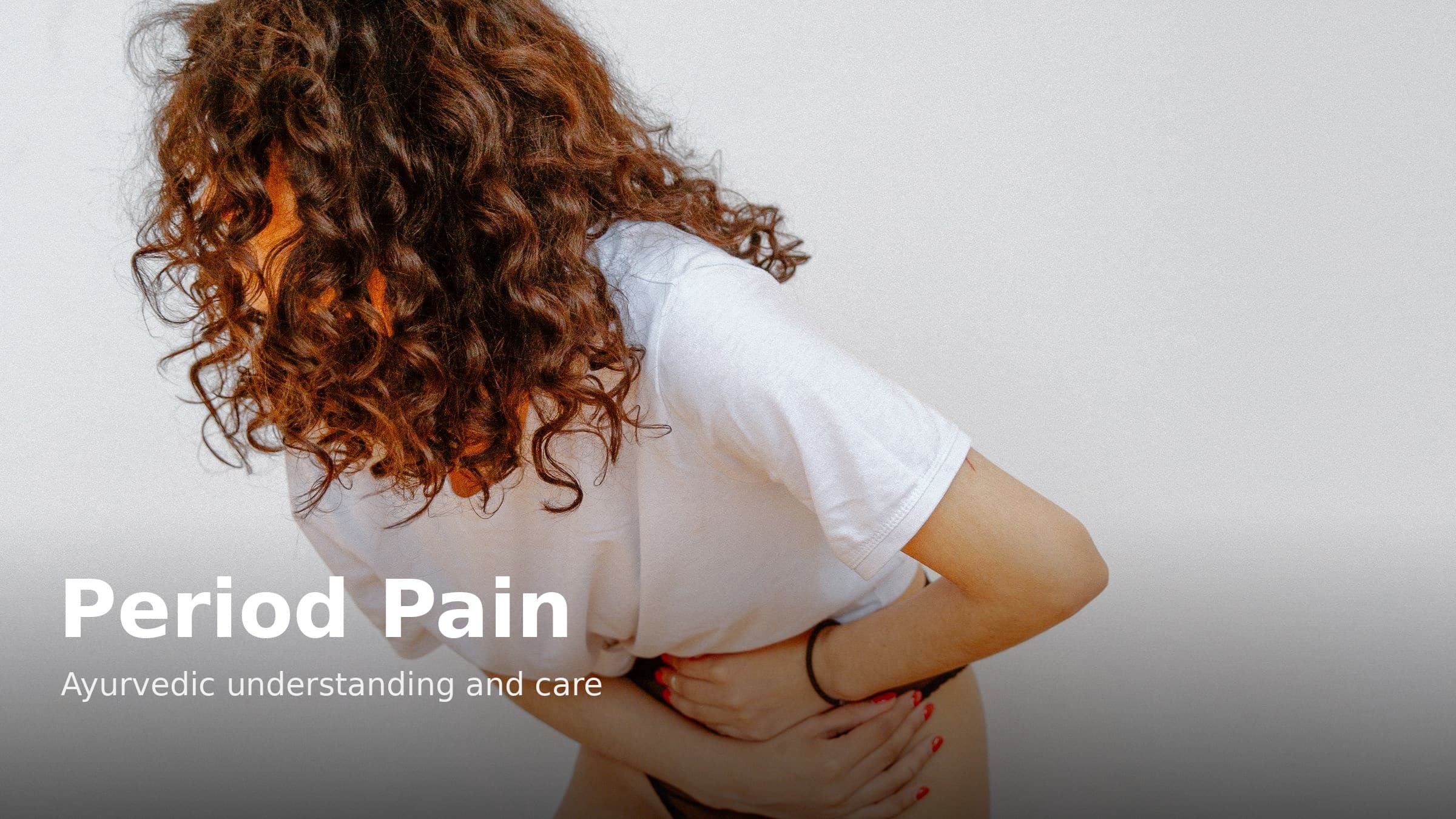
Introductory summary
Period pain is common and usually manageable. Learn the classical Kashtartava view, what actually relieves cramps, and when pain needs investigating.
1. Definition
Period pain (dysmenorrhoea) is cramping lower abdominal pain that comes with menstruation, sometimes spreading to the back and thighs, often with nausea, loose stools, headache or fatigue. It is extremely common. Most period pain is "primary" - caused by normal womb contractions, with no underlying disease - but pain that is severe, worsening, or new later in life can signal conditions such as endometriosis or fibroids and deserves assessment.
Classical Ayurveda describes painful menstruation as Kashtartava (Kashta = difficult, painful; Artava = menstrual flow), with the entity Udavartini Yonivyapad matching spasmodic dysmenorrhoea closely: Apana Vayu - the downward-moving energy governing the pelvis - reverses direction, obstructs the menstrual flow, and produces colic until the flow is released. These are traditional interpretive frameworks, not exact translations of a modern diagnosis.
2. Etymology & Conceptual Meaning
- Kashtartava means difficult, distressing menstruation - the overarching classical term.
- Udavartini comes from Udavarta, the reverse upward movement of Vata; it is the classical picture of spasmodic period pain that eases once bleeding is established.
- Apana Vayu is the sub-dosha governing downward evacuation - menstruation, stool, urine and childbirth.
- Vatala Yonivyapad describes a Vata-driven uterine disorder with pricking, cutting pelvic pain and scanty, dry flow.
- Yonivyapad is the classical framework of twenty gynaecological disorders.
These terms explain a traditional model of pelvic function. Modern medicine attributes period pain to prostaglandin-driven uterine contractions and, in secondary cases, to identifiable pelvic disease.
3. Causes (Nidana)
In the traditional account, painful periods follow suppression of natural urges (flatus, stool, urine), dry, cold or scanty food, excessive exertion, cold exposure, day sleeping, and mental strain such as grief and anxiety - all of which provoke Vata and disturb Apana Vayu. The texts also describe a proper menstrual regimen (Rtumati Charya), whose neglect counts among the causes. These are traditional explanations, not a complete account.
In modern medicine, primary dysmenorrhoea is driven by prostaglandins, which make the womb contract harder and reduce its blood supply - hence cramping. It typically begins in the teens and often eases with age or after childbirth. Secondary dysmenorrhoea comes from endometriosis, adenomyosis, fibroids, pelvic infection or an IUD, and typically appears or worsens later in life.
4. Journey of the Disease (Pathogenesis / Samprapti)
In the traditional account, urge suppression and Vata-provoking habits disturb Apana Vayu in the pelvis. Moving in reverse (Udavarta), it obstructs the Artavavaha Srotas and traps the menstrual blood; the resulting pressure produces intense spasmodic pain until the flow is expelled - after which, the texts note, relief comes immediately. This is a traditional explanatory model, though its emphasis on obstructed flow and spasm is not far from the modern one.
In modern medicine, the womb lining releases prostaglandins as it breaks down; higher prostaglandin levels mean stronger, more painful contractions and more inflammation, plus the nausea and loose motions that often accompany periods. In secondary dysmenorrhoea, the pain mechanism comes from the underlying condition - for example, endometrial tissue growing outside the womb.
Samprapti Ghataka: a traditional interpretive framework
| Component | Traditional interpretation, not a laboratory diagnosis |
|---|---|
| Dosha | Vata predominant - Apana and Vyana Vayu |
| Dushya | Artava (menstrual tissue) and Rasa-Rakta Dhatu |
| Srotas | Artavavaha Srotas |
| Srotodushti | Sanga (obstruction) and Vimarga-gamana (reverse flow), traditional concepts |
| Agni | Variable in the traditional account |
| Ama | May accompany, in the traditional model |
| Adhisthana | Garbhashaya (uterus) and pelvic cavity |
These are not validated categories for distinguishing primary from secondary period pain.
5. Symptoms (Lakshana)
Cramping pain in the lower abdomen starting with or just before bleeding, easing over one to three days; possible backache, thigh pain, nausea, loose stools, headache and fatigue. Classical descriptions add colicky pain relieved by the onset of free flow, stiffness, and scanty or frothy discharge in Vata patterns.
See a doctor if pain is severe enough to disrupt school, work or daily life despite simple measures; if it is getting steadily worse; if pain occurs between periods or during sex; if bleeding is very heavy; or if pain started for the first time after the age of 25. These point to secondary causes such as endometriosis - which is common, underdiagnosed, and treatable. Sudden severe one-sided pain with faintness, or pain with a positive pregnancy test, is an emergency.
6. Different Types or Classification (Bheda)
Modern practice distinguishes primary dysmenorrhoea (no pelvic disease, typically starting in the teens) from secondary dysmenorrhoea (endometriosis, adenomyosis, fibroids, infection, IUD-related) - because the second needs its own treatment.
Classical texts separate Udavartini (spasmodic, Vata-driven pain relieved by flow), Vatala (severe pricking pain with scanty dry menses), and Kashtartava as the umbrella term, guiding traditional care. The two frameworks do not map onto each other, and a dosha pattern cannot exclude endometriosis.
7. Diagnosis
For typical primary period pain, no tests are needed - the history is enough. When secondary causes are suspected, assessment may include a pelvic examination, ultrasound, and sometimes referral for laparoscopy to confirm endometriosis. Persistent severe pain should not be dismissed as "normal periods" without this consideration.
In the traditional framework, a practitioner assesses constitution, cycle pattern, digestion and daily routine to plan supportive care. This assessment cannot detect endometriosis, fibroids or infection; modern evaluation comes first when the picture is atypical.
8. Disease Management
Food (Ahara)
Traditional guidance for Vata-driven pain favours warm, freshly cooked, unctuous food - soups, khichadi, ghee, cooked vegetables - and warm drinks, avoiding very cold, dry and stale items, especially around the period. No food cures period pain. Modern advice agrees on regular balanced meals and limiting excess caffeine and alcohol, which can worsen cramps and sleep.
Lifestyle (Vihara)
Heat is genuinely evidence-based: a hot-water bottle or heat pad on the lower abdomen relieves cramps comparably to simple painkillers in trials. Gentle exercise, stretching and yoga help many women, as do good sleep and stress management. The classical menstrual regimen (rest, warmth, light activity, avoidance of suppression of urges) points the same direction.
Medicines and traditional formulations
Modern first-line treatment is NSAID painkillers (ibuprofen, mefenamic acid), started as bleeding or pain begins - they reduce prostaglandin production and are effective for most women. Hormonal contraception is an established option when contraception is also wanted. Persistent pain despite these measures is the trigger to investigate secondary causes, not to escalate self-treatment. Classical texts name Shatavari, Ashoka, Lodhra, Dashamoola and Hing in the traditional care of painful menstruation, often as decoctions or classical formulations. Their traditional use does not establish that they relieve dysmenorrhoea, evidence is limited, and herbal products can interact with medicines; discuss the exact product with your clinician and a qualified Ayurvedic practitioner. Do not use herbs instead of investigating worsening pain.
Panchakarma and external therapies
Classical texts describe Basti (medicated enema) as the principal therapy for Apana Vayu disorders, along with warm oil massage (Abhyanga) and local fomentation. These are traditional procedures performed by trained practitioners, not proven treatments for period pain, and enema-based procedures should never be attempted at home - especially during menstruation.
9. Prognosis (Expected Course and Outcome)
Primary period pain often improves with age and after childbirth, and most women manage it well with heat, NSAIDs and, where wanted, hormonal contraception. Secondary dysmenorrhoea improves when the cause is treated - endometriosis care has advanced considerably. Classical texts regard Vata-type menstrual pain in a young, otherwise healthy woman as readily responsive to Vata-pacifying care - a broadly realistic optimism. There is no reliable promise that any herb will remove period pain within a fixed period.
10. Modern Correlations
Both approaches value warmth, rest, regular meals and moderation around the period. The important difference is that modern medicine can distinguish primary from secondary pain and treat both effectively, while the classical framework offers a coherent Vata-pacifying regimen. Traditional terms should be presented as a separate framework, with its limits stated. Ayurvedic care must not delay investigation of severe, worsening or later-onset period pain - endometriosis in particular rewards early recognition.
11. References
Traditional background
The Ayurveda notebook draws on discussions of Kashtartava, Udavartini and Vatala Yonivyapad in Charaka Samhita (Chikitsa Sthana 30, Sutra Sthana 19), Sushruta Samhita (Uttara Tantra 38), Ashtanga Hridaya (Uttara Tantra 33) and Madhava Nidana (Chapter 62). These are background for traditional concepts, not clinical proof of a pain-relieving effect. Exact verse citations and formulation indications should be checked by a qualified Ayurvedic editor before being quoted as direct text.
Modern clinical information
Government and institutional resources
The institutional links are general resources, not endorsements of the treatment claims in this article.
12. FAQ Section
Is severe period pain normal?
Mild to moderate cramping is common; pain that stops normal life, is worsening, or comes with pain between periods or during sex is not something to endure - it deserves assessment for causes such as endometriosis.
What relieves cramps fastest?
A heat pad on the lower abdomen and an NSAID such as ibuprofen, started as the period begins, are the best-evidenced quick measures.
Do Ayurvedic medicines work for period pain?
Herbs such as Shatavari and Ashoka are traditional favourites, but modern evidence is limited. They should complement, not replace, proven relief and proper investigation.
Will period pain go away after childbirth?
It often eases with age and after childbirth, but not always - worsening pain at any stage deserves a check.
When is period pain an emergency?
Sudden severe one-sided pelvic pain with faintness or a positive pregnancy test (possible ectopic pregnancy), or pain with fever and foul discharge, needs urgent care.
Related reading
Explore Irregular Periods and PCOD.
Medical disclaimer: This article is for education, not an individual diagnosis or prescription. Severe, worsening or later-onset period pain deserves medical assessment. Discuss all medicines and supplements with a qualified clinician.
Consult a Doctor
- AI4.9Dr. Aayush Ishwar
Ayurveda2 yrs exp
- SJ3.9SUMEDH JOSHI
Ayurveda7 yrs exp
- VH3.9Vaidya Harsh
Ayurveda9 yrs exp
- GG3.0Dr GN Govinda
Ayurveda1 yrs exp
Buy Medicine
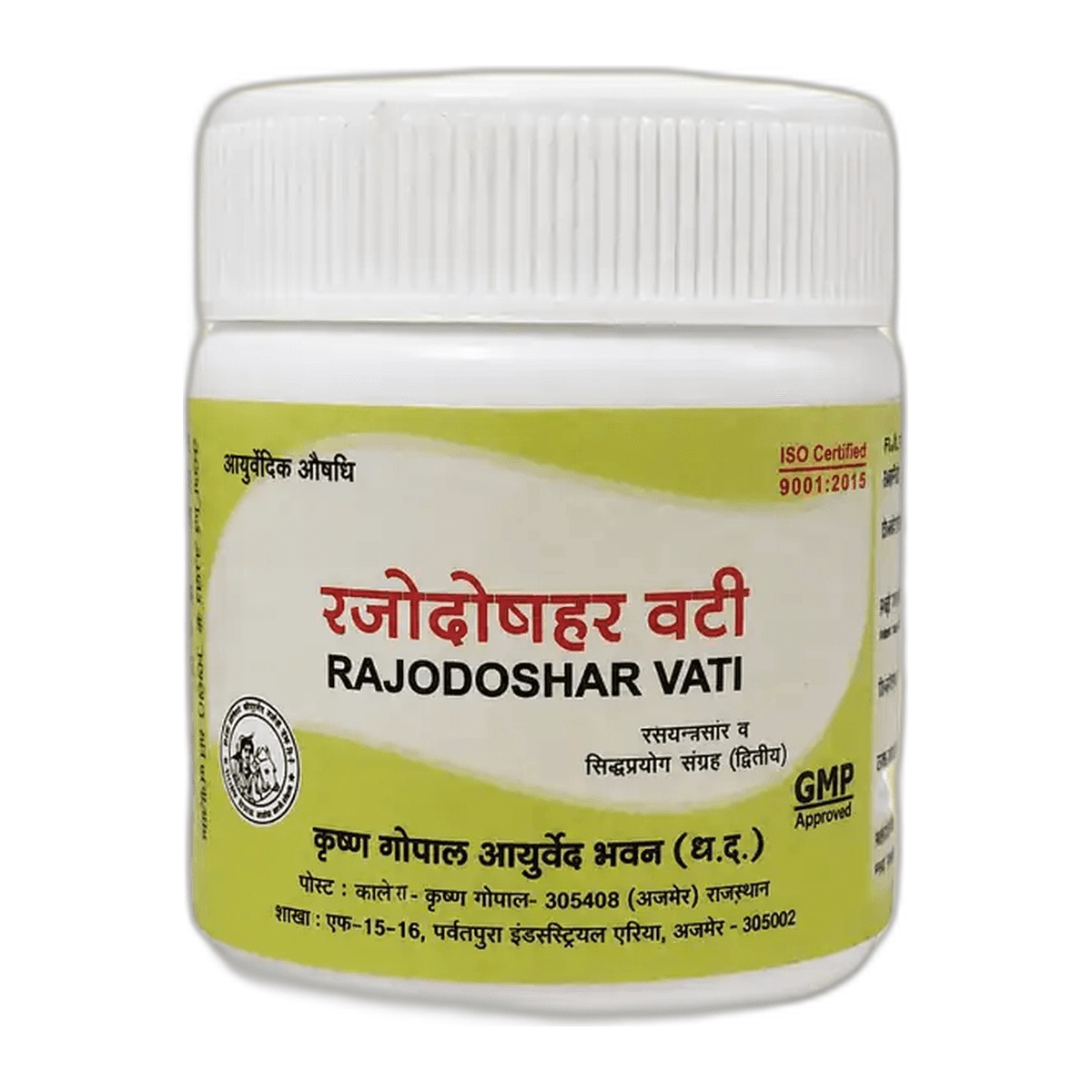 Prescribed to you4.3₹4 cashback
Rajadosh-har Vati (Kalera) Kalera
Supports women's health and dysmenorrhoea
Strip of 15 Tablets
4.3
₹47Get ₹4 Cashback
₹5413% off
