

Menopause Symptoms and the Ayurvedic View
Reviewed by medical experts · For informational purposes only
Introductory summary
Learn about menopause from an Ayurvedic perspective: Rajonivritti, common symptoms, bone and heart health, safe care and when to see a doctor.
1. Definition
Menopause is when periods stop for good because the ovaries stop releasing eggs and hormone levels change. It is a natural stage of life, not a disease. The years of changing periods and symptoms before it are called perimenopause. Most women reach menopause between 45 and 55; symptoms such as hot flushes, night sweats, poor sleep, mood changes and vaginal dryness are common and can last several years.
Ayurvedic texts discuss the natural end of menstruation under the term Rajonivritti (Rajas + Nivritti, "cessation of the menstrual flow"), understood as part of Jara (natural ageing) with gradual Dhatukshaya (tissue decline), rather than as a disorder. Symptoms around this transition are traditionally read through the lens of aggravated Vata, often with Pitta. These are traditional interpretive frameworks, not exact translations of a modern diagnosis. Menopause before 40, or bleeding after menopause, always needs medical assessment.
2. Etymology & Conceptual Meaning
- Rajas here refers to the menstrual flow (Artava); Nivritti means cessation. Rajonivritti is the natural stopping of menstruation with age.
- Jara denotes natural ageing, described in classical texts as one of the spontaneous (Svabhavika) processes of life.
- Dhatukshaya means gradual decline of the body's tissues (Dhatus) with age, especially Rasa and Asthi in the traditional account.
- Vata is said to predominate in the later stage of life (Vriddha Avastha), which frames the traditional reading of symptoms.
These terms explain a traditional model of ageing. Modern medicine defines menopause by twelve months without a period, driven by falling oestrogen levels.
3. Causes (Nidana)
In the traditional account, Rajonivritti is a natural, age-driven transition rather than something "caused" by wrongdoing; the texts emphasise Jara and Dhatukshaya. Symptoms around the transition are attributed to rising Vata (dryness, irregularity, poor sleep), sometimes with Pitta (heat, flushing) and to Agni and Ama imbalances from long-standing diet and lifestyle. These accounts should not be treated as a complete explanation of hormone change.
In modern medicine, menopause happens because the ovaries' egg supply is exhausted and oestrogen and progesterone fall. Surgical removal of the ovaries, some cancer treatments and certain conditions can cause early menopause. Smoking is linked to earlier menopause. Hot flushes, sleep disturbance, mood changes and vaginal dryness follow from the hormone shift; bone loss accelerates afterwards.
4. Journey of the Disease (Pathogenesis / Samprapti)
In the traditional account, ageing naturally increases Vata and diminishes the Dhatus. As Rasa Dhatu declines, its secondary tissue Artava is no longer formed in the same way and menstruation ceases. Aggravated Vata, alone or with Pitta, then produces the transition's symptoms: dryness, insomnia, anxiety and palpitations (Vata) and hot flushes, heat and irritability (Pitta). This is a traditional explanatory model, not a proven account of hormonal change.
In modern medicine, falling oestrogen alters temperature regulation (flushes, sweats), sleep, mood, the vaginal and urinary tissues (dryness, discomfort, urinary symptoms) and over time bone density and cardiovascular risk. The transition typically spans several years.
Samprapti Ghataka: a traditional interpretive framework
| Component | Traditional interpretation, not a laboratory diagnosis |
|---|---|
| Dosha | Vata predominant in later life; Pitta involvement in heat and flushing |
| Dushya | Rasa, Rakta, Asthi and Majja Dhatu; Artava as the declining Upadhatu |
| Srotas | Rasavaha, Asthivaha and Artavavaha Srotas |
| Srotodushti | Kshaya (depletion), a traditional explanatory concept |
| Agni | Variable; Mandagni (weakened digestive fire) often described with ageing |
| Ama | A traditional concept of incomplete processing, not a measurable hormone |
| Adhisthana | Garbhashaya (uterus) and Artavavaha channels in the traditional model |
| Roga Marga | Not a disease in the classical view, but a natural transition |
These are not validated categories for deciding whether someone needs hormone tests or treatment.
5. Symptoms (Lakshana)
Common symptoms are irregular or changing periods that eventually stop, hot flushes and night sweats, difficulty sleeping, low mood or anxiety, reduced concentration and memory, vaginal dryness and discomfort, reduced sex drive, and joint aches. Symptoms usually begin in perimenopause and can continue for years after the last period.
See a doctor if menopausal symptoms disrupt daily life - effective treatments exist. Seek prompt assessment for bleeding after 12 months without a period, very heavy or frequent bleeding during perimenopause, or menopausal symptoms before 40. New symptoms such as unexplained weight loss, a breast lump or persistent pelvic pain need their own evaluation and should not be attributed to menopause.
6. Different Types or Classification (Bheda)
Classical texts do not classify Rajonivritti into formal disease types; they describe it as a natural milestone, with individual variation read through prakriti (constitution) and the balance of Vata, Pitta and Kapha. Symptom patterns are traditionally grouped by dominant dosha: Vata patterns (dryness, insomnia, anxiety, joint aches), Pitta patterns (flushes, heat, irritability) and Kapha patterns (weight gain, low mood, heaviness).
Modern practice distinguishes natural menopause, perimenopause, early menopause (before 45), premature ovarian insufficiency (before 40) and surgical or treatment-induced menopause, because care differs. These are different frameworks; traditional pattern labels do not replace modern evaluation.
7. Diagnosis
In women over 45, menopause and perimenopause are usually diagnosed from the pattern of periods and symptoms alone; hormone tests are generally not needed. Tests become relevant for younger women, unclear pictures, or to exclude thyroid problems and pregnancy. Bone density scanning (DEXA) may be offered when fracture risk is a concern.
In the traditional framework, a practitioner assesses constitution, sleep, digestion, cycle history and pulse to plan supportive care. This assessment cannot confirm menopause, measure bone density or exclude thyroid disease; modern evaluation comes first when the picture is atypical.
8. Disease Management
Food (Ahara)
Traditional guidance for this stage favours warm, unctuous, freshly cooked food - milk, ghee, dates, raisins, cooked whole grains and sesame are mentioned - with attention to regular meals. No single food treats menopausal symptoms. Modern guidance emphasises a balanced diet with adequate calcium and vitamin D for bone health, and limiting caffeine and alcohol, which can worsen flushes and sleep; choose changes with a clinician or dietitian.
Lifestyle (Vihara)
Traditional advice emphasises regular routine, calming conduct (Achara Rasayana), oil massage (Abhyanga) and stress management. Modern guidance agrees on the value of regular weight-bearing exercise for bones and mood, good sleep habits, not smoking, and practical measures for flushes such as cool layers and a cooler bedroom. Neither tradition supports enduring severe symptoms without treatment.
Medicines and traditional formulations
Modern treatment for troublesome symptoms includes hormone replacement therapy (HRT), which is effective for flushes and vaginal symptoms for most women and protects bone, non-hormonal medicines for those who cannot or prefer not to take HRT, and vaginal oestrogen for dryness. Benefits and risks depend on age, timing and personal history - discuss them with a clinician. Do not stop prescribed treatment to try herbs instead.
Classical texts describe Rasayana (rejuvenative) support for this stage and name Shatavari, Ashwagandha, Bala, Guduchi and Amla, with formulations such as Shatavari-based ghritas and general Rasayana preparations appearing in traditional practice. Their traditional use does not establish that they control flushes or protect bones the way assessed treatments do, and evidence is limited. Herbal products can cause side effects and interact with medicines; discuss the exact product and ingredients with your clinician and a qualified Ayurvedic practitioner.
Panchakarma and external therapies
Classical texts describe Abhyanga, Shirodhara and Basti in the supportive care of this transition. These are traditional procedures performed by trained practitioners, not proven treatments for hot flushes or bone loss. There is insufficient evidence to recommend them instead of established medical care, and enema-based procedures should never be attempted at home.
9. Prognosis (Expected Course and Outcome)
Menopausal symptoms are temporary for most women, though they can last several years; they respond well to treatment when needed. The longer-term issues are bone loss and cardiovascular risk after menopause, which are manageable with lifestyle measures, assessment and, where appropriate, medication. Classical texts frame this stage as a natural transition that settles as the body adapts, supported by Rasayana and routine. There is no reliable promise that any herb or therapy will remove symptoms within a fixed period.
10. Modern Correlations
Both approaches encourage routine, nourishing food, movement and stress care. The important difference is that modern medicine can treat severe symptoms directly with assessed options such as HRT and can protect bone and heart health over time. Rajonivritti is not a diagnosis to be matched against a lab value; traditional terms should be presented as a separate framework, with its limits stated. Ayurvedic care must not replace medical assessment of post-menopausal bleeding, early menopause or severe symptoms.
11. References
Traditional background
The Ayurveda notebook draws on discussions of Jara, Dhatukshaya, Artava and Rasayana in Charaka Samhita (Sutra Sthana, Chikitsa Sthana 1), Sushruta Samhita (Sutra Sthana 14, Sharira Sthana 3), Ashtanga Hridaya (Sharira Sthana 1, 3) and classical Dravyaguna texts. These are background for traditional concepts, not clinical proof of a symptom-relieving effect. Exact verse citations and formulation indications should be checked by a qualified Ayurvedic editor before being quoted as direct text.
Modern clinical information
Government and institutional resources
The institutional links are general resources, not endorsements of the treatment claims in this article.
12. FAQ Section
Is menopause a disease?
No. It is a natural life stage. But its symptoms can be disruptive and treatable, and the years afterwards need attention to bone and heart health.
How long do hot flushes last?
They vary widely - from months to several years. If they disrupt life, effective treatments such as HRT and non-hormonal options exist; ask your clinician.
Can Ayurvedic treatment replace HRT?
There is no reliable evidence that herbs control flushes or protect bones the way assessed treatments do. Discuss any product with your clinician rather than swapping prescribed treatment for it.
Is bleeding after menopause normal?
No. Any bleeding after 12 months without a period should be checked promptly by a doctor.
Do I need a hormone test to confirm menopause?
Usually not after 45 - the pattern of periods and symptoms is enough. Tests help in younger women or unclear cases.
Related reading
Explore Irregular Periods and PCOD.
Medical disclaimer: This article is for education, not an individual diagnosis or prescription. Discuss all medicines and supplements with a qualified clinician. Have any bleeding after menopause checked promptly.
Consult a Doctor
- KC5.0Dr. Kamesh chand sharma
Ayurveda2 yrs exp
- PP4.4Dr prince patel
Ayurveda22 yrs exp
- PJ5.0Dr. P. JOTEENDRA
Ayurveda2 yrs exp
- S4.6Dr. Shan
Ayurveda4 yrs exp
Buy Medicine
 Prescribed to you5.0₹24 cashback
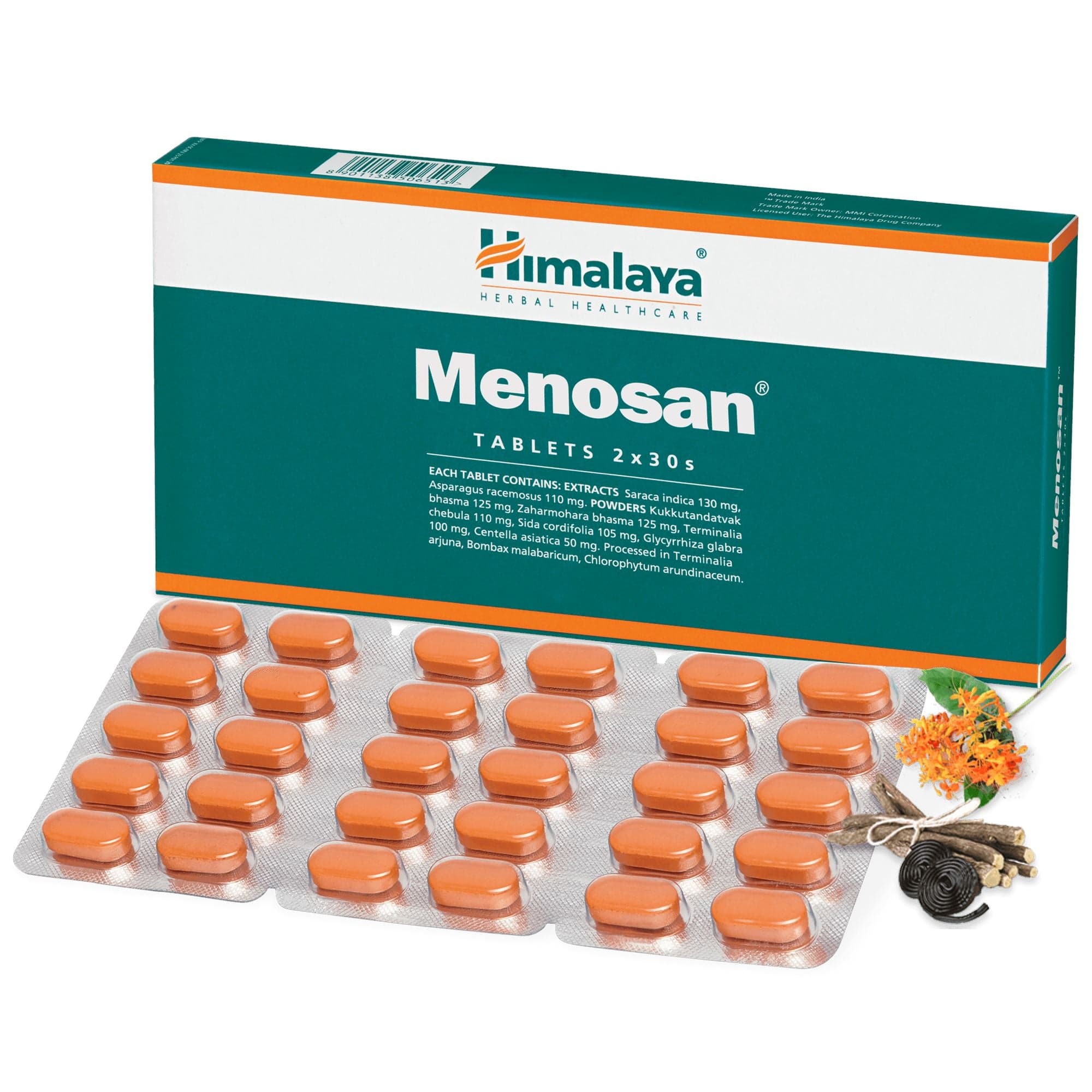
Menosan Himalaya
Supports comfort during menopausal transition
Strip of 30 Tablets
5.0
₹243Get ₹24 Cashback
₹28314% off
