

Latex Allergy Symptoms and Causes
Reviewed by medical experts · For informational purposes only
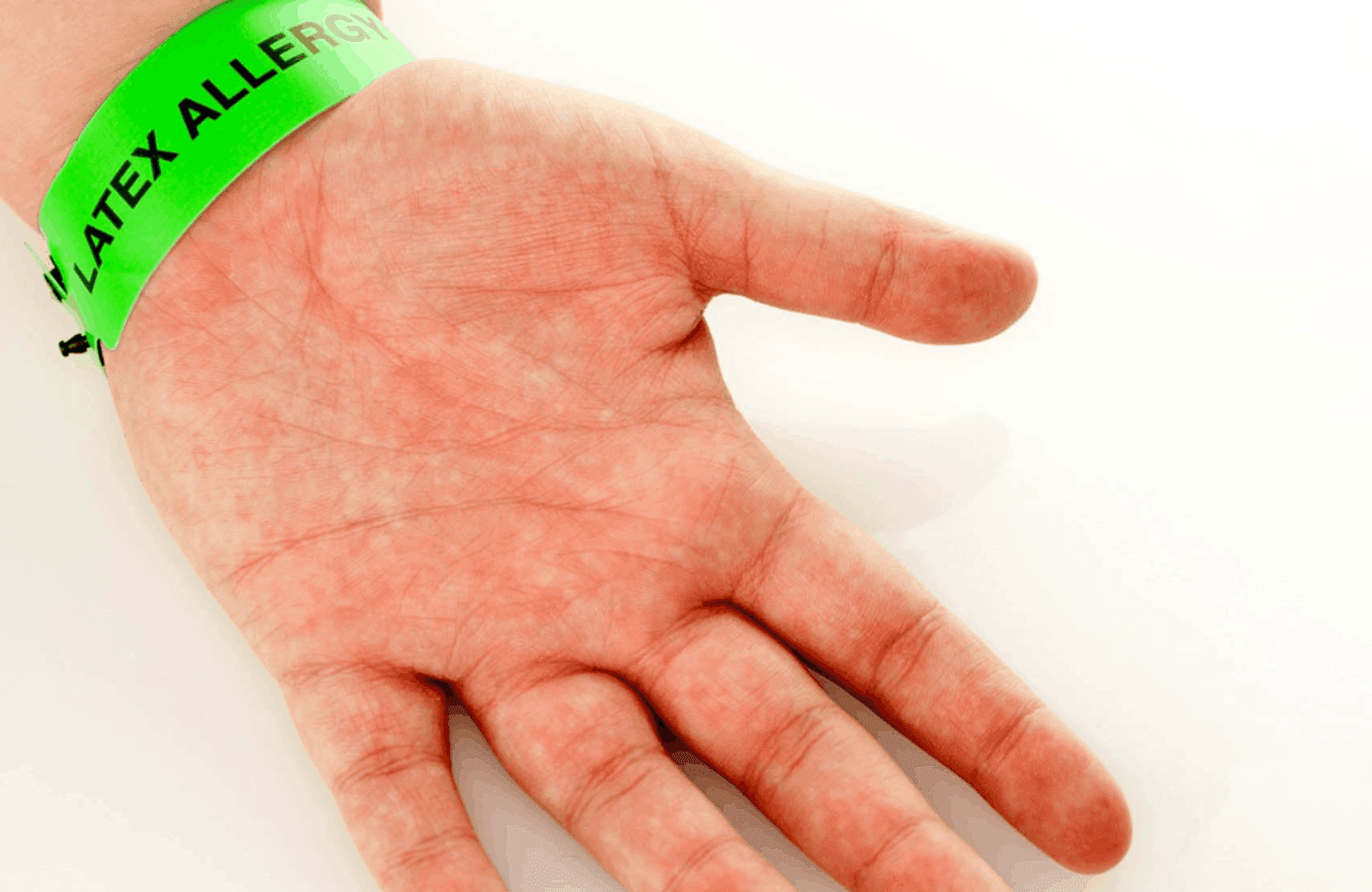
Introductory summary
Latex allergy correlates with Ayurvedic concepts of Sitapitta Udarda and Kotha representing allergic skin manifestations like urticaria and rashes. It involves the vitiation of Rakta and Pitta doshas triggered by external contact. Symptoms include Kandu or itching Raga or redness and Visphota or blisters. Management focuses on blood purification and pacifying Pitta. The Ayurvedic Formulary of India highlights formulations such as Haridrakhanda and Mridvikadi Lehya specifically for Sitapitta and itching. Mahatiktaka Ghrita is recommended for inflammatory skin conditions and blisters. Therapies like Virechana are employed to expel toxins while herbs like Svarnaksiri are noted for treating urticaria. Treatment aims to restore the balance of Doshas and purify the blood to alleviate hypersensitivity.
Latex Allergy
Latex Allergy is a reaction to certain proteins found in natural rubber latex, a product made from the rubber tree. In Ayurveda, allergic reactions to external substances are understood as a result of Asatmya (intolerance/incompatibility) leading to the vitiation of Rakta (blood) and Pitta Dosha. It manifests as conditions described under Sitapitta (Hives/Urticaria), Kotha (Red rashes), or Visphota (Blisters), often triggered by contact with irritating plant exudates (Kshira/Niryasa).
1. Definition
- Modern Definition: An immune system reaction to natural rubber latex, ranging from skin irritation (contact dermatitis) to anaphylaxis.
- Ayurvedic Definition: A condition classified under Twak Vikara (skin diseases) caused by Agantuja (external/accidental) factors. When the skin comes into contact with an incompatible substance (Latex/Kshira), it acts as a mild Visha (toxin) or Dooshivisha (cumulative toxin), provoking the Doshas (primarily Pitta and Kapha) to obstruct the skin channels, resulting in swelling (Shotha), redness (Raga), and itching (Kandu).
2. Etymology & Conceptual Meaning
- Sitapitta: Sita (Cold/Kapha) + Pitta (Heat). It refers to a condition where Vata and Kapha are disturbed, mixing with Pitta to spread over the skin.
- Kotha: Refers to circular, red, itching patches or rashes, often caused by the suppression of vomiting or contact with allergens.
- Conceptual Interpretation: Latex is a plant exudate (Niryasa). In Ayurveda, certain plant milks (Snuhi, Arka) are known to be Tikshna (sharp) and irritating. An allergy occurs when the body's Ojas (immunity) identifies this external substance as Asatmya (unwholesome), triggering a defense mechanism that manifests as inflammation.
3. Causes (Nidana)
While latex is a specific modern material, Ayurvedic texts describe similar allergic triggers under Agantuja Nidana (External Causes).
- Contact Factors (Sparsha): Direct contact with irritating plant exudates or substances that possess Tikshna (sharp) or Ushna (hot) potencies.
- Dietary Causes (Contributing Factors): Consuming Viruddha Ahara (incompatible foods) such as fish with milk, or excessive sour (Amla) and salty (Lavana) foods predisposes the blood (Rakta) to vitiation, making the person more susceptible to allergies.
- Toxin Accumulation: The presence of Gara Visha (accumulated artificial poisons) or Dooshivisha (latent toxins) in the body sensitizes the immune system to external allergens.
4. Journey of the Disease (Pathogenesis/Samprapti)
- Samprapti Ghataka (Components):
- Dosha: Pitta (dominant in redness/burning), Kapha (dominant in swelling/itching), and Vata (spreading).
- Dushya (Tissues): Rasa (Plasma) and Rakta (Blood), Twak (Skin).
- Srotas (Channels): Rasavaha and Raktavaha Srotas.
- Agni: Mandagni (weak digestive fire) leads to Ama formation, increasing allergic tendency.
- Adhisthana (Site): Skin (Twak).
- Pathogenesis:
- Contact with the allergen (Latex) acts as an external trigger.
- This aggravates Vata and Kapha doshas.
- These mix with Pitta (heat) and vitiate the Rakta (blood).
- The vitiated Doshas spread to the skin surface (Twak) and block the channels.
- This results in raised, red, itchy rashes known as Kotha or Sitapitta.
5. Symptoms (Lakshana)
- Early Symptoms:
- Advanced Symptoms:
- Shotha: Swelling or edema.
- Visphota: Formation of blisters or vesicles.
- Daha: Burning sensation.
- Kshudra Shwasa: Difficulty breathing (in severe anaphylactic-type reactions, correlated with Vata obstructing respiratory channels).
6. Different Types or Classification (Bheda)
Ayurveda classifies skin allergic reactions based on the dominant symptoms:
- Sitapitta (Vata-dominant): Characterized by pricking pain and reddish rashes.
- Udarda (Kapha-dominant): Characterized by thick, heavy swelling, itching, and whitish/pale patches.
- Kotha (Pitta-Rakta dominant): Characterized by intense redness, burning sensation, and repeated eruption of rashes.
- Visphota (Blistering): When the allergy leads to fluid-filled blisters due to high Pitta/blood involvement.
7. Diagnosis
- Ayurvedic Diagnosis (Roga Pariksha):
- Darshana (Observation): Inspecting the skin for redness (Raga), wheals, or blisters (Pidaka).
- Prashna (History): Inquiry about recent contact with rubber/latex products and history of incompatible diet.
- Differential Diagnosis:
- Distinguished from Visarpa (Erysipelas), which spreads rapidly like a snake.
- Distinguished from Kustha (chronic skin diseases), which are long-standing, whereas allergy is often acute (Sadyo).
8. Disease Management
Management focuses on Rakta Shodhana (Blood purification), Pitta Shamana (Pacifying heat), and Vishaghna (Anti-toxic) therapies.
Diet (Ahara)
- Pathya (Beneficial): Light, bitter (Tikta), and sweet foods. Old rice, green gram (Mudga), and vegetables like Patola (pointed gourd) are recommended.
- Apathya (Avoid): Sour (Amla), salty, and spicy foods. Avoid fermented foods, curd (Dadhi), and jaggery, as these aggravate skin conditions.
Lifestyle (Vihara)
- Avoid contact with the allergen.
- Avoid sun exposure which aggravates Pitta.
- Use cool water for bathing.
Medicines
- Haridrakhanda: A famous granular formulation containing Turmeric (Haridra). It is specifically indicated for Sitapitta (Urticaria), Kandu (Itching), and Visphota (Blisters).
- Mahamanjisthadi Kwatha: A decoction used to purify the blood and treat skin diseases (Kustha) and inflammation (Sotha).
- Vilwadi Gutika: A tablet used for Visa (poison), insect bites, and toxic conditions. It is useful in acute allergic reactions.
- Aragvadhadi Kwatha: Used for skin diseases, itching, and purification.
- Gandhaka Rasayana: Sulphur preparation used for intractable skin diseases and itching (administered as Gandhaka Vati).
Panchakarma
- Virechana (Purgation): The primary treatment for Pitta and Blood disorders. Formulations like Trivrit Leha or Avipattikar Churna are used to expel toxins.
- Raktamokshana (Bloodletting): In severe cases of localized swelling and burning, letting impure blood helps reduce symptoms instantly (mentioned in context of Visarpa and Kustha).
9. Prognosis
- Sadhya (Curable): If the allergy is recent and the patient avoids the trigger (latex), it is easily curable.
- Yapya (Manageable): If the patient has a chronic history of allergies or "Dooshivisha" (cumulative toxicity), it requires long-term management.
- Factors affecting prognosis: High Pitta constitution or consuming incompatible foods (Viruddha Ahara) makes the reaction more severe.
10. Modern Correlations
- Similarities:
- Differences: Ayurveda views the skin reaction as a systemic issue of "impure blood" (Rakta Dushti) and digestive toxins (Ama), whereas modern medicine views it as a specific IgE-mediated antibody response.
- Limitations: Ancient texts do not explicitly mention "rubber latex" as it is a New World discovery, but the mechanism of allergic reaction is fully described under Agantuja causes.
11. References
-
World Health Organization (WHO) – Allergic diseases and hypersensitivity
https://www.who.int/teams/health-product-policy-and-standards/standards-and-specifications
-
Centers for Disease Control and Prevention (CDC) – Latex allergy
https://www.cdc.gov/niosh/topics/latex/
-
National Institute of Allergy and Infectious Diseases (NIAID – NIH) – Latex allergy
https://www.niaid.nih.gov/diseases-conditions/latex-allergy
-
Mayo Clinic – Latex allergy
https://www.mayoclinic.org/diseases-conditions/latex-allergy
-
StatPearls (NCBI Bookshelf) – Latex Allergy
https://www.ncbi.nlm.nih.gov/books/NBK532912/
-
National Health Portal of India – लेटेक्स एलर्जी (Latex Allergy)
https://www.nhp.gov.in/disease/skin/latex-allergy
-
Ministry of Health & Family Welfare, Government of India – एलर्जी रोग
https://www.mohfw.gov.in/
12. FAQ Section
Q: What is the best Ayurvedic herb for skin allergies like latex allergy?
A: Haridra (Turmeric) is considered one of the best herbs. The formulation Haridrakhanda is specifically designed for itching (Kandu), blisters (Visphota), and hives (Sitapitta).
Q: Can Ayurvedic detoxification help with allergies?
A: Yes. Virechana (therapeutic purgation) is highly recommended to clear Pitta and Rakta toxins, which reduces the body's hypersensitivity.
Q: Is there an Ayurvedic pill for acute allergic reactions?
A: Vilwadi Gutika is a classical formulation used for poisons (Visha) and bites. It is often used by practitioners to manage acute toxic or allergic skin reactions.
Q: What foods should be avoided during an allergic flare-up?
A: One should avoid sour foods, fermented items, excessive salt, and jaggery, as these aggravate blood impurities (Rakta Dushti) and worsen itching.
Q: What is the Ayurvedic term for hives caused by allergy?
A: The closest terms are Sitapitta or Udarda. These describe the red, swollen, itchy patches typical of an allergic reaction.
Consult a Doctor
- KC5.0Dr. Kamesh chand sharma
Ayurveda2 yrs exp
- PP4.4Dr prince patel
Ayurveda22 yrs exp
- PJ5.0Dr. P. JOTEENDRA
Ayurveda2 yrs exp
- AI4.9Dr. Aayush Ishwar
Ayurveda2 yrs exp