

Colon cancer Symptoms and Causes
Reviewed by medical experts · For informational purposes only
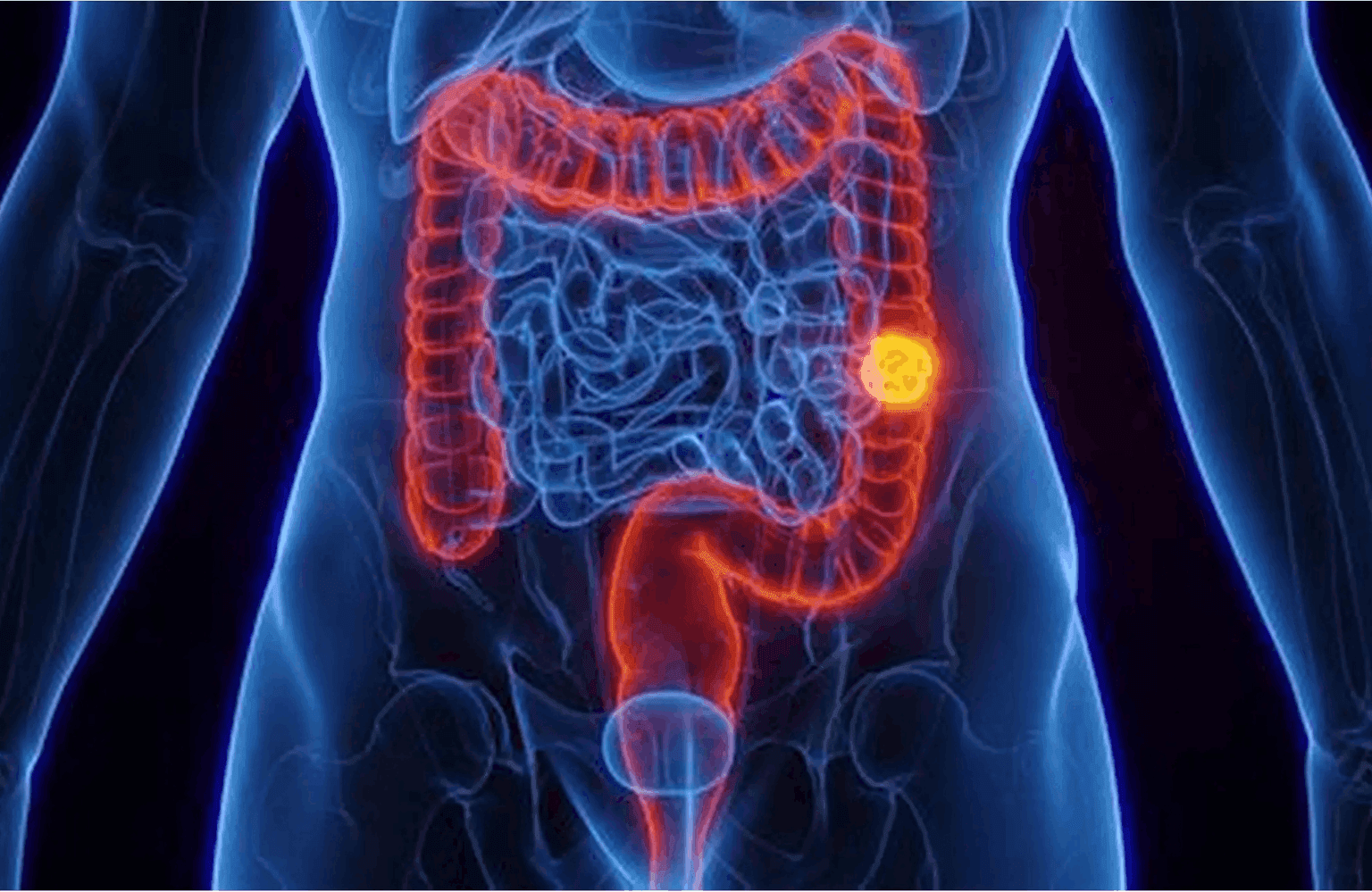
Introductory summary
Colon cancer aligns with Ayurvedic concepts of Arbuda and Gulma manifesting as malignant growths or lumps within the abdominal region. The condition arises from aggravated Doshas particularly Vata and Kapha vitiating muscle and blood tissues often linked to weak digestion and toxin accumulation. Symptoms include abdominal masses constipation and weakness. Treatment strategies emphasize Shodhana purification particularly Vasti enemas to cleanse the colon and pacify Vata. The Ayurvedic Formulary of India highlights formulations like Chandraprabha Vati and specific Ghrita preparations involving Bhallataka to address tumors and cysts. Managing the condition involves reducing tissue mass through scraping therapies and restoring metabolic balance though advanced bleeding tumors are often considered difficult to cure requiring rigorous dietary discipline.
Colon Cancer
Colon Cancer is a type of cancer that begins in the large intestine (colon). In Ayurveda, while there is no single term that translates exactly to "Colon Cancer," the condition is understood through the concepts of Arbuda (Tumor/Malignant growth), Gulma (Abdominal Mass), and Raktapitta (Bleeding disorders). It involves the vitiation of the Mamsa (muscle) and Rakta (blood) tissues in the Pakvashaya (colon).
1. Definition
Modern Definition: A malignant tumor arising from the inner wall of the large intestine.
Ayurvedic Definition: An Arbuda is defined as a large, fixed, deep-seated, and slow-growing mass. When such a growth occurs in the Pakvashaya (colon) or Guda (rectum), it obstructs the channel. If the tumor is fleshy and hard, it is called Mamsarbuda; if it is rapidly growing and bleeding, it is called Raktarbuda.
2. Etymology & Conceptual Meaning
- Arbuda: The term implies a mass that hurts or kills (Arb = to hurt). It is described as round, immobile, and deep-seated.
- Pakvashaya: The "receptacle of digested food," referring to the large intestine/colon.
- Conceptual Interpretation: Ayurveda views this not just as a local growth but as a systemic failure of Agni (digestive fire) leading to the accumulation of Ama (toxins). These toxins, combined with vitiated Doshas (particularly Vata and Kapha), consolidate in the colon tissue to form a mass (tumor).
3. Causes (Nidana)
The development of growths in the colon is attributed to dietary and lifestyle factors that vitiate the blood and muscle tissue.
- Dietary Causes:
- Consumption of Viruddha Ahara (Incompatible foods) leading to toxin formation.
- Excessive intake of meats and heavy, greasy foods which vitiate Mamsa (muscle tissue) and Medas (fat).
- Diets that aggravate Vata and Kapha, leading to obstruction.
- Lifestyle Causes:
- Vegadharana: Suppression of natural urges, specifically the urge to defecate (Purisha) or pass gas (Adhovayu), which causes Vata to move upwards and stagnate in the colon.
- Sedentary lifestyle leading to Agnimandya (weak digestion).
- Psychological Factors:
- Extreme grief (Shoka) and stress are mentioned as aggravating factors for body humors that can lead to disease.
4. Journey of the Disease (Pathogenesis/Samprapti)
- Samprapti Ghataka (Components):
- Dosha: Kapha (causes the mass), Vata (causes cell proliferation/pain), Pitta (involved in bleeding/inflammation).
- Dushya (Tissues): Mamsa (Muscle), Rakta (Blood), and Medas (Fat).
- Srotas (Channels): Annavaha (Digestive) and Purishavaha (Excretory).
- Agni: Mandagni (Weak digestive fire) leading to Ama production.
- Adhisthana (Site): Pakvashaya (Colon) and Guda (Rectum).
- Pathogenesis:
- Due to poor diet and weak digestion, Ama (toxins) accumulates.
- Vitiated Kapha and Vata doshas mobilize these toxins.
- They lodge in the colon (Pakvashaya), damaging the muscle and blood tissues.
- This consolidation leads to a hardened, non-suppurating swelling known as Arbuda.
- In severe cases (Raktarbuda), the blood is heavily vitiated, leading to rapid growth and bleeding.
5. Symptoms (Lakshana)
Symptoms often overlap with Gulma (abdominal lump) and Grahani (digestive disorder).
- Early Symptoms:
- Vistambha: Constipation or feeling of blockage.
- Agnimandya: Loss of appetite and weak digestion.
- Udararuj: Vague abdominal pain or colic.
- Advanced Symptoms:
- Arbuda/Gulma: Palpable mass or lump in the abdomen.
- Raktapravritti: Rectal bleeding or blood in stools (resembling Raktapitta).
- Karshya: Severe weight loss and emaciation.
- Pandu: Anemia (due to blood loss).
- Atisara: Diarrhea, sometimes alternating with constipation.
6. Different Types or Classification (Bheda)
Classified based on the dominant Dosha and tissue involvement:
- Vataja Arbuda: Painful, dry, and rough growth.
- Kaphaja Arbuda: Fixed, heavy, deep-seated, and slow-growing.
- Raktarbuda (Blood Tumor): Characterized by rapid growth, excessive bleeding, and covered with fleshy sprouts. This type is considered incurable (Asadhya).
- Mamsarbuda (Fleshy Tumor): Hard, stone-like, painless, and fixed swelling.
7. Diagnosis
- Ayurvedic Diagnosis (Roga Pariksha):
- Sparshana (Palpation): Feeling for a hard, fixed mass (Arbuda) or "ball-like" movement (Gulma) in the abdomen.
- Darshana (Observation): Observing signs of anemia (Pandu), muscle wasting, and examining the stool for blood.
- Prashna (Questioning): History of constipation, bowel irregularities (Grahani), and dietary habits.
- Differential Diagnosis:
- Distinguished from Arsha (Hemorrhoids), which are fleshy growths primarily at the anal verge.
- Distinguished from Vidradhi (Abscess), which usually involves pus formation (Paka), whereas Arbuda typically does not suppurate.
8. Disease Management
Management focuses on Shodhana (Purification) to remove toxins and Lekhana (Scraping) therapies to reduce the mass.
Medicines
- Kanchanara Guggulu: (Implied usage for Gandamala and growths) Used to reduce glandular swellings and tumors.
- Triphala Guggulu: Specifically indicated for Bhagandara (fistula), Gulma (abdominal lump), and Shotha (inflammation/growth).
- Panchatikta Ghrita: A medicated ghee containing five bitter herbs (Neem, Giloy, etc.). It is indicated for Arbuda (tumors), deep-seated ulcers, and skin diseases.
- Bhallataka (Semecarpus anacardium): A potent herb described as a Rasayana that destroys Arsha (piles/growths), Gulma, and Krimi. It is "sharp" and used to cauterize or destroy abnormal tissue.
- Arogyavardhini Vati: Used for liver disorders, improving digestion, and treating accumulations in the abdomen.
- Shilajatu: Prescribed for Arbuda and reducing overgrowths.
Diet (Ahara)
- Pathya (Beneficial): Light, digestible foods. Old rice, green gram (Mudga), and vegetables like bitter gourd (Karvellaka) and pointed gourd (Patola) are recommended to purify the blood.
- Apathya (Avoid): Heavy, greasy meats, dairy, and incompatible food combinations (Viruddha Ahara).
Panchakarma (Therapies)
- Vasti (Enema): This is the primary treatment for the colon (Pakvashaya). Medicated enemas (like Lekhana Vasti) help scrape away toxins and reduce growths.
- Virechana (Purgation): Indicated if there is Pitta involvement or bleeding, to cleanse the blood.
9. Prognosis
- Krichrasadhya (Difficult to Cure): Tumors that are fixed and deep-seated are generally difficult to treat.
- Asadhya (Incurable): Raktarbuda (bleeding tumor) is classified as incurable because of its rapid growth and connection to blood vessels. Signs such as massive size, fixity, and severe emaciation of the patient indicate a poor prognosis.
10. Modern Correlations
- Colorectal Carcinoma: The description of Mamsarbuda and Raktarbuda closely mirrors malignant tumors of the colon.
- Polyps: The Ayurvedic description of Arsha (fleshy sprouts) within the rectum/colon correlates with polyps, which can be precursors to cancer.
- Intestinal Obstruction: The symptoms of Gulma and Baddha-gudodara (intestinal obstruction) correlate with the obstructive nature of advanced colon cancer.
11. References
-
World Health Organization (WHO) – Colorectal Cancer
Global burden, risk factors, prevention, and screening
🔗 https://www.who.int/news-room/fact-sheets/detail/cancer
-
International Agency for Research on Cancer (IARC) – Colorectal Cancer
Cancer statistics and research data
🔗 https://iarc.who.int
-
National Cancer Institute (NCI, USA) – Colon Cancer
Detailed information on causes, stages, diagnosis, and treatment
🔗 https://www.cancer.gov/types/colorectal
-
Centers for Disease Control and Prevention (CDC) – Colorectal Cancer
Screening guidelines and prevention
🔗 https://www.cdc.gov/cancer/colorectal
-
Mayo Clinic – Colon cancer: Symptoms and causes
Clinical overview with patient-friendly explanations
🔗 https://www.mayoclinic.org/diseases-conditions/colon-cancer
-
Ministry of Health & Family Welfare (MoHFW), India
National cancer control initiatives
🔗 https://www.mohfw.gov.in
-
राष्ट्रीय स्वास्थ्य पोर्टल (National Health Portal – India)
कोलन कैंसर / बड़ी आँत का कैंसर
🔗 https://www.nhp.gov.in
12. FAQ Section
Q: Can Ayurveda cure colon cancer?
A: Ayurveda describes "Arbuda" (tumors) as difficult to treat (Krichrasadhya) or incurable (Asadhya) depending on the stage and type. While Ayurvedic treatments like Panchatikta Ghrita and Bhallataka can support the body and manage symptoms, advanced Raktarbuda (bleeding tumors) are traditionally considered incurable.
Q: What herbs are good for colon health?
A: Triphala is the best formulation for colon cleansing and health. Herbs like Haridra (Turmeric) and Guggulu have anti-inflammatory and scraping properties useful for growths.
Q: Is "Gulma" the same as a tumor?
A: Not always. Gulma refers to a palpable lump in the abdomen. It can be a gaseous tumor (phantom tumor) or a solid mass. If it is solid, fixed, and fleshy, it is more likely an Arbuda (tumor).
Q: Why is digestion important in preventing cancer according to Ayurveda?
A: Ayurveda believes that weak digestion (Mandagni) leads to the formation of Ama (toxins). These toxins accumulate in the tissues and disturb the cellular intelligence, leading to abnormal growths like Arbuda.
Consult a Doctor
- KC5.0Dr. Kamesh chand sharma
Ayurveda2 yrs exp
- PP4.4Dr prince patel
Ayurveda22 yrs exp
- PJ5.0Dr. P. JOTEENDRA
Ayurveda2 yrs exp
- S4.6Dr. Shan
Ayurveda4 yrs exp