

Ovarian cancer Symptoms and Causes
Reviewed by medical experts · For informational purposes only
Introductory summary
Ovarian cancer correlates with the Ayurvedic concepts of Arbuda representing malignant tumors and Rakta Gulma, a blood-based abdominal mass specific to women. It arises when aggravated Vata and Kapha doshas obstruct the Artavavaha Srotas or reproductive channels causing vitiated blood and tissues to solidify into deep-seated fixed masses. Common causes include the suppression of natural urges and improper diet during menstruation which disturb pelvic circulation. Symptoms typically involve abdominal distension irregular bleeding and a palpable stone-like mass. Management focuses on clearing pelvic obstructions through Basti therapy which regulates Vata. Treatments also employ scraping herbs like Guggulu and Shilajit to reduce the mass along with alkaline preparations known as Kshara to break down tumorous tissue.
Ovarian Cancer
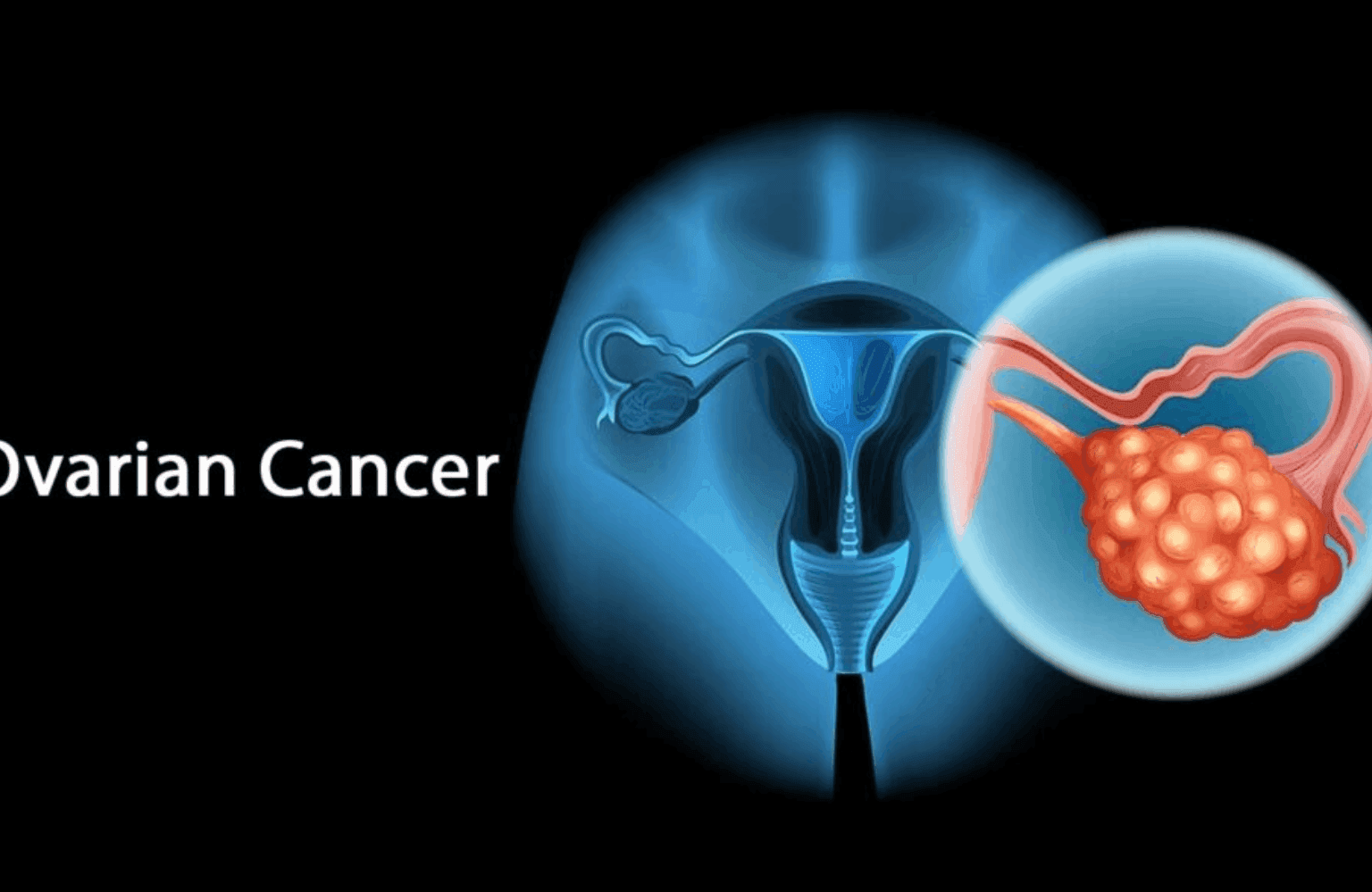
Ovarian Cancer is a type of cancer that forms in the ovaries. In Ayurveda, malignancies and tumors are generally classified under Arbuda (Tumor) or Granthi (Knot/Cyst). While there is no single Sanskrit term that translates directly to "Ovarian Cancer," the condition is understood as a mass affecting the Artavavaha Srotas (reproductive channels) and the Garbhashaya (uterus/ovarian bed). It is often correlated with Rakta Gulma (a blood-based abdominal mass specific to women) or Tridoshaja Arbuda (a tumor involving all three bio-energies),.
1. Definition
Modern Definition: Ovarian cancer is the growth of abnormal, malignant cells in the ovaries (the female reproductive glands that produce eggs). Ayurvedic Definition:
- Arbuda: A large, extensive, fixed, and deep-seated swelling of the flesh which is caused by the vitiation of Doshas and tissues (Dhatus), specifically involving muscle (Mamsa) and blood (Rakta).
- Rakta Gulma: A specific type of abdominal mass (Gulma) found only in women, often resulting from menstrual irregularities or postpartum complications, where Vata blocks the blood in the uterus, forming a mass.
2. Etymology & Conceptual Meaning
- Arbuda: Means "tumor" or "swelling." It implies a growth that is round, immobile, and deeply rooted.
- Gulma: Refers to a "clump" or "bush," describing a palpable mass in the abdomen that may be stationary or movable.
- Rakta: Blood.
- Conceptual Interpretation: Ayurveda views this pathology as an obstruction (Avarana) in the pelvic region (Apana Vayu zone). When the flow of reproductive fluids (Artava) is blocked by aggravated Vata and Kapha, it accumulates and solidifies into a mass. If this mass involves deep tissues and corrupted blood, it becomes an Arbuda (tumor).
3. Causes (Nidana)
The causes are multifactorial, involving diet, lifestyle, and reproductive history.
- Dietary Causes:
- Consumption of foods that aggravate Vata and Kapha (e.g., dry, heavy, or incompatible foods).
- Eating dirt or indigestible materials is mentioned as a cause for certain abdominal masses.
- Excessive intake of meat, fat, and sweets leads to the accumulation of Meda (fat) and Mamsa (muscle), contributing to tumor growth.
- Lifestyle Causes:
- Vegadharana: Suppression of natural urges, particularly of menstruation, urine, and feces.
- Mithya Vihara: Improper lifestyle during menstruation or postpartum periods. Rakta Gulma specifically arises in women who fast excessively or eat Vata-aggravating food immediately after a miscarriage, delivery, or during menstruation.
- Psychological Factors:
- Deep-seated grief (Shoka) and fear (Bhaya) aggravate Vata, which can disrupt the cellular intelligence and immunity (Ojas).
4. Journey of the Disease (Pathogenesis/Samprapti)
- Samprapti Ghataka (Components):
- Dosha: Vata (Apana Vayu - governs pelvic organs), Kapha (causes mass/growth), and Pitta (in inflammatory/bleeding stages).
- Dushya (Tissues): Rakta (Blood), Mamsa (Muscle), Meda (Fat), and Artava (Ovarian fluid/Ovum).
- Srotas (Channels): Artavavaha Srotas (Reproductive channels) and Raktavaha Srotas.
- Adhisthana (Site): Garbhashaya (Uterus/Ovaries) and Pakvashaya (Pelvic cavity).
- Pathogenesis:
- Etiological factors aggravate Vata in the uterus and ovaries.
- Vata blocks the natural flow of menstrual blood or reproductive fluids.
- Kapha and Pitta join the blockage, leading to the accumulation of vitiated blood and tissue.
- This accumulation solidifies into a mass known as Gulma or Arbuda.
- If the mass becomes Mamsarbuda (fleshy tumor), it is described as fixed, painless (initially), and deep-seated, growing like a "stone".
5. Symptoms (Lakshana)
Symptoms depend on the size and type of the mass.
- Early Symptoms (Prodromal):
- Irregular menstruation or amenorrhea (absence of periods), specifically in Rakta Gulma.
- Indigestion, nausea, and loss of appetite (Arocaka).
- Advanced Symptoms (Manifested Disease):
- Abdominal Mass: A palpable lump in the pelvic region. In Rakta Gulma, the mass may pulsate initially but becomes solid.
- Pain: Cutting or piercing pain in the pelvis, sides, or back (symptoms of Gulma).
- Ascites (Udara Roga): Accumulation of fluid in the abdomen, a common complication of advanced abdominal tumors.
- Bleeding: Menorrhagia (excessive bleeding) or irregular discharge.
- General: Weight loss, fatigue, and anemia (Pandu).
6. Different Types or Classification (Bheda)
While modern medicine classifies by cell type, Ayurveda classifies by Dosha:
- Vataja Arbuda/Gulma: characterized by severe pain, constipation, and a mass that may change size or position.
- Pittaja Arbuda/Gulma: Associated with burning sensation, fever, and inflammation (suppuration).
- Kaphaja Arbuda/Gulma: Associated with a cold, heavy, hard, and slow-growing mass. This closely resembles solid ovarian tumors.
- Rakta Arbuda/Gulma: A mass formed of vitiated blood; highly vascular and specific to women.
- Mamsarbuda: A fleshy tumor that is stone-hard, fixed, and non-suppurating (malignant potential).
7. Diagnosis
- Ayurvedic Diagnosis (Roga Pariksha):
- Sparshana (Palpation): Examining the abdomen for a mass. A malignant tumor (Arbuda) is described as Sthira (fixed), Mahamula (deep-rooted), and Ayata (extensive).
- Darshana (Observation): Checking for abdominal distention (Udara) and signs of anemia or jaundice.
- Differential Diagnosis: Distinguishing Rakta Gulma from pregnancy (Garbha). In Rakta Gulma, the abdomen enlarges, but there is no fetal movement, and the patient may feel a pulsatile mass rather than a limb.
8. Disease Management
Management focuses on Vata Anulomana (correcting the flow of Vata) and Lekhana (scraping/reducing the mass).
Medicines
- Kancanara Guggulu: Commonly used for Granthi (nodules) and Arbuda (tumors) to reduce size (implied by general tumor protocols).
- Shilajatu: Used as a Rasayana and for treating chronic conditions like tumors and diabetes; it acts as a "scraping" agent.
- Alkaline Preparations (Kshara): Palasha Kshara or Yava Kshara are used to break down masses (Gulma) and tumors,.
- Varanadi Ghrita / Guggulutiktaka Ghrita: Medicated ghees used for deep-seated inflammatory and tumorous conditions.
- Tamra Bhasma (Copper): Mentioned for treating Gulma and abdominal lumps.
Panchakarma
- Basti (Enema): The most important therapy for Vata disorders and pelvic diseases. Anuvasana (oil) and Niruha (decoction) Bastis are used to clear the pelvic channels.
- Virechana (Purgation): Used to eliminate Pitta and cleanse the blood, often prescribed for Gulma and Arbuda.
- Svedana (Fomentation): Localized steaming to soften the mass.
Diet (Ahara)
- Recommended: Light, warm, and digestible foods. Barley (Yava), Horse gram (Kulattha), and spices like garlic, ginger, and long pepper (Pippali) are beneficial for breaking down masses.
- Avoid: Heavy, cold, and oily foods; dairy and excessive sweets which increase Kapha and tumor growth.
9. Prognosis
- Krichrasadhya (Difficult to Cure): Tumors (Arbuda) that are fixed, deep-seated, and involve multiple tissues are difficult to treat.
- Asadhya (Incurable): If the tumor is oozing (Srava), fixed like a stone, or if the patient is suffering from severe wasting (Dhatukshaya) and complications like ascites (Udara), it is considered incurable.
- Rakta Gulma: This specific condition is stated to be difficult to treat but can be managed if treated after ten months of development (according to specific classical timelines).
10. Modern Correlations
- Ovarian Mass/Cyst: Correlates with Granthi or Kaphaja Gulma.
- Malignant Tumor: Correlates with Mamsarbuda (fleshy tumor) which is described as hard, non-suppurating, and deep-rooted.
- Metastasis: The spread of disease to other tissues is described in Ayurveda as the vitiation of multiple Dhatus and the movement of Doshas through the channels.
11. References
-
World Health Organization (WHO)
Cancer fact sheets & global burden (ovarian cancer)
https://www.who.int/news-room/fact-sheets/detail/cancer
-
International Agency for Research on Cancer (IARC – WHO)
Ovarian cancer epidemiology (GLOBOCAN)
https://gco.iarc.fr/
-
National Cancer Institute (NCI – NIH)
Ovarian cancer overview, treatment, and research
https://www.cancer.gov/types/ovarian
-
Mayo Clinic
Symptoms, causes, diagnosis, and treatment
https://www.mayoclinic.org/diseases-conditions/ovarian-cancer/symptoms-causes/syc-20375941
12. FAQ Section
Q: Can Ayurveda treat ovarian cysts?
A: Ayurveda treats ovarian cysts under the concept of Granthi or Kaphaja Gulma. Treatments usually involve "scraping" (Lekhana) herbs like Guggulu, Shilajit, and Kanchanara, along with dietary changes to reduce Kapha and Ama.
Q: What is "Rakta Gulma"?
A: Rakta Gulma is a condition described in texts like Madhava Nidana and Charaka Samhita that occurs only in women. It presents as a mass in the uterus caused by the retention of menstrual blood due to Vata obstruction, often mimicking pregnancy symptoms.
Q: Are there specific diets for tumors in Ayurveda?
A: Yes. Ayurveda generally recommends a Kapha-reducing diet for tumors. This includes avoiding dairy, sugar, and heavy meats, and increasing the intake of bitter and pungent spices like turmeric, ginger, and black pepper to improve metabolism and reduce tissue overgrowth.
Q: What is the role of Panchakarma in ovarian health?
A: Panchakarma, specifically Basti (medicated enema), is highly effective for ovarian health because the ovaries are located in the pelvic region, which is the seat of Vata Dosha. Basti helps regulate Vata, thereby normalizing reproductive functions and reducing pathological growths.
Consult a Doctor
- KC5.0Dr. Kamesh chand sharma
Ayurveda2 yrs exp
- PP4.4Dr prince patel
Ayurveda22 yrs exp
- PJ5.0Dr. P. JOTEENDRA
Ayurveda2 yrs exp
- S4.6Dr. Shan
Ayurveda4 yrs exp